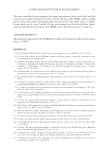
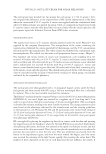
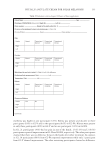
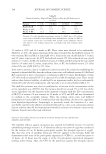
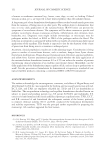
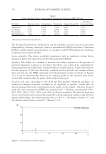
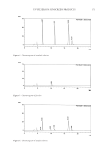
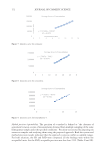
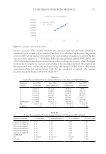
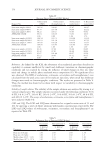
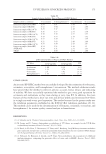
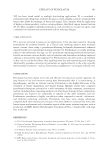
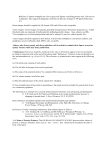
175 UV FILTERS IN SUNSCREEN PRODUCTS CONCLUSION An isocratic RP-HPLC method was successfully developed for the estimation of avobenzone, octinoxate, octocrylene, and benzophenone-3 in.sunscreen. The method validation results have proved that the method is selective, precise, accurate, linear, robust, and indicating of stability. We have successfully optimized the method to get a very good separation for octinoxate and avobenzone as they were eluting at very close RT. In addition, the main features of this method are a short run time and all four widely used mentioned UV filters in a single run with a very good separation. The method assessed in the present study met the validation parameters established in the ICH Q2 (R1) validation guidelines (20, 21). This method can be used for the determination of avobenzone, octinoxate, octocrylene, and benzophenone-3 for routine quality control analysis in formulations. REFERENCES (1) A. Salvador and A. Chisvert, Sunscreen analysis, Anal. Chim. Acta, 537(1–2), 1–14 (2005). (2) M. Lorigo and E. Cairrao, Antioxidants as stabilizers of UV filters: an example for the UV-B filter octylmethoxycinnamate, Biomed. Dermatol., 3(1), 11 (2019). (3) N. Duale, A.-K. Olsen, T. Christensen, S. T. Butt, and G. Brunborg, Octyl Methoxycinnamate modulates gene expression and prevents cyclobutane pyrimidine dimer formation but not oxidative DNA damage in UV-exposed human cell lines, Toxicol. Sci., 114(2), 272–284 (2010). (4) A. Nečasová, K. Bányiová, J. Literák, and P. Čupr, New probabilistic risk assessment of ethylhexyl methoxycinnamate: comparing the genotoxic effects of trans- and cis-EHMC, Environ. Toxicol., 32(2), 569–580 (2017). Table VII LOD and LOQ Data of Proposed HPLC Method UV filter LOD (µg/mL) LOQ (µg/mL) S/N Avobenzone 1.88 6.16 4.07 Octinoxate 1.51 4.76 24.82 Octocrylene 2.5 7.82 23.37 Benzophenone-3 1.53 4.75 27.15 Table VI Sample Solution Stability Data of Proposed HPLC Method Sample stability condition % octinoxate % benzophenone-3 % avobenzone % octocrylene Sunscreen sample (Initial/RT) 6.54 5.51 2.49 1.5 Sunscreen sample (6Hr/RT) 6.52 5.44 2.57 1.46 Sunscreen sample (6Hr/2-8°C) 6.29 5.47 2.48 1.53 Sunscreen sample (24Hr/RT) 6.36 5.37 2.54 1.48 Sunscreen sample (24Hr/2-8°C) 6.48 5.40 2.57 1.53 Sunscreen sample (30Hr/RT) 6.39 5.33 2.49 1.52 Sunscreen sample (30Hr/2-8°C) 6.32 5.28 2.5 1.54 Sunscreen sample (48Hr/RT) 6.21 5.43 2.48 1.49 Sunscreen sample (48Hr/2-8°C) 6.35 5.38 2.43 1.47 Sunscreen sample (Initial/RT) 6.54 5.51 2.49 1.5 AVERAGE %RSD 6.38 1.38 5.41 0.98 2.51 1.94 1.53 1.88

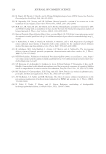
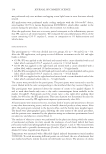
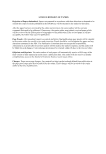
176 JOURNAL OF COSMETIC SCIENCE (5) M. Lorigo, C. Quintaneiro, M. C. Lemos, J. Martinez-de-Oliveira, L. Breitenfeld, and E. Cairrao, UV-B filter octylmethoxycinnamate induces vasorelaxation by Ca(2+) channel inhibition and guanylyl cyclase activation in human umbilical arteries, Int. J. Mol. Sci., 20(6), 1376 (2019). (6) S. Dunaway, R. Odin, L. Zhou, L. Ji, Y. Zhang, and A. L. Kadekaro, Natural antioxidants: multiple mechanisms to protect skin from solar radiation, Front. Pharmacol., 9, 392 (2018). (7) S. Q. Wang, U. Osterwalder, and K. Jung, Ex vivo evaluation of radical sun protection factor in popular sunscreens with antioxidants, J. Am. Acad. Dermatol., 65(3), 525–530 (2011). (8) Harvard Health, The Science of Sunscreen, 2018, accessed October 27, 2021. Available from: https:// www.health.harvard.edu/staying-healthy/the-science-of-sunscreen (9) M. Schlumpf, B. Cotton, M. Conscience, V. Haller, B. Steinmann, and W. Lichtensteiger, In vitro and in vivo estrogenicity of UV screens, Environ. Health Perspect., 109(3), 239–244 (2001). (10) N. R. Janjua, B. Mogensen, A.-M. Andersson, J. H. Petersen, M. Henriksen, N. E. Skakkebaek, and H. C. Wulf, Systemic absorption of the sunscreens benzophenone-3, octyl-methoxycinnamate, and 3-(4-methyl-benzylidene) camphor after whole-body topical application and reproductive hormone levels in humans, J. Invest. Dermatol., 123(1), 57–61 (2004). (11) T. Takeuchi, J. Uitto, and E. F. Bernstein, A novel in vivo model for evaluating agents that protect against ultraviolet A-induced photoaging, J. Invest. Dermatol., 110(4), 343–347 (1998). (12) K. M. Hanson, E. Gratton, and C. J. Bardeen, Sunscreen enhancement of UV-induced reactive oxygen species in the skin, Free Radic. Biol. Med., 41(8), 1205–1212 (2006). (13) E. Westgate and J. Sherma, Determination of the sunscreen oxybenzone in lotions by reversed-phase HPTLC with ultraviolet absorption densitometry, J. Liq. Chromatogr. Relat. Technol., 23(4), 609–615 (2000). (14) F. M. P. Vilela, Y. M. Fonseca, F. T. M. C. Vicentini, M. J. V. Fonseca, and MdP. Hd Do Amaral, Determination of three ultraviolet filters in sunscreen formulations and from skin penetration studies by high-performance liquid chromatography, Quím. Nova, 34(5), 879–883 (2011). (15) D. J. Schakel, D. Kalsbeek, and K. Boer, Determination of sixteen UV filters in suncare formulations by high-performance liquid chromatography, J. Chromatogr. A, 1049(1–2), 127–130 (2004). (16) C. Couteau, M. Pommier, E. Paparis, and L. J. M. Coiffard, Study of the efficacy of 18 sun filters authorized in European Union tested in vitro, Pharmazie, 62(6), 449–452 (2007). (17) E. R. M. Kedor-Hackmann, M. L. De Lourdes Pérez González, A. K. Singh, and M. I. R. M. Santoro, Validation of a HPLC method for simultaneous determination of five sunscreens in lotion preparation, Int. J. Cosmet. Sci., 28(3), 219–224 (2006). (18) S. Simeoni, R. Tursilli, A. Bianchi, and S. Scalia, “Assay of common sunscreen agents in suncare products by high-performance liquid chromatography on a cyanopropyl-bonded silica column,” J. Pharm. Biomed. Anal., 38(2), 250–255 (2005). (19) A. Guesmi, L. Ohlund, and L. Sleno, In vitro metabolism of sunscreen compounds by liquid chromatography/high-resolution tandem mass spectrometry, Rapid Commun. Mass Spectrom., 34(8), e8679 (2020). (20) ICH “Stability Testing of new Drug Substances and Products,” in Proceedings of the International Conference on Harmonization, Q1a, no. R2, 2003. (21) ICH “Validation of analytical procedures: text and methodology,” in Proceedings of the International Conference on Harmonization, Q2, no. R1, 2005.
Purchased for the exclusive use of nofirst nolast (unknown)
From: SCC Media Library & Resource Center (library.scconline.org)