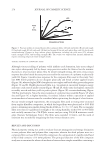
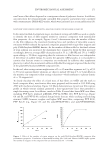
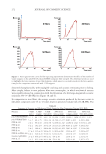
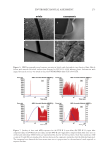
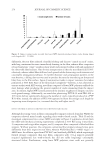
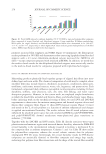
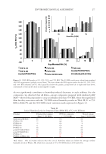
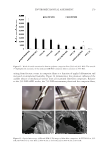
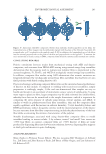
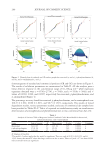
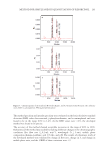
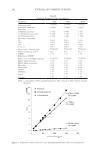
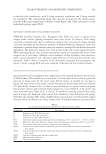
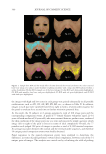
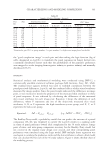
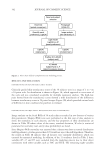
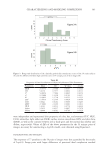
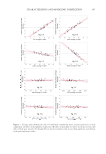
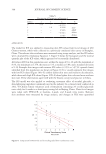
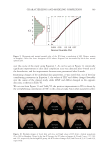
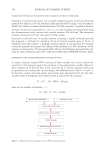
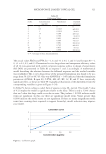
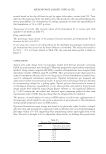
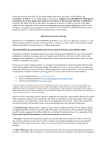
271 Enviromechanical Assessment small mass of hair fibers dispersed in a contiguous volume of polymeric fixative. In addition, outcomes from the environmentally controlled film property assessments were correlated with commensurate DHSA-AED results, which were presented in a recent publication (16). NEAT FILM VERSUS FIBER COMPOSITES: ANALYSIS OF INDUCED MECHANICAL FAILURE In the initial method development stages, mechanical testing with AED was used as a probe to identify the mass of fiber snippets needed to construct composites with reproducible film properties. As an example, Figures 4 and 5 demonstrate that the number of fibers in the film influences the maximum breaking force and numbers of detectable acoustic emissions (#AED) released by ruptured composites prepared with virgin fiber snippets and poly (OAA/Acrylates/BAEM) fixative. As the number of fibers added to the fixed volume of resin solution was increased, the maximum force required to break the film increased accordingly however, average AED values plateaued at 54 ± 2 dB-SPL and 170 ± 3 #AED upon adding ca. 50 fibers, suggesting that the resistance to film fracture was independent of the release of audible energy. To justify the apparent AED paradox, it is reasonable to surmise that fracture events in composites are moderated by additives that supplement plasticity, in which the incremental addition of flexible fiber snippets improved the ductility of the poly(OAA/Acrylates/BAEM) composite film. In the end, after testing various weight ratios of 5- to 15-mm fiber segments in 13 g of 3% to 5% (w/w) aqueous fixative solutions, we chose to include 100 mg of 5- to 9-mm fibers in the majority our comparative film testing evaluations—which amounts to a planar density of ca. 50 snippets/cm2. To clearly elucidate the effect of a fixed mass of hair fibers on #AED and the work to break composite films, neat fixative films were prepared and fractured at 50% RH using AED with mechanical analysis. Figure 5 (0 fibers) demonstrates a typical neat film-rupture profile in which texture analysis generated a force-against-time trace that presented a single fracturing event. In addition, trends in Table II reveal that lower MW neat films, including PVP K-15, imidized p(IB/MA), PVP K-30/PEG 400, PVP K-30 (e.g., Figure 6A and B), and PVP K-60, endured abrupt brittle fracture while cracking and releasing minimal #AED however, tougher and higher MW neat films, comprising PVP K-90, PVP K-120 (e.g., Figure 6C and D), poly(VP/MAPTAC), and poly(VP/DMAPMA), Figure 4. Effect of the number of virgin snippets on the poly(OAA/Acrylates/BAEM) composite film performance properties. Correlations of maximum breaking force (left) and liberated #AED (right) against the number of snippets in the composite film are demonstrated (50 ± 5% RH).

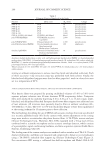
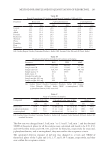
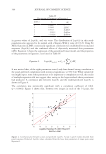
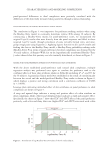
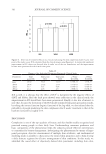
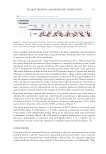
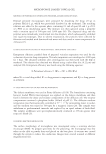
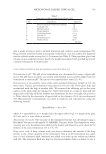
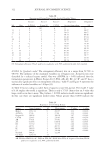
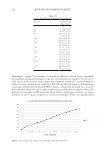
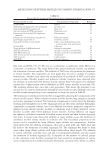
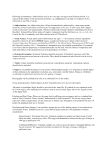
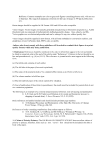
272 JOURNAL OF COSMETIC SCIENCE distorted elastoplastically, with negligible cracking and acoustic emissions prior to failing. More simply, failure in neat polymer films was catastrophic, in which mechanical stresses were rapidly released in conjunction with the liberation of a few large-magnitude acoustic emissions (90–97 dB-SPL) (see Figure 7A and C). In comparison to neat films, the average acoustic emissions produced by fracture events in film-fiber composites were 16 to 32 times lower in perceived volume (40–60 dB-SPL). Put Table II Summary of Acoustic and Mechanical Work Events for Film Composites Testing (50% RH) Polymer #AED (neat) #AED (virgin) #AED (bleached) AVG work (neat, g·mm) AVG work (virgin, g·mm) AVG work (bleached, g·mm) poly(VP/DMAPMA) 3 ± 1 90 ± 22 143 ± 35 53,320 ± 3,023 13,036 ± 1,828 12,521 ± 1,471 poly(VP/MAPTAC) 5 ± 2 60 ± 25 139 ± 34 41,249 ± 3,122 8,082 ± 603 4,181 ± 866 PVP K-120 2 ± 1 99 ± 18 219 ± 38 32,058 ± 1,347 12,080 ± 1,347 9,763 ± 1,129 PVP K-90 6 ± 2 102 ± 8 203 ± 19 20,113 ± 3,269 8,015 ± 1,269 6,181 ± 627 PVP K-60 5 ± 3 166 ± 3 288 ± 64 18,593 ± 1,652 5,847 ± 1,027 5,701 ± 349 PVP K-30 17 ± 4 215 ± 29 568 ± 53 12,819 ± 268 2,560 ± 207 5,285 ± 457 PVP K-30/PEG-400 6 ± 1 520 ± 20 764 ± 32 8,342 ± 233 2,540 ± 137 4,018 ± 35 Imidized p(IB/MA) 27 ± 4 846 ± 64 866 ± 52 495 ± 83 2,505 ± 75 2,523 ± 75 PVP K-15 3 ± 1 611 ± 88 983 ± 68 478 ± 69 1,459 ± 90 1,507 ± 273 Figure 5. Force-against-time curves for film rupturing experiments demonstrate the effect of the number of virgin snippets on the poly(OAA/Acrylates/BAEM) composite film strength. The downward arrows are used to highlight the force response of neat film domains, which appear as secondary peaks in the force-against- time plot for composites constructed with 100 snippets.
Purchased for the exclusive use of nofirst nolast (unknown)
From: SCC Media Library & Resource Center (library.scconline.org)