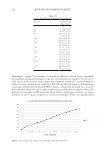
288 JOURNAL OF COSMETIC SCIENCE Based on the values of desirability function and practical experimentations, the optimized chromatographic condition states the use of a mixture of acetonitrile:methanol:ion-pairing reagent maintained at 5:5:90 v/v ratios as the mobile phase flow rate was maintained at 1.5 mL min-1 with a run time of 15 minutes. Methanol was used as a diluent. The detection of analytes was carried out at 225 nm. PREPARATION OF STANDARD STOCK SOLUTION Standard stock was prepared using solutions A (50 mg of resorcinol), B (70 mg of p-phenylenediamine), and C (70 mg of m-aminophenol). Accurately weighed substances were transferred to a 100 mL volumetric flask. To this 50 mL of methanol was added, sonicated using an ultrasonic bath (UCB 30, Spectra Lab, Mumbai, India) for 5 minutes at 25oC to dissolve, and the volume was adjusted to 100 mL. A further 5 mL of these obtained solutions were diluted to 50 mL with methanol. Finally, the standard was prepared by adding 5 mL each of these three solutions (solutions A, B, and C) to a 50 mL volumetric flask and diluting with methanol. PREPARATION OF ION-PAIRING REAGENT The ion-pairing reagent was prepared by dissolving 1.68 g of hexane-1-sulfonic acid in 1 L of water. Then the pH was adjusted to 2.8 with o-phosphoric acid, and finally the solution was filtered through a 0.45 µm nylon syringe filter (Millipore®, Merck Millipore, Mumbai, India) and degassed. PREPARATION OF SAMPLE SOLUTION Two samples of commercial hair dyes were analyzed. Each of the hair color creams were weighed (0.3–0.5 g) using an analytical balance (Denver Instrument, New York, USA) and placed in a volumetric flask. Then 35 mL of methanol was added. The mixture was stirred vigorously for 15 minutes, sonicated using an ultrasonic bath (UCB 30, Spectra Lab, Mumbai, India) for 5 minutes at 25oC, and the volume was made up to 100 mL. A further 5 mL of this preparation was transferred into a 50 mL calibrated flask and diluted to volume using methanol. The final solution was filtered through a 0.45 µm nylon syringe (Millipore®, Merck Millipore, Mumbai, India). ANALYTICAL METHOD DEVELOPMENT AND VALIDATION The stock solution was diluted with methanol to give working standard solutions containing a series of 10–150 µg mL−1 concentrations. These solutions were filled into vials and placed in vial holders. The linearity was determined for resorcinol, p-phenylenediamine, and m-aminophenol by injecting nine concentrations of substances prepared in diluent, and the calibration curves were constructed by plotting peak area against the respective concentrations. The HPLC method was validated according to International Council for Harmonisation of Technical Requirements for Pharmaceuticals for Human Use (ICH) guidelines (29). The

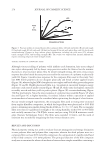
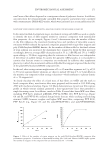
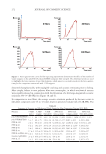
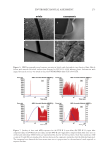
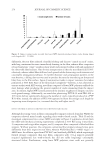
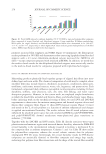
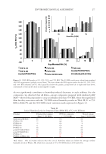
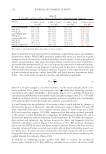
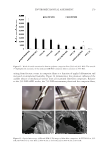
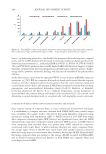
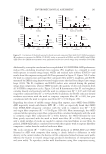
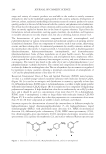
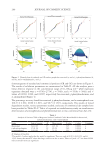
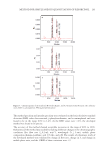
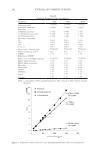
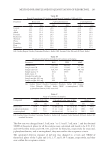
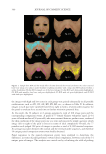
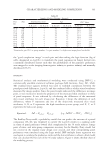
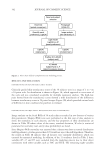
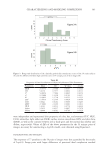
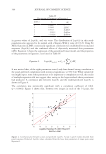
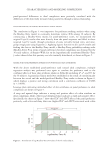
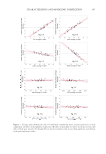
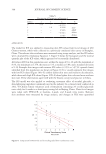
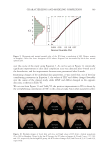
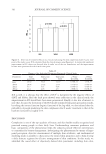
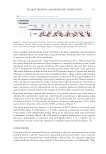
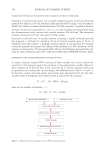
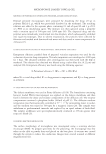
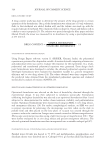
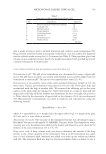
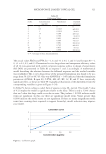
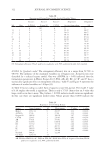
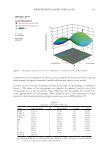
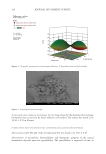
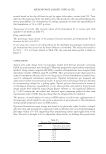
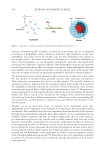
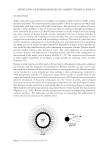
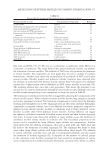
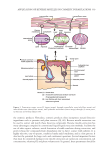
289 METHOD FOR SIMULTANEOUS QUANTITATION OF RESORCINOL system precision was verified by six replicate injections of standard solution. The method precision of the analytes was carried out six times using the proposed method. Repeatability was measured by multiple injections of homogenous samples prepared. Accuracy was carried out by percentage recovery studies at three different concentration levels. To the preanalyzed samples solution, a known amount of resorcinol, p-phenylenediamine, and m-aminophenol were added at 50%, 100%, and 150% levels. The robustness of the method was studied in the sample for flow rate, mobile phase ratio, wavelength, and pH. Ruggedness of the method was performed by two different analysts using the same experimental and environmental conditions as the sample concentration of 50 µg mL−1. The system suitability parameters, such as number of theoretical plates and tailing factor and resolution, were studied. The specificity of the method was demonstrated through forced degradation studies conducted on the sample using acidic, alkaline, oxidative, reductive, thermal, photolytic, humidity, heat, and hydrolytic conditions (30). The sample was exposed to these conditions, and the main peak was studied for the peak purity and percentage degradation. Absence of interfering peaks from blank and placebo with sample and standard peaks demonstrated specificity of the method. Stability of sample solutions was established by analyzing the concentrations of the samples that were stored at 25oC for 24 hours. Samples were reanalyzed after 24 hours and assay was determined. RESULTS AND DISCUSSION The structures of the components in hair dyes are presented in Figure 1. RSM-generated 3D surface plots for the optimized chromatographic conditions are provided in Figure 2. The normal plot of residuals indicates whether the residuals follow a normal probability distribution or not. The 3D surface plots show the attainment of retention times for the simultaneous determination of resorcinol, m-aminophenol, and p-phenylenediamine under the optimized chromatographic conditions. The analysis of variance table for response surface combined cubic × mean model of resorcinol, m-aminophenol, and p-phenylenediamine has been provided in Table I. Considering RSM studies, it was found that the process order fits to combined cubic × mean model. From the solutions obtained using the desirability function it was found that a mobile phase composition ratio of 5:5:90 (ACN: methanol: hexane-1-sulfonic acid) with a flow rate of 1.5 mL min−1 and a run time of 15 minutes gave optimum retention times for simultaneous estimations of resorcinol, m-aminophenol, and p-phenylenediamine. To achieve shorter analysis time, the retention time was indicated as the response variable. We have also considered peak resolution, and the results obtained were within acceptance criteria of 1.5 of all the analytes. The design expert generated the desirability function data, and practical experimentations satisfy these chromatographic conditions. In addition to RSM-based desirability function, to find the optimum separation conditions for a model mixture of resorcinol, p-phenylenediamine, and m-aminophenol on a Luna C 8 column, the influence of separation parameters such as flow rate, ACN, methanol, and an ion-pairing reagent concentration on the retention of analytes were also studied. The proposed chromatographic system was found suitable for effective separation of resorcinol, p-phenylenediamine, and m-aminophenol with t R 7.232–7.273, 9.976–10.114, and 11.639–11.735 minutes, respectively, with sharp peak shapes and minimal tailing. The
Purchased for the exclusive use of nofirst nolast (unknown)
From: SCC Media Library & Resource Center (library.scconline.org)