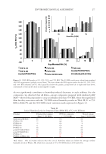
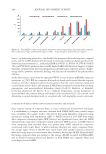
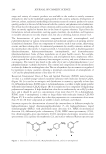
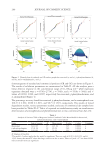
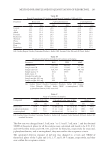
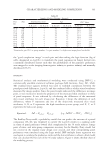
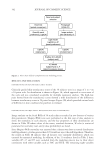
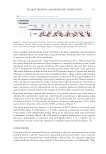
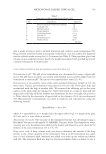
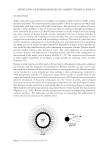
265 Enviromechanical Assessment Although each novel approach offers unique capabilities for characterizing fixative performance, all measurement outcomes share a common factor—the fundamentals of adhesion, which are deeply rooted in polymer science principles. By adopting tenets from adhesion theory, it is worthwhile to visualize how the various modes of practical adhesion may contribute to the strength and durability of fixative-treated hair fiber assemblies (18): (a) chemical interactions—including ionic, Lewis acid/base polar attractions, and hydrogen bonding—promote adhesional strength between the hair fiber and fixative resin at distances of less than a micron (b) physisorption involves the physical adsorption of fixative to the surface of the hair fiber and is driven by weak Lifshitz-van der Waals forces, which are induced electrostatic attractions that take place over short intermolecular distances (c) mechanical interlocking of welds likely occurs as aqueous polymer wets the fiber surface and subsequently dries into hook-and-loop microstructures in the accessible cracks and pores of the fiber and between layers of lifted cuticle cells (d) diffusive processes create an interdigitated bonding interface in which interfacial keratin and long fixative chains entangle and reptate and e) substrate failure, in which the 6 to 10 layers of overlapping cuticle cells introduce sacrificial layers that can be torn from the fiber if the fixative-fiber adhesive strength exceeds the energy to delaminate cuticles from the hair shaft. In the current work, we sought to simplify fixative performance studies by reducing the sample matrix to a planar film composed of dried fixative and dispersed fiber snippets. Outcomes from scanning electron microscopy (SEM), tensile strength, impact testing, dynamic vapor sorption (DVS), DMA-RH, DSC-RH, and DHSA-AED (16) were used to correlate material properties and changes in ambient humidity with the work-to-break neat and fixative-fiber composite films. MATERIALS AND METHODS MATERIALS A description of the polymeric fixatives used in this study is provided in Table I. The absolute weight–average molecular weight (MW) information was determined using GPC/MALLS, and the data reported in Table I was collected from Ashland Inc. technical reports. The fixatives were supplied by Ashland Inc. (Wilmington, DE, USA), and PEG 400 (polyethylene glycol) was furnished by Sigma-Aldrich (St. Louis, MO, USA). The properties of the various fixatives were tested on virgin, bleached, and bleach- dilapidated hair. Chemical oxidation of hair was carried out on medium-density European dark brown hair tresses that were purchased from International Hair Importers &Products Inc. (Glendale, NY, USA). The bleaching mixture was prepared by blending 120 g of Clairol Professional BW2 powder lightener (The Wella Corporation, Woodland Hills, CA, USA) with 147 mL of Salon Care Professional 20 Volume Clear developer (Arcadia Beauty Labs LLC, Reno, NV, USA). The tresses were triple bleached in three successive steps using fresh bleaching solutions, wherein the duration of each bleaching step was 60 minutes. Between bleaching steps, the lightened hair was rinsed with warm tap water. After the final bleaching step, the tresses were washed with 3% (w/w) sodium lauryl ether sulfate. The oxidized hair tresses were then soaked in Milli-Q (Merck KGaA, Darmstadt, Germany) deionized water (18.2 MΩ·cm) for 5 days to gently remove soluble leachate. In addition, sections of the triple-bleached tresses were cut into 5- to 9-mm snippets. The snippets were subsequently soaked in a 4:1 (w/w) chloroform–methanol solvent with gentle

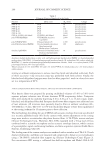
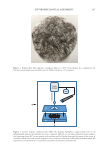
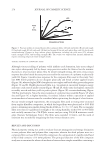
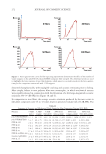
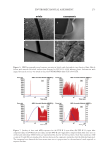
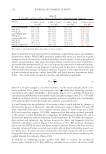
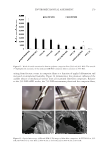
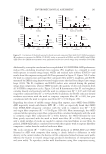
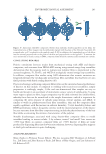
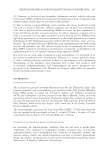
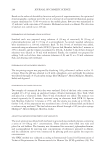
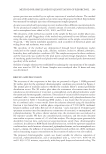
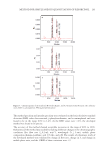
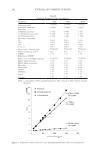
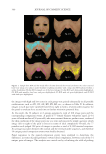
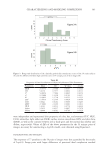
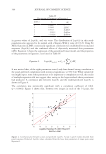
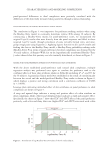
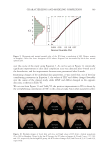
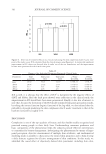
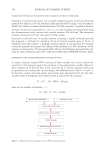
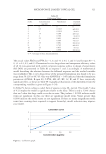
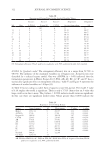
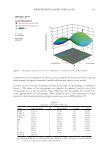
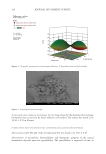
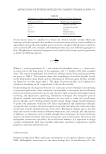
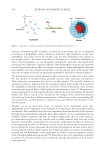
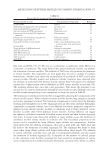
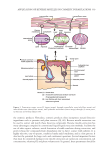
266 JOURNAL OF COSMETIC SCIENCE stirring at ambient temperature to remove most free lipids and adsorbed surfactant. Each of three successive 1-day extraction steps was performed with fresh solvent. Finally, the bleached-and-delipidated snippets were dried on filter paper for 1 week in a forced-air oven set to a temperature of 80°C. AED IN CONJUNCTION WITH MECHANICAL ANALYSIS OF FIXATIVE-FIBER COMPOSITES Neat fixative films were prepared by pouring established volumes of 3.0% or 5.0% (w/w) aqueous polymer solutions into 60-mm diameter PTFE evaporating dishes. Composite films were produced by randomly dispersing 0.10 to 0.20 g of 5- to 15-mm virgin, triple- bleached, and delipidated-bleached European dark brown fiber snippets into additional sets of neat solutions. All mixtures were passively dried to films at ambient conditions (40– 45% RH) for 5 days. The 0.50- to 0.70-mm thick films (Figure 1) were then equilibrated at the testing isohume for 45 minutes prior to data collection. The methodology describing the use of DHSA with acoustic envelope detection was detailed in a recently published study (16). In the current work, minor adjustments to the testing stage were made to accommodate the planar fixative films. A TA.XTplus texture analyzer (Texture Technologies Corp., Hamilton, MA, USA) equipped with a 50-kg load cell was combined with a scientific microphone and an acoustic envelope detector, which consists of a preamplifier, signal conditioning hardware, and data acquisition systems (Stable Micro Systems, Goldaming, UK) (19). The loading arm of the texture analyzer was outfitted with a stainless-steel TA-8 0.25-inch diameter ball probe, and films were mounted and compressed to failure at several isohumes using a TA-108S-5i indexable film support rig (Texture Technologies Corp.) (Figure 2). For concomitant AED testing, a calibrated free-field microphone and Model 4188-A-021 Table I Polymeric Fixatives Employed in the Study Polymer INCI name Mw (kDa) Charge PVP K-15 PVP 10 pseudocationic PVP K-30 PVP 50 pseudocationic PVP K-60 PVP 350 pseudocationic PVP K-90 PVP 1,400 pseudocationic PVP K-120 PVP 1,800 pseudocationic PVP K-30:PEG 400 blenda PVP/PEG-400 Blend blend pseudocationic/nonionic poly(VP/DMAPMA) VP/DMAPA Acrylates Copolymer 2,800 cationic poly(VP/MAPTAC) Polyquaternium-28 1,300 pseudocationic poly(OAA/Acrylates/BAEM) Octylacrylamide/Acrylates/ Butylaminoethyl Methacrylate Copolymer 100 amphoteric Imidized p(IB/MA) Isobutylene/Ethylmaleimide/ Hydroxyethylmaleimide Copolymer 70 pseudocationic Acrylates: methyl methacrylate, acrylic acid, and hydroxypropyl methacrylate BAEM: tert-butylaminoethyl methacrylate DMAPMA: 3-(dimethylaminopropyl) methacrylamide IB: isobutylene MA: maleic anhydride MAPTAC: [3-(methacryloylamino)propyl]trimethylammonium chloride OAA: tert-octylacrylamide PVP: polyvinylpyrrolidone VP: vinyl pyrrolidone. a Blend consisted of 0.1% (w/w) PEG 400 and 1.0% (w/w) PVP K-30, which produced a 1.1% (w/w) polymer solids solution.
Purchased for the exclusive use of nofirst nolast (unknown)
From: SCC Media Library & Resource Center (library.scconline.org)