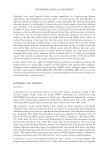
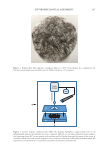
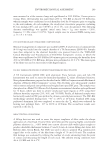
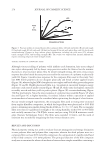
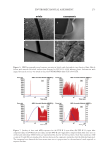
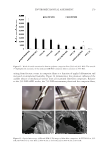
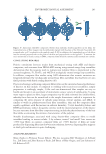
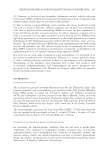
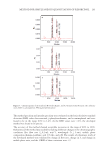
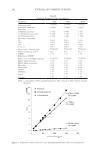
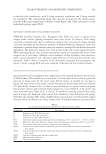
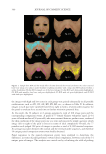
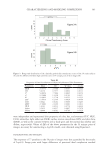
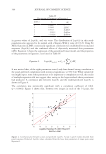
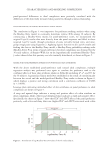
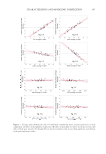
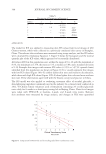
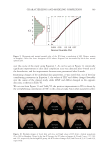
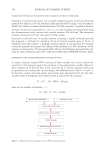
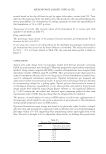
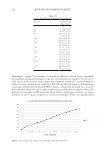
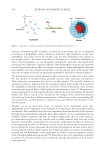
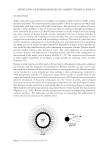
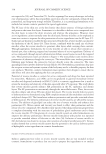
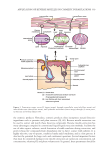
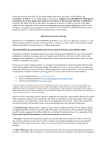
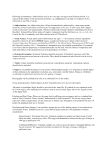
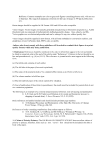
267 Enviromechanical Assessment Figure 1. Polymer-fiber film composite. Composite films are 90% (w/w) polymer. As a comparison, the fixative-treated omega loop assemblies used in DHSA testing are 2% polymer. A Texture Analyzer C B A D AED Figure 2. Texture analyzer combined with AED. The diagram highlights a single testing zone on an indexable film support rig. Initially, the intact composite film (A) was securely fastened between stainless- steel retaining plates (B,C) a one-quarter-inch stainless-steel ball probe then applied pressure to the center of each film, and the force and acoustic responses were recorded as a function of time and penetration depth. All experiments were performed in a humidity-controlled environmental enclosure (D). Compression

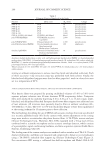
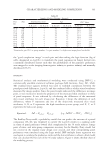
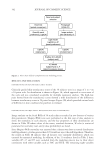
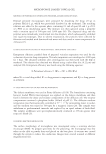
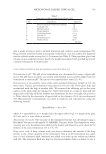
268 JOURNAL OF COSMETIC SCIENCE preamplifier (Brüel-Kjær, Nærum, Denmark) were coupled with the acoustic envelope detector and set at a fixed distance (1.25 cm) from the film surface. The acoustic emissions were collected over a 3- to 12-kHz frequency envelope, and the high-pass corner frequency filter was fixed at 3.125 kHz, which adequately removed high-frequency instrumental noise (19). For all measurements the gain was set to 18 dB. Exponent v.6 software (Stable Micro Systems) was used to record acoustic emissions information as a function of time, in which the acoustic envelope detector summed the total voltage over the set frequency range and converted the calibrated signal to discrete sound pressure level (dB-SPL) values (19). SEM OF DAMAGED NEAT AND FIXATIVE-FIBER COMPOSITE FILMS Film-fiber composites were imaged using field emission SEM. Samples were fixed to aluminum Pelco pin stubs using double-sided 25-mm conductive carbon tabs (Ted Pella, Redding, CA, USA) and then coated with Au/Pd using a high-vacuum Leica EM ACE600 sputter coater (Leica Mikrosysteme GmbH, Wetzlar, Germany). A Hitachi SU-5000 FESEM (Hitachi High Technologies, Schaumburg, IL, USA) was used to image the samples at several magnifications. SINGLE-FIBER CONTACT ANGLE MEASUREMENTS A Biolin Scientific (Gothenburg, Sweden) Sigma700 force tensiometer was used to evaluate the dynamic contact angle (DCA) of individual 2- to 3-mm fiber segments. Each fiber snippet was immersed tip-end first into Milli-Q deionized water, and the advancing contact angle was measured. The measured DCA values include virgin fibers =100 ± 6° bleached fibers =71 ± 4° and delipidated-bleached fibers =67 ± 4°. At least 22 DCA measurements were completed for each type of hair fiber. DMA-RH: CRITICAL HUMIDITY AND VISCOELASTICITY OF FILM-FIBER COMPOSITES The mechanical stiffness of polymeric fixatives is compromised by increased ambient humidity. At a critical humidity level, absorbed water vapor facilitates a water-plasticized glass transition (T g ),which is assessed by a negative inflection in the storage modulus (E’) plateau (intersecting lines method) at a particular isotherm. For our studies, film-fiber composite films were prepared as described in the “AED in Conjunction with Mechanical Analysis of Fixative-Fiber Composites” section. Additionally, composites with porous poly(ethylene terephthalate) (PET) were prepared by saturating PET felt strips in 5% (w/w) solutions of each fixative. The critical humidity measurements were performed uniaxially using a TA Instruments (New Castle, DE, USA) Mark IV DMTA. A custom Model 5503 Electro-Tech Systems Inc. (Perkasie, PA, USA) environmental chamber, which is capable of humidity (2–95% RH) and temperature control, was affixed to the DMA sample stage. After equilibrating samples at 20% RH and 26 ± 1°C, an Electro-Tech Model 5100 RH microcontroller was used to increase the humidity of the isothermal environment from 20% to 90% RH at a rate of 0.5% RH/min. The following dynamic methodology was applied: initial static force =1 g auto tension =120% frequency =1 Hz strain =0.075%. In other work, a Q800 DMA equipped with a DMA-RH fixture (TA Instruments) was used to assess the viscoelasticity of polymer-fiber film composites. The composites
Purchased for the exclusive use of nofirst nolast (unknown)
From: SCC Media Library & Resource Center (library.scconline.org)