14 JOURNAL OF COSMETIC SCIENCE
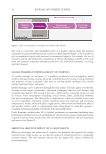
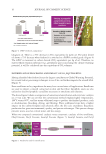
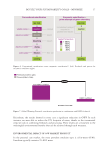
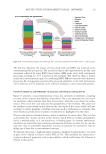
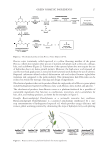
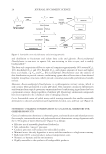
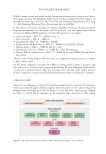
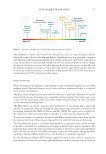
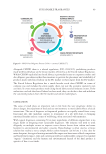
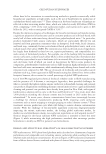
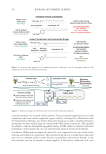
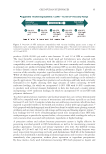
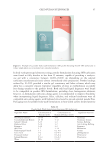
Life cycle is consecutive and interlinked stages of a product system, from raw material
acquisition or generation from natural resources to final disposal (Figure 1). LCA addresses
the environmental aspects and potential environmental impacts, for example, the use of
resources and the environmental consequences of releases throughout a product’s life cycle
from raw material acquisition through production, use, end-of-life treatment, recycling,
and final disposal.
GLOBAL WARMING POTENTIAL IMPACT OF COSMETICS
A circular economy or circularity is “a model of production and consumption, which
involves sharing, leasing, reusing, repairing, refurbishing and recycling existing materials
and products as long as possible” that aims at tackling global challenges like climate
change, biodiversity loss, and waste.2
Global warming can be addressed through four key pillars. The first pillar is feedstocks,
focusing on the origin of materials, cultivation techniques, land use and changes, and
transportation impacts. The second is processes, which involve evaluating energy use and
its sources, water consumption (including virtual water), yields, purification methods,
and waste management. The third pillar is formulations, where we consider factors such
as active ingredients, renewable content, multifunctional raw materials, and processing
temperatures. Finally, the fourth pillar is applications, which examine formulation efficacy
and product forms—such as transitioning from water-based to water-free options—
requiring minimal packaging and thereby reducing landfill waste.
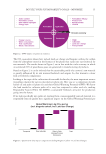
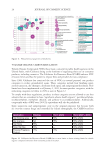
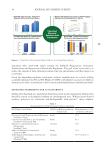
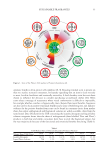
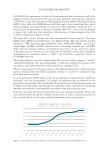
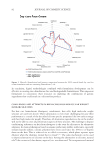
Circle Economy calculates that 62% of global greenhouse gas emissions (excluding those
from land use and forestry) are released during the extraction, processing, and manufacturing
of goods to serve society’s needs only 38% are emitted in the delivery and use of products
and services (see Figure 2).
FEEDSTOCK SELECTION IMPACT ON CO2 EQUIVALENTS
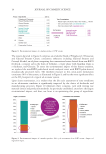
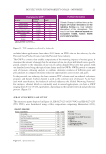
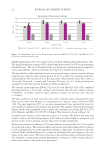
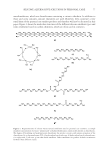
When we investigate the production of cosmetic raw materials and quantify the carbon
footprint from cradle-to-gate, we see that the impact of transportation has a comparably
minimal impact. The raw material selection has the largest CO
2 impact, followed by
processing/energy.
Figure 1. Life cycle assessment (according to ISO 14040 /ISO 14044).1
Life cycle is consecutive and interlinked stages of a product system, from raw material
acquisition or generation from natural resources to final disposal (Figure 1). LCA addresses
the environmental aspects and potential environmental impacts, for example, the use of
resources and the environmental consequences of releases throughout a product’s life cycle
from raw material acquisition through production, use, end-of-life treatment, recycling,
and final disposal.
GLOBAL WARMING POTENTIAL IMPACT OF COSMETICS
A circular economy or circularity is “a model of production and consumption, which
involves sharing, leasing, reusing, repairing, refurbishing and recycling existing materials
and products as long as possible” that aims at tackling global challenges like climate
change, biodiversity loss, and waste.2
Global warming can be addressed through four key pillars. The first pillar is feedstocks,
focusing on the origin of materials, cultivation techniques, land use and changes, and
transportation impacts. The second is processes, which involve evaluating energy use and
its sources, water consumption (including virtual water), yields, purification methods,
and waste management. The third pillar is formulations, where we consider factors such
as active ingredients, renewable content, multifunctional raw materials, and processing
temperatures. Finally, the fourth pillar is applications, which examine formulation efficacy
and product forms—such as transitioning from water-based to water-free options—
requiring minimal packaging and thereby reducing landfill waste.
Circle Economy calculates that 62% of global greenhouse gas emissions (excluding those
from land use and forestry) are released during the extraction, processing, and manufacturing
of goods to serve society’s needs only 38% are emitted in the delivery and use of products
and services (see Figure 2).
FEEDSTOCK SELECTION IMPACT ON CO2 EQUIVALENTS
When we investigate the production of cosmetic raw materials and quantify the carbon
footprint from cradle-to-gate, we see that the impact of transportation has a comparably
minimal impact. The raw material selection has the largest CO
2 impact, followed by
processing/energy.
Figure 1. Life cycle assessment (according to ISO 14040 /ISO 14044).1