16 JOURNAL OF COSMETIC SCIENCE
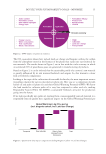
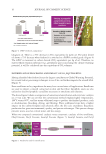
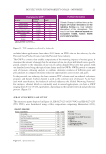
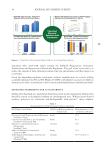
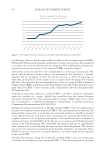
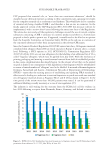
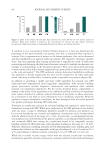
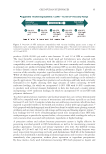
kilogram oil. There is a 78% decrease in CO
2 equivalents for palm oil. The palm kernel
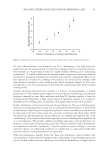
oil shows a 73% decrease when feedstock is switched to a RSPO certified grade. (Figure 4)
The GWP is measured in carbon dioxide (CO
2 )equivalents per kg of oil. Therefore, no
matter which emission substance (e.g., greenhouse gas) is increasing the climate warming
potential, it will be calculated into the equivalent of CO
2 volumes.
ESTERIFICATION PROCESSING AND IMPACT ON CO2 EQUIVALENTS
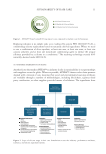
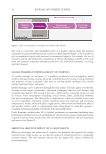
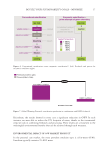
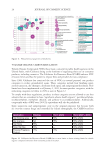
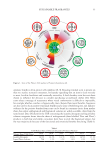
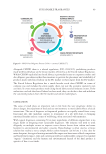
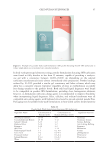
Having identified that feedstocks are the largest contributor to Global Warming Potential,
let us now look at processing techniques to see if we can further improve the overall LCA.
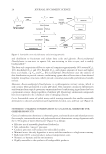
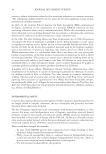
(Figure 5).
Ester emollients are key ingredients for many leave-on and rinse-off applications. Emollients
are used to impart a smooth caring feel on skin and hair fiber. Lipophilic esters are also
utilized to dissolve lipophilic crystalline structures in emulsions and solutions.
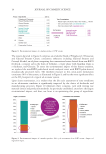
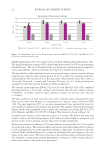
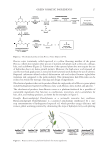
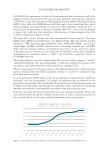
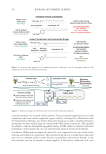
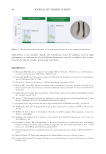
The above Figure 6 shows a comparison of conventional esterification and enzymatic catalysis
on a 5-ton scale. We can see that the conventional method employs higher temperatures,
180°C versus 60°C, and has many additional steps to produce the finished products, such
as deodorization, bleaching, drying, and filtering. These additional steps have a higher
impact on the carbon footprint and adversely affect the life cycle assessment. Enzymatic
production has great environmental, quality, and process advantages. This process change
prevents waste, uses less virtual water, and less energy.
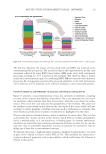
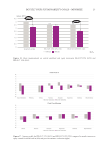
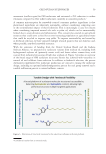
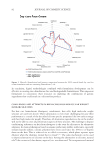
When we compared conventional catalysis verses enzymatic catalysis of five emollients
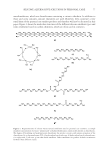
Oleyl Erucate, Decyl Cocoate, Isoamyl Cocoate (Figure 7), Isoamyl Laurate, and Cetyl
Figure 4. GWP: feedstock comparison.3
Figure 5. Feedstocks used for esterification.
kilogram oil. There is a 78% decrease in CO
2 equivalents for palm oil. The palm kernel
oil shows a 73% decrease when feedstock is switched to a RSPO certified grade. (Figure 4)
The GWP is measured in carbon dioxide (CO
2 )equivalents per kg of oil. Therefore, no
matter which emission substance (e.g., greenhouse gas) is increasing the climate warming
potential, it will be calculated into the equivalent of CO
2 volumes.
ESTERIFICATION PROCESSING AND IMPACT ON CO2 EQUIVALENTS
Having identified that feedstocks are the largest contributor to Global Warming Potential,
let us now look at processing techniques to see if we can further improve the overall LCA.
(Figure 5).
Ester emollients are key ingredients for many leave-on and rinse-off applications. Emollients
are used to impart a smooth caring feel on skin and hair fiber. Lipophilic esters are also
utilized to dissolve lipophilic crystalline structures in emulsions and solutions.
The above Figure 6 shows a comparison of conventional esterification and enzymatic catalysis
on a 5-ton scale. We can see that the conventional method employs higher temperatures,
180°C versus 60°C, and has many additional steps to produce the finished products, such
as deodorization, bleaching, drying, and filtering. These additional steps have a higher
impact on the carbon footprint and adversely affect the life cycle assessment. Enzymatic
production has great environmental, quality, and process advantages. This process change
prevents waste, uses less virtual water, and less energy.
When we compared conventional catalysis verses enzymatic catalysis of five emollients
Oleyl Erucate, Decyl Cocoate, Isoamyl Cocoate (Figure 7), Isoamyl Laurate, and Cetyl
Figure 4. GWP: feedstock comparison.3
Figure 5. Feedstocks used for esterification.