22 JOURNAL OF COSMETIC SCIENCE
Ethylhexyl Salicylate (5%), Octocrylene (4%), and Butyl Methoxydibenzoylmethane (3%).
The initial formulation contained 62% ethanol, which was reduced to 55% by incorporating
Isoamyl Laurate. The use of Isoamyl Laurate was based on its physicochemical properties,
such as spreadability, which could mimic the behavior of ethanol in this matrix.
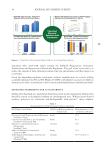
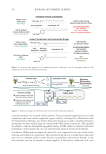
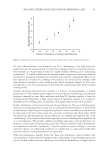
The spreadability of the formulated system was reviewed using an internal system utilizing
polypropylene substrate with a dosing level of 50 µl. To evaluate the spreading properties,
a polypropylene film was placed on a flat glass plate. Measurements (mm) were taken at
15 seconds, 30 seconds, 1 minute, and 5 minutes. The area, A =πr2, of the spreading was
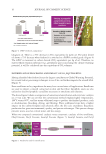
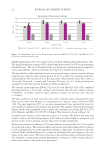
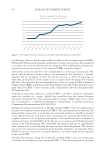
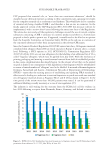
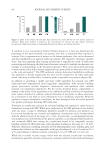
calculated at each time interval. Results are shown in Figure 15.
The internal spray sunscreens EK-6127-1254 (62%) and EK-6127-1255 (55%) exhibited
spreading behavior at 30-second, 1-minute, and 5-minute intervals that remains constant
(∼950mm2). A market sunscreen spray remained constant for all four time intervals
(∼313mm2).
The gloss attributes of each sunscreen spray were evaluated. Gloss measurements were
taken on the inner volar forearm at a concentration of 2 mg/cm2 using a Zehntner ZGM
1130. The gloss angle was 85°C. In vivo gloss measurements were repeated five times for
each sample at 1-minute and 5-minute time intervals. The samples evaluated were Isoamyl
Laurate made with responsibly sourced palm and enzymatic processing, EK-6127-1254
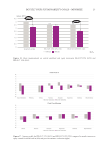
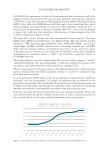
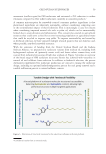
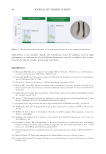
(62% Ethanol), and EK-6127-1255 (55% Ethanol). The results are shown in Figure 16.
Isoamyl Laurate showed a 22% reduction in gloss at 5 minutes. We believe this reduction
in gloss is due to the branched geometry of the molecule, which enhances absorption, and
the low surface tension and low viscosity that result in high spreadability.
We also observed that the addition of 7% Isoamyl Laurate to formula EK-6127-1255 resulted
in a reduction in gloss. The sunscreen filters used in this system have high refractive indices
(1.5), and high refractive index ingredients produce a high gloss on substrates like skin
and hair. If the individual filters were to come out of solution, they would appear to be very
glossy on the skin surface. We believe that due to the medium polarity of Isoamyl Laurate,
this emollient is maintaining solution homogeneity, resulting in a lower average refractive
index of the solution, and producing a lower gloss.
Figure 15. Spreadability data for the internal spray sunscreens EK-6127-1254 (62%) and EK-6127-1255
(55%) and a market sunscreen spray.
Ethylhexyl Salicylate (5%), Octocrylene (4%), and Butyl Methoxydibenzoylmethane (3%).
The initial formulation contained 62% ethanol, which was reduced to 55% by incorporating
Isoamyl Laurate. The use of Isoamyl Laurate was based on its physicochemical properties,
such as spreadability, which could mimic the behavior of ethanol in this matrix.
The spreadability of the formulated system was reviewed using an internal system utilizing
polypropylene substrate with a dosing level of 50 µl. To evaluate the spreading properties,
a polypropylene film was placed on a flat glass plate. Measurements (mm) were taken at
15 seconds, 30 seconds, 1 minute, and 5 minutes. The area, A =πr2, of the spreading was
calculated at each time interval. Results are shown in Figure 15.
The internal spray sunscreens EK-6127-1254 (62%) and EK-6127-1255 (55%) exhibited
spreading behavior at 30-second, 1-minute, and 5-minute intervals that remains constant
(∼950mm2). A market sunscreen spray remained constant for all four time intervals
(∼313mm2).
The gloss attributes of each sunscreen spray were evaluated. Gloss measurements were
taken on the inner volar forearm at a concentration of 2 mg/cm2 using a Zehntner ZGM
1130. The gloss angle was 85°C. In vivo gloss measurements were repeated five times for
each sample at 1-minute and 5-minute time intervals. The samples evaluated were Isoamyl
Laurate made with responsibly sourced palm and enzymatic processing, EK-6127-1254
(62% Ethanol), and EK-6127-1255 (55% Ethanol). The results are shown in Figure 16.
Isoamyl Laurate showed a 22% reduction in gloss at 5 minutes. We believe this reduction
in gloss is due to the branched geometry of the molecule, which enhances absorption, and
the low surface tension and low viscosity that result in high spreadability.
We also observed that the addition of 7% Isoamyl Laurate to formula EK-6127-1255 resulted
in a reduction in gloss. The sunscreen filters used in this system have high refractive indices
(1.5), and high refractive index ingredients produce a high gloss on substrates like skin
and hair. If the individual filters were to come out of solution, they would appear to be very
glossy on the skin surface. We believe that due to the medium polarity of Isoamyl Laurate,
this emollient is maintaining solution homogeneity, resulting in a lower average refractive
index of the solution, and producing a lower gloss.
Figure 15. Spreadability data for the internal spray sunscreens EK-6127-1254 (62%) and EK-6127-1255
(55%) and a market sunscreen spray.