24 JOURNAL OF COSMETIC SCIENCE
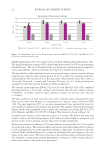
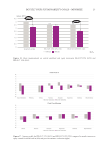
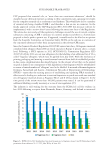
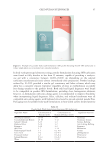
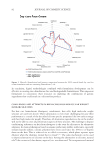
A sensory evaluation was conducted using a descriptive analysis of paired comparison to
identify differences between the two internally formulated spray sunscreens and the market
benchmark. Eight attributes were evaluated during application: ease of distribution,
whitening, oiliness, waxiness, absorption, slipperiness, stickiness, and silky-/velvetiness. An
additional six attributes were evaluated at 5 minutes post-application, including oiliness,
waxiness, absorption, slipperiness, stickiness, and silky-/velvetiness. The scale used was
significantly less (-2), slightly less (-1), identical (0), slightly more (+1), and significantly
more (+2). The dosing level was 2 mg/cm2.
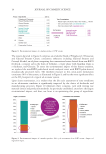
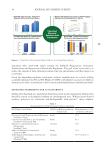
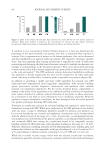
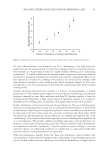
According to the sensory results (Figure 17), it is possible to decrease the VOC level from
62% to 55% by carefully selecting emollients based on their physiochemical properties,
without compromising the formula’s aesthetics. By substituting with Isoamyl Laurate,
which has a low viscosity and high spreadability, the VOC level can be further reduced,
resulting in decreased oiliness and waxiness, and increased silky/velvetiness of the product.
CONCLUSION
Today’s consumers are increasingly aware of the importance of sustainability and are
demanding sustainable solutions in various industries, including the personal care industry.
Many companies are placing sustainability at the center of their research and development
efforts and identifying key parameters that will support market needs. Our research has
demonstrated that with careful selection of raw material feedstocks in combination with
green biotechnological processes, such as enzymatic catalysis, we can significantly influence
the CO
2 emissions in manufacturing. These sustainable enzymatic emollients can be used
in traditional cometic applications to reduce the CO
2 footprint, or they can be sustainable
solutions to reduce VOC levels while maintaining key parameters such as spreadability,
minimizing gloss on skin, and sensory attributes. By adopting these sustainable practices,
companies can meet the growing demand for eco-friendly personal care products and help
reduce the environmental impact of the industry.
REFERENCES
(1) SO 14044:2006 – Environmental management — Life cycle assessment — Requirements and guidelines.
Available at: https://www.iso.org/standard/38498.html
(2) Circularity Gap Report 2019 |European Circular Economy Stakeholder Platform. Available at: https://
circulareconomy.europa.eu/platform/en/knowledge/circularity-gap-report-2019
(3) Schmidt J, De Rosa M. Comparative LCA of RSPO-Certified Palm Oil – Executive Summary 2019.
(4) Sheldon RA. ‘Atom utilisation, E factors and the caralytic solution,’ C.R. Acad. sci. Ser. llc. Chim.
2000:541-551.
(5) Anastas P, Warner JC. Green chemistry Theor Pract. Oxford University. 1998.
(6) The 12 Principles of Green Chemistry. Available at: https://www.acs.org/content/acs/en/greenchemistry/
principles/12-principles-of-green-chemistry.html
A sensory evaluation was conducted using a descriptive analysis of paired comparison to
identify differences between the two internally formulated spray sunscreens and the market
benchmark. Eight attributes were evaluated during application: ease of distribution,
whitening, oiliness, waxiness, absorption, slipperiness, stickiness, and silky-/velvetiness. An
additional six attributes were evaluated at 5 minutes post-application, including oiliness,
waxiness, absorption, slipperiness, stickiness, and silky-/velvetiness. The scale used was
significantly less (-2), slightly less (-1), identical (0), slightly more (+1), and significantly
more (+2). The dosing level was 2 mg/cm2.
According to the sensory results (Figure 17), it is possible to decrease the VOC level from
62% to 55% by carefully selecting emollients based on their physiochemical properties,
without compromising the formula’s aesthetics. By substituting with Isoamyl Laurate,
which has a low viscosity and high spreadability, the VOC level can be further reduced,
resulting in decreased oiliness and waxiness, and increased silky/velvetiness of the product.
CONCLUSION
Today’s consumers are increasingly aware of the importance of sustainability and are
demanding sustainable solutions in various industries, including the personal care industry.
Many companies are placing sustainability at the center of their research and development
efforts and identifying key parameters that will support market needs. Our research has
demonstrated that with careful selection of raw material feedstocks in combination with
green biotechnological processes, such as enzymatic catalysis, we can significantly influence
the CO
2 emissions in manufacturing. These sustainable enzymatic emollients can be used
in traditional cometic applications to reduce the CO
2 footprint, or they can be sustainable
solutions to reduce VOC levels while maintaining key parameters such as spreadability,
minimizing gloss on skin, and sensory attributes. By adopting these sustainable practices,
companies can meet the growing demand for eco-friendly personal care products and help
reduce the environmental impact of the industry.
REFERENCES
(1) SO 14044:2006 – Environmental management — Life cycle assessment — Requirements and guidelines.
Available at: https://www.iso.org/standard/38498.html
(2) Circularity Gap Report 2019 |European Circular Economy Stakeholder Platform. Available at: https://
circulareconomy.europa.eu/platform/en/knowledge/circularity-gap-report-2019
(3) Schmidt J, De Rosa M. Comparative LCA of RSPO-Certified Palm Oil – Executive Summary 2019.
(4) Sheldon RA. ‘Atom utilisation, E factors and the caralytic solution,’ C.R. Acad. sci. Ser. llc. Chim.
2000:541-551.
(5) Anastas P, Warner JC. Green chemistry Theor Pract. Oxford University. 1998.
(6) The 12 Principles of Green Chemistry. Available at: https://www.acs.org/content/acs/en/greenchemistry/
principles/12-principles-of-green-chemistry.html