45 Sustainable Fragrances
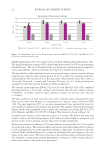
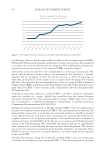
Pre-REACH the requirement for data on the environmental fate of chemicals used by the
fragrance industry was limited and focused on new substances in Europe and substances
1000 lbs/y in the USA through the EPA High Production Volume Challenge Program
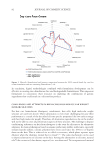
(HPV). A key objective of REACH was to fill data gaps to better understand the risks of
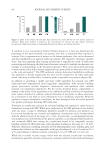
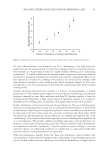
chemical spillage and contamination of wastewater. This additional testing has led to a
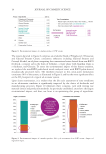
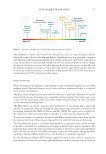
sharp increase in the number of substances classified H410-412, “very toxic/toxic/harmful
to aquatic life”, with more than a doubling of the substances in these categories from 2010
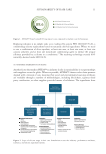
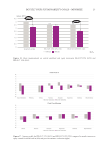
to 2023 as illustrated in Figure 7 below.
The latest CLP revision includes two new environmental hazard categories, Persistent,
Mobile, Toxic (PMT) and very Persistent, very Mobile (vPvM). The most severely classified
substances – PBT (Persistent, Bioaccumulative, Toxic), vPvB, PMT, vPvM – are seen in a
similar light to CMR 1 and ED 1 discussed above concerning “essential use” and SSbD.
Today only four fragrance industry used materials meet these criteria, and all are subject
to European bans as substances of very high concern: Karanal®, musk xylol, butylphenyl
methylpropional (commonly known as Lilal®) and Octitrizole (commonly known as
CYASORB® W-5411)
The biodegradability status of a material today falls into one of three categories, “readily”,
“inherently/ultimately” and “not biodegradable”. It may seem simple but in practice there
are nuances, especially around how natural extracts are considered [40].
There is some good news. The renewed focus on biodegradation has led to additional more
rigorous testing within the OECD guidelines leading to a number of substances being
reclassified more favourably.
It can be questioned whether there is room for an additional category between “inherently/
ultimately” and “not biodegradable”, for example for substances that are shown to be not
persistent or degrade abiotically, provided that the metabolites or transformation products can
be shown to be degradable. The extended test conditions in (EU) 2023/2055 for considering
whether a microparticle is biodegradable are perhaps a first step in this direction.
In the past, materials which were persistent but inert were considered acceptable. Today, with
zero pollution ambitions and less confidence in the notion of “inert”, persistent materials are
less accepted, and we can anticipate a gradual replacement in the coming years.
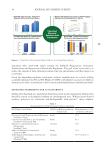
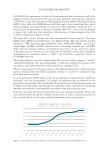
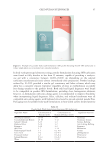
Figure 7. Percentage of chemical substances in the IFRA Labelling Manual classified H410-412.
Pre-REACH the requirement for data on the environmental fate of chemicals used by the
fragrance industry was limited and focused on new substances in Europe and substances
1000 lbs/y in the USA through the EPA High Production Volume Challenge Program
(HPV). A key objective of REACH was to fill data gaps to better understand the risks of
chemical spillage and contamination of wastewater. This additional testing has led to a
sharp increase in the number of substances classified H410-412, “very toxic/toxic/harmful
to aquatic life”, with more than a doubling of the substances in these categories from 2010
to 2023 as illustrated in Figure 7 below.
The latest CLP revision includes two new environmental hazard categories, Persistent,
Mobile, Toxic (PMT) and very Persistent, very Mobile (vPvM). The most severely classified
substances – PBT (Persistent, Bioaccumulative, Toxic), vPvB, PMT, vPvM – are seen in a
similar light to CMR 1 and ED 1 discussed above concerning “essential use” and SSbD.
Today only four fragrance industry used materials meet these criteria, and all are subject
to European bans as substances of very high concern: Karanal®, musk xylol, butylphenyl
methylpropional (commonly known as Lilal®) and Octitrizole (commonly known as
CYASORB® W-5411)
The biodegradability status of a material today falls into one of three categories, “readily”,
“inherently/ultimately” and “not biodegradable”. It may seem simple but in practice there
are nuances, especially around how natural extracts are considered [40].
There is some good news. The renewed focus on biodegradation has led to additional more
rigorous testing within the OECD guidelines leading to a number of substances being
reclassified more favourably.
It can be questioned whether there is room for an additional category between “inherently/
ultimately” and “not biodegradable”, for example for substances that are shown to be not
persistent or degrade abiotically, provided that the metabolites or transformation products can
be shown to be degradable. The extended test conditions in (EU) 2023/2055 for considering
whether a microparticle is biodegradable are perhaps a first step in this direction.
In the past, materials which were persistent but inert were considered acceptable. Today, with
zero pollution ambitions and less confidence in the notion of “inert”, persistent materials are
less accepted, and we can anticipate a gradual replacement in the coming years.
Figure 7. Percentage of chemical substances in the IFRA Labelling Manual classified H410-412.