47 Sustainable Fragrances
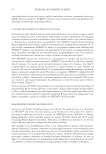
In early 2024, there have been EU initiatives at the state level to introduce legislation to
limit PFAS that could enter into force before the proposal under REACH. In February
2025, LOI No. 2025-188 was passed into French Law, and will prohibit the manufacture,
import, export and placing on the market of any cosmetic product containing PFAS from
January 2026. The text does acknowledge a minimum concentration needs to be defined
for trace contamination below which the law would not apply.
Whilst PFAS are not intentionally used in the fragrance industry as ingredients one can
imagine that trace levels of PFAS could eventually be found in fragrance oil from, for
example, manufacturing steps where materials come into contact with Teflon O-rings or
other trace contamination. As legislators shift from “intentionally added” to restrictions at
ppb level in the EU, or in the US to PQL, the risks of being over a limit increases. Zero
doesn’t exist, and each year the threshold of detection lowers.
HUMAN ETHICAL CONSIDERATIONS
In some ways, this is one of the most difficult yet important issues for the industry.
Amongst the possible ethical considerations like cultural and gender diversity, religious
freedom, the two topics that have emerged as most sensitive are labour practices and fair or
living wage, often termed modern slavery. The subject is difficult because these aspects are
rarely if ever disclosed by suppliers and need to be identified by whistle blowers or on-site
audits. The point of focus of companies and civil society also evolves over time, influenced
by legislation, social media and political events.
Unacceptable labour practices can take the form of using child labour, migrant labour, prison
labour, or taking advantage of disadvantaged communities. Many companies refer to the
Dhaka Principles for Migrant Workers [43] as guidelines to be followed for the employment
of migrant workers, including the Employer Pays Principle related to fees for employment.
The subject of fair or living wage, now included in CSDDD, is a complex issue. The
Anker Institute [44] and the Global Living Wage Coalition [45] are considered amongst
the best methodology and data sources, especially for commodities and more urban areas,
however these cannot always be readily extrapolated to smaller volume naturals used by the
fragrance industry, often in rural areas. Other difficulties faced are access to primary data
and translation to seasonal, part-time work, often paid by volume not time. The Anker
methodology also needs to be adapted to be applicable for Europe. Another source of living
wage estimates is Wageindicator [46] and IDH, a Dutch NGO, has developed a process
to recognise robust living wage benchmark methodologies available in the market and
provides a tool to helps companies find credible living wage benchmarks [47].
A default position on wages adopted by many is to consider the minimum national wage,
where in general there is an official government figure [48, 49].
Many ethical issues are primarily country issues rather than specific crop issues so traceability
of natural raw materials or renewable feedstocks to at least the country of origin is essential
and transparency along the supply chain has improved significantly over recent years.
Publicly available information concerning labour risks, concerned countries or regions and
concerned goods is available from UNICEF [50], the Internation Labor Organisation (ILO)
[51] and the Bureau of International Labor Affairs of the US Department of Labor [52]. A
number of companies such as Sedex and Maplecroft provide commercial risk indices, often
In early 2024, there have been EU initiatives at the state level to introduce legislation to
limit PFAS that could enter into force before the proposal under REACH. In February
2025, LOI No. 2025-188 was passed into French Law, and will prohibit the manufacture,
import, export and placing on the market of any cosmetic product containing PFAS from
January 2026. The text does acknowledge a minimum concentration needs to be defined
for trace contamination below which the law would not apply.
Whilst PFAS are not intentionally used in the fragrance industry as ingredients one can
imagine that trace levels of PFAS could eventually be found in fragrance oil from, for
example, manufacturing steps where materials come into contact with Teflon O-rings or
other trace contamination. As legislators shift from “intentionally added” to restrictions at
ppb level in the EU, or in the US to PQL, the risks of being over a limit increases. Zero
doesn’t exist, and each year the threshold of detection lowers.
HUMAN ETHICAL CONSIDERATIONS
In some ways, this is one of the most difficult yet important issues for the industry.
Amongst the possible ethical considerations like cultural and gender diversity, religious
freedom, the two topics that have emerged as most sensitive are labour practices and fair or
living wage, often termed modern slavery. The subject is difficult because these aspects are
rarely if ever disclosed by suppliers and need to be identified by whistle blowers or on-site
audits. The point of focus of companies and civil society also evolves over time, influenced
by legislation, social media and political events.
Unacceptable labour practices can take the form of using child labour, migrant labour, prison
labour, or taking advantage of disadvantaged communities. Many companies refer to the
Dhaka Principles for Migrant Workers [43] as guidelines to be followed for the employment
of migrant workers, including the Employer Pays Principle related to fees for employment.
The subject of fair or living wage, now included in CSDDD, is a complex issue. The
Anker Institute [44] and the Global Living Wage Coalition [45] are considered amongst
the best methodology and data sources, especially for commodities and more urban areas,
however these cannot always be readily extrapolated to smaller volume naturals used by the
fragrance industry, often in rural areas. Other difficulties faced are access to primary data
and translation to seasonal, part-time work, often paid by volume not time. The Anker
methodology also needs to be adapted to be applicable for Europe. Another source of living
wage estimates is Wageindicator [46] and IDH, a Dutch NGO, has developed a process
to recognise robust living wage benchmark methodologies available in the market and
provides a tool to helps companies find credible living wage benchmarks [47].
A default position on wages adopted by many is to consider the minimum national wage,
where in general there is an official government figure [48, 49].
Many ethical issues are primarily country issues rather than specific crop issues so traceability
of natural raw materials or renewable feedstocks to at least the country of origin is essential
and transparency along the supply chain has improved significantly over recent years.
Publicly available information concerning labour risks, concerned countries or regions and
concerned goods is available from UNICEF [50], the Internation Labor Organisation (ILO)
[51] and the Bureau of International Labor Affairs of the US Department of Labor [52]. A
number of companies such as Sedex and Maplecroft provide commercial risk indices, often