J. Soc. Cosmet. Chem., 38, 419-433 (November/December 1987) Characteristics of poly(oxytetramethylene) poly(glyceryl) alkyl ether nonionic surfactants as emulsifiers H. SAGITANI, M. OCHIAI, and K. ITOH, Pola Corporation, Yokohama Research Laboratories, 27-1, Takashimadai, Kanagawa-ku, Yokohama, 221, Japan. Received March 19, 1987. Presented at the 14th I.F.S. C. C. Congress, Barcelona, September 16-19, 1986. Synopsis Poly(oxytetramethylene) (x) poly(glyceryl) (y) alkyl ether (R.TxGy) was synthesized from fatty alcohol, tetrahydrofuran, and glycidol under a Lewis acid catalyst. To investigate the usefulness of this type of nonionic surfactant as an emulsifier in cosmetics, the emulsifying properties were compared with poly(ox- yethylene) (x) alkyl ether (R,EOx). The HLB-values (hydrophilic lipophilic balance) of R,TxGy ranged from 7 to 30. It is notable that this is the first ultrahydrophilic nonionic surfactant that possesses excellent emulsifying ability. By using phase diagrams, the reasons why the HLB-values of R•TxGy exceeded 20 were discussed. A lameliar liquid crystalline phase and O/W emulsions are formed by the addition of water to a W/O microemulsion in the R•T•Gy system, whereas a W/O emulsion was formed by the addition of water to the W/O microemulsion in the R•EOx system. This difference in solution behavior is why R.T•Gy provides a higher HLB-value and finer O/W emulsions. The dermal and eye irritation levels of R•T•Gy are lower than those of R•EO•. We conclude that RnT•Gy is useful as an emulsifier for cosmetics. INTRODUCTION Poly(oxyethylene) (POE)-type nonionic surfactants are now widely used in cosmetics because of their fine properties as emulsifiers, solubilizers, and dispersants. The solu- tion behavior of nonionic surfactants is generally independent of pH, and the dermal irritation of nonionic surfactants is generally lower than that of ionic surfactants (1,2). The former have been used for more than 35 years in cosmetics (3-5). The appearance, rheology, and feel of emulsion products are strongly influenced by the type of surfac- rants used (6,7). Therefore, it should be beneficial to develop nonionic surfactants that do not have an ethylene oxide chain in the production of new types of cosmetics. The irritation level of high-molecular-weight surfactants is generally lower than that of surfactants of low molecular weight (8). Nonionic surfactants, having a long polyox- yethylene chain, have a low irritation potential (9). However, such surfactants are gen- erally too hydrophilic to make fine emulsions (10). Polyglyceryl fatty acid esters are commercially available, but they do not possess suffi- cient emulsifying ability (11,12). (The ranges of HLB-values are from 3 to 15). 419

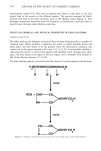
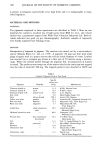
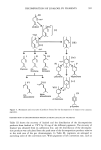
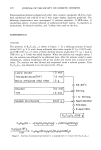
420 JOURNAL OF THE SOCIETY OF COSMETIC CHEMISTS Poly(oxytetramethylene) poly(glyceryl) alkyl ether random copolymers (RnTxGy) have been synthesized and studied to see if they might display improved properties. The following characteristics were investigated: 1) solution properties, 2) HLB-value, 3) emulsifying ability, 4) phase behavior of surfactant/oil/water system, 5) properties as moisturizers, 6) chemical stability, and 7) safety when used on the skin. EXPERIMENTAL SYNTHESIS The synthesis of R12T2.2G3.1 is shown in Figure 1. To a refluxing solution of lauryl alcohol (62.1 g, 0.33 mob, boron trifluoride ethyl ether complex (0.5 g, 0.0035 mol), and THF (180.3 g, 2.5 mob, a freshly distilled solution of gtycidol (74.1 g, 1 mol) in THF (36.1 g, 0.5 mol) was added dropwise. When the addition was complete (about 1 hr), the solution was refluxed for an additional hour. After the mixture cooled to room temperature, sod. ium bicarbonate (20 g) was added and stirred over a period of two hours. The mixture was then filtered and evaporated under a reduced pressure. Thus R12T2.2G3.1 was obtained in an oily state (yield, 202 g). Lauryl alcohol 1.0 mol Tetrahydrofuran(THF) Boron trifluoride ethyl ether 7.5 mol 1.5 g Glycidol 3.0 mol THF 1.5 mol J Sodium bicarbonate 60.0 g 64-65'C Stirring I hr Stirring Neutralization Filtration Evaporation [ R,2T2.2G3., 606 cJ l Ci2H250H + xCH2CH2CH2CH2? + yHOCH21CHCH210 I (C2H5)20' BF3 THF = C 12H250[(CH2)40]x[IC3H5{O H)OJyH Figure 1. Synthesis of poly(oxytetramethylene) (2.2) poly(glyceryl) (3.1) lauryl ether (R•2T2.2G3.•).
Purchased for the exclusive use of nofirst nolast (unknown)
From: SCC Media Library & Resource Center (library.scconline.org)