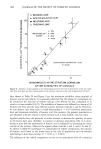
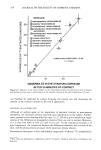
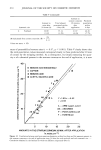
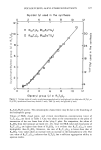
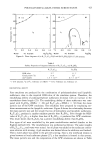
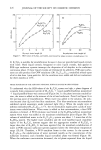
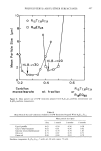
j. Soc. Cosmet. Chem., 38, 397-417 (November/December 1987) An original predictive method for in vivo percutaneous absorption studies ANDR]2 ROUGIER, CLAIRE LOTTE, and DIDIER DUPUIS, Ddpartement de Biologie, Centre de Recherche Fondamentale de l'Oreal, 1 Avenue Eugene Schueller, 93 600 Aulnay sous Bols, France. Received March 2, 1987. Award for best paper presented at the Annual ScientijS'c Meeting of the Society of Cosmetic Chemists, New York, December 4-5, 1986. Synopsis Barrier function is doubtless one of the most important skin functions. It restricts entry by obstructing the inward uptake of molecules and participates in the homeostasis of the organism, in particular by limiting the outward movement of water. It is well established that the main barrier is constituted by the stratum corneum which also acts as a "reservoir" for molecules topically applied. Our findings in animal and in man clearly show that these two principal functions of the horny layer are intimately linked. Thus, there exists a linear relationship between the amount of chemical pres•ent in the stratum corneum at the end of a 30-min application period and the total amount penetrated within four days. Moreover, it is of note that this relationship has been found to be independent of the main factors likely to modify the absorption level of a chemical, i.e., application time, dose applied, vehicle used, anatomical site involved, and species chosen. The overall absorption of a substance can therefore be predicted by simply stripping the treated area and measuring the amount of product present in the horny layer at the end of a 30-min application period. Moreover, due to the relatively large amounts of chemical found in the stratum corneum at the end of application, this rapid and mildly invasive method allows percutaneous absorption measurements to be performed on animals or on humans, either by using appropriate analytical techniques or by reducing the radioactivity applied when labeled compounds are used. INTRODUCTION From a practical viewpoint, it remains difficult to draw valid conclusions from the literature concerning the absorption level of a given compound. This is essentially due to the diversity of techniques used, animal species (1,2), anatomical location (3,4), duration of application (1), dose applied (5,6), and vehicle used (1,7). Furthermore, since this kind of research has interested scientists from widely differing disciplines, each worker has chosen or adapted the methodology in order to elucidate his own problem. From a theoretical viewpoint, over the two past decades considerable attention has been paid to developing an understanding of the mechanisms and routes by which chemical 397

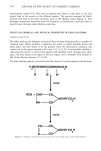
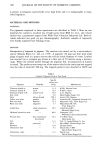
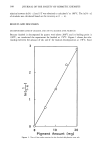
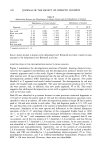
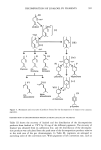
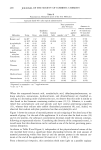
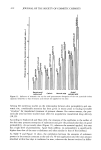
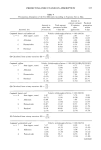
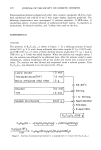
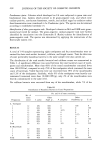
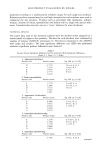
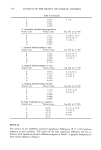
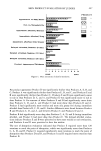
398 JOURNAL OF THE SOCIETY OF COSMETIC CHEMISTS compounds may penetrate the skin. Without considering the different interpretations about mechanisms acting on percutaneous absorption, it is however well established that the main barrier is constituted by the stratum corneum (3,8,9), which also acts as a reservoir for molecules topically applied (10, l l). Moreover, it is likely that, at the early step of the absorption process, the interaction between the physicochemical properties of the drug, the vehicle, and the horny layer plays an important role in total absorption. In Part I of the present study, we hypothesize that the amount of chemical present in the stratum corneum at the end of application may represent the stratum corneum vehicle partitioning and could also reflect the rate of penetration of the chemical. In Part II, we ascertained that this hypothesis is independent of the main factors likely to modify the absorption level of a compound, i.e., contact time, dose applied, vehicle used, anatomic site involved, and animal species chosen. PART I: IN VIVO RELATIONSHIP BETWEEN STRATUM CORNEUM CONCENTRATION AND PERCUTANEOUS ABSORPTION MATERIALS AND METHODS Ten radiolabeled ingredients (Table I), having very different physicochemical proper- ties and belonging to different chemical classes, were tested on the hairless rat. For each compound, a group of 12 female hairless Sprague-Dawley rats, aged 12 weeks, weighing 200 _ 20 g, was used. The compounds were dissolved in ethanol-water mixtures (chosen according to the solu- bility of the chemical), and applied on 1 cm 2 of dorsal skin delimited by an open circular cell fixed by silicone glue in order to prevent any loss of chemical. The applica- tion time was 30 min and the standard dose was 200 nmol.cm -2. At the end of appli- cation, the excess product was removed rapidly by washing twice with ethanol-water (95-5) (vol/vol), followed by two rinsings with distilled water and drying lightly with cotton wool. The twelve animals were then divided into two groups (Figure 1). The animals of group l, wearing collars to prevent licking, were placed individually in metabolism cages for four days. Table I Characteristics of the Test Molecules Compound Specific activity Purity (Ring-•4C) benzoic acid 55 mCi/mmol 98% (Carboxyl-•4C) acetylsalicyclic acid 45 mCi/mmol 97.5% (1,2-3H) dehydroepiandros terone 95 Ci/mmol 97 % (Carboxyl-•4C) sodium salicylate 40 mCi/mmol 98.5% (•4C) testosterone 44 mCi/mmol 97.5% (8-3H) caffeine 140 Ci/mmol 98% (•4C) thiourea 65 mCi/mmol 97% D-(1-•4C) mannitol 54 mCi/mmol 98.5% (1,2,6,7-3H) hydrocortisone 120 Ci/mmol 97.5 % (1,2-3H) dexamethasone 115 Ci/mmol 98 %
Purchased for the exclusive use of nofirst nolast (unknown)
From: SCC Media Library & Resource Center (library.scconline.org)