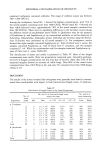
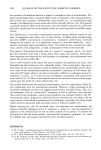
j. Soc. Cosmet. Chem., 38, 359-370 (November/December 1987) The chlorine-hair interaction. I. Review of mechanisms and changes in properties of keratin fibers N. B. FAIR and B. S. GUPTA, University of Missouri-Columbia, Columbia, MO 65211 (N.B.F.), and North Carolina State University, Raleigh, NC 27695-8301 (B.S.G.). Received April 23, 1987. Synopsis A review of mechanisms involved in the interaction of halogens (primarily chlorine) with keratin fibers is presented. The subsequent effect of chlorination on properties of keratin fibers, including chemical reac- tivity, surface properties, weight loss, and mechanical properties is also reviewed. INTRODUCTION Human hair is commonly exposed to chlorine in swimming pools with possible dele- terious effects. An understanding of the reaction of chlorine with the component struc- tures of hair and of the effects of chlorine on hair properties is essential if effective anti-chlorine products are to be developed. Unfortunately, little has been published on the nature of the chlorine-hair interaction. Information of possible reactions and effects, however, can be obtained by examining related literature, which includes the halogena- tion of wool, peptides, amino acids, and disulfides. A substantial amount of technical literature exists on the reaction of wool, a keratin fiberlike hair, with chlorine (and other halogens). Chlorination has been used commer- cially for shrinkproofing woolen fabrics and involves the use of relatively strong concen- trations of chlorine (2-4% based on the weight of the fabric), low liquor-to-fabric ratios, and short reaction times. Exposure of hair to chlorine, in contrast, involves much weaker concentrations (0.5-3 ppm), but usually much greater liquor-to-fiber ratios and reaction times. In the shrinkproofing treatments given to wool, chlorination has been shown to alter the surface morphology, primarily through breakage of disulfide bonds and also peptide bonds in the proteinous material of the fiber. Mechanisms for these cleavage reactions in keratin fibers, however, have not been well understood because of the very complex structure of these fibers. Also, reaction products have been difficult to obtain, since, with the exception of spectroscopic assays, the fibers are generally hy- drolyzed into their component amino acids before an analysis is made. Consequently, the more macroscopic effects of halogenation treatments, such as changes in the physical and the mechanical properties, generally have been followed. However, some insight 359

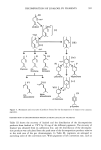
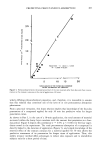
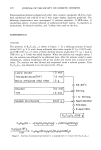
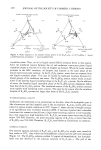
360 JOURNAL OF THE SOCIETY OF COSMETIC CHEMISTS into the reaction mechanisms occurring in keratin fibers can be obtained from studies of reactions of halogens with simpler structures--disulfides, amino acids and peptides. In this review, therefore, these reactions are examined along with their general effect on the physical properties of the fibers. REACTION MECHANISMS REACTION VARIABLES The most important variable in the reaction of halogens with kerarin fibers has been shown ro be the pH of the reaction medium (1-7). Depending on the pH, halogens are present either as X 2, a aliaromic molecule HOX, a weak acid or OX-, a strong base. Reaction rares in aqueous chlorinarion, determined by reduction of the amount of active chlorine in solution with rime, are extremely rapid below pH 2, somewhat slower bur relatively constant in the pH range of 3-7, and much slower above pH 8 (1-6). The very rapid reaction in the acid region has been attributed ro the formation of chlora- mines in addition to oxidation (6-7). The constant rate of reaction between pH 3-7 has been explained by the similar diffusion rares of C12 and HOC1, both of which are neutral species (3). The reduced rate of reaction in the alkaline region (3) has been attributed ro the surface charge of wool fibers, which has been determined ro be nega- tive (8). The fiber will thus tend ro repel the negatively charged hypochlorire ions, prohibiting their penetration into the fiber. Other variables also affect the rare of reaction of halogens with kerarin fibers. The rare of reaction increases with stirring and remains constant over a wide range of stirring speeds (3,9-11), suggesting that diffusion through a liquid layer is nor the rare-deter- mining step bur rhar diffusion into the fiber is. Stirring gives the least effect on reaction rare in the alkaline region. The rate of reaction also has been found ro increase with the temperature of the reaction medium (12,10,12). Finally, the size of the fibers also affects the rare of reaction. Generally, the finer the fibers, the higher the reaction rare. This has been attributed ro the finer fibers having greater surface area (9). DISULFIDE BOND OXIDATION Although chlorine is capable of reacting with all amino acids present in keratin fibers, cystine and tyrosine are found to be particularly susceptible to attack (13-15). Cystine generally is oxidized to cysteic acid (13-23), but intermediate sulfur compounds are also possible which could break down during the amino acid analysis of the protein (22). Insight into the possible intermediate compounds can be obtained by a review of the reaction of halogens with simple disulfides. A pathway summarizing reactions of disulfides and chlorine (24) is illustrated in Figure 1. Cystine is readily oxidized in the acid-neutral region, but much less so in the alkaline region (7,18,25). Alexander et al. (19) attributed this reactivity to the presence of two separate cystine fractions in wool, one of which is not accessible to the hypochlorite ion. Earland and Raven (20), instead, concluded that the attack of the hypochlorite ion is not restricted to the disulfide bond but proceeds more generally in the wool fiber. The idea of a general attack is reinforced by the fact that lanthionine (Cy-S-Cy) has also been found among the reaction products in the alkaline region (18), suggesting that nonoxi-
Purchased for the exclusive use of nofirst nolast (unknown)
From: SCC Media Library & Resource Center (library.scconline.org)