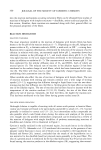
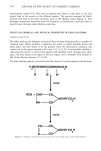
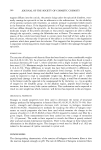
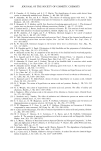
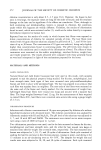
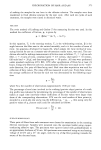
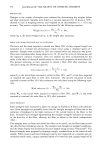
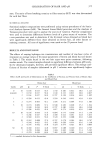
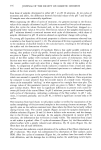
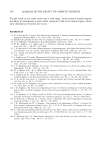
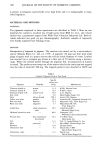
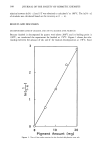
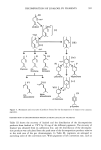
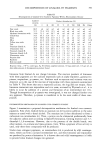
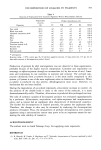
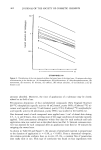
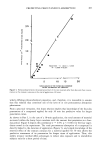
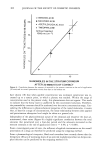
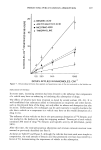
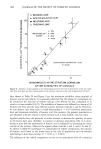
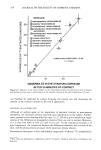
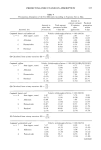
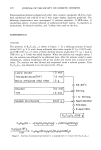
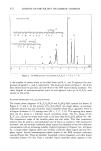
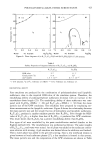
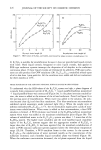
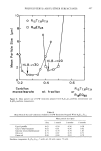
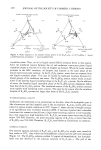
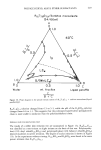
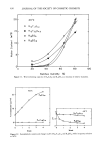
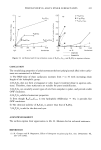
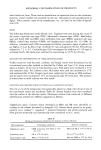
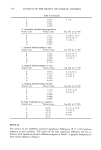
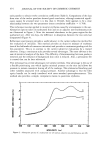
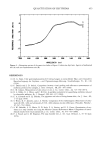
426 JOURNAL OF THE SOCIETY OF COSMETIC CHEMISTS / R'2 3yTG, / 20 / JR,aTxG• • /0' /J2"' Ri83yTG. y i io I I I I I 0 2 4 6 8 I0 Glyceryl chain length (¾] Figure 7. HLB values of R.TxGy ! i RmEOx I I 0 I0 20 30 Oxyethylene chain lengfh (x] and R.EOx determined by phase inversion emulsification (14). II. R,TxGy is suitable for emulsification because it does not provide hard liquid crystals with water. Hard liquid crystals, hexagonal or cubic liquid crystals, that appear in POE-type surfactant systems interrupt the dispersion of oil droplets in the surfactant continuous phase. If these liquid crystals are eliminated by additives, POE-type surfac- tants can also produce fine O/W emulsions (28). R18T14.1G13.2 emulsified several types of oil to less than 1-•m particles. All the emulsions were stable and did not coalescence for three months at 20øC. PHASE DIAGRAMS OF THE TERNARY NONIONIC SURFACTANT/OIL/WATER SYSTEMS To understand why the HLB-values of the R]2TxGy system are high, a phase diagram of a pseudo three-component system of (R12TxGy + liquid paraffin)/(sorbitan monooleate + liquid paraffin)/water was constructed (Figure 9a). In the phase inversion emulsifica- tion, the water is added to the mixture of the oil and surfactant. Point S in Figure 9a is the starting point of emulsification. When water was added to the solution, the solu- tion became clear (I•)) and then blue translucent. This blue translucent microemulsion exhibited optical anisotropy under polarized light (LC=). When the weight ratio of sorbitan monooleate/R12T7.8G7. 9 is 7:3, the microemulsion region gives a peak of max- imum water solubilization. When water is added to this microemulsion, a fine O/W emulsion is formed. A W/O emulsion was formed in the R]2EO2o/sorbitan monooleate system when water was added at the maximum solubilization point (Figure 9b). The volume of solubilized water in the R•2T7.8G7. 9 system was about 1.5 times that of the R•2EO2o system. The higher water solubility and the wide lameliar liquid crystalline region of the R•2TxGy systems suggest that the aggregation number of R•2TxGy is larger than that of R]2EO x. It has been reported that the maximum solubilization of water in POE nonionic surfactant systems appeared above the three-phase temperature range (29,30). Therefore, a W/O emulsion forms in this system. In the system of R•2T7.8G7.9, the solubilization of water increased rapidly as the concentration of the surfactant increased, and a lameliar liquid crystalline phase was formed (Figure 10). When the surfactant concentration decreased, the oil phase separated from the liquid

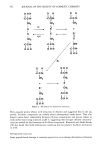
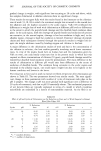
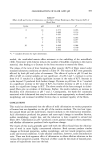
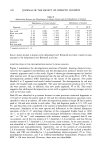
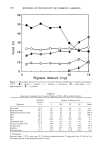
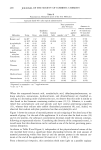
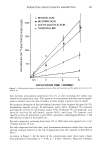
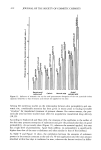
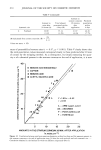
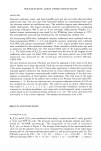
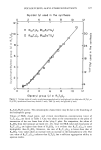
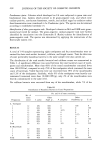
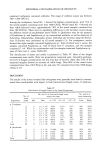
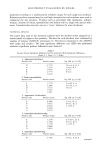
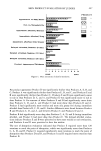
POLY(GLYCERYL) ALKYL ETHER SURFACTANTS 427 IO 8 2 o 0.2 I I 0 R 12T7.sG7.9 [] R•2E 025 o I I I 0.4 0.6 Sorbitan monostearate wt. fraction R 12T7.sG7.9 or Ri2E025 Figure 8. Mean particle size of O/W emulsions prepared with R•2T7.8G7.9/sorbitan monostearate and R•2EO25/sorbitan monostearate. Table II Mean Particle Size and Coalescence Stability of O/W Emulsions Prepared With R18T14.1G13.2 Mean particle size 1 day 1 month 3 months 6 months Liquid paraffin 0.63 0.54 0.56 0.58 Cetyl 2-ethyl hexanoate 0.62 0.61 0.56 0.62 Glyceryl tris(2-ethyl)hexanoate 0.73 0.78 0.79 1.03 Olive oil 0.73 0.67 0.70 0.71 Castor oil 0.66 0.64 0.61 0.70 Emulsion components: R18T14.1G13.2, 5 wt% oil, 20 wt%' water, 75 wt%.
Purchased for the exclusive use of nofirst nolast (unknown)
From: SCC Media Library & Resource Center (library.scconline.org)