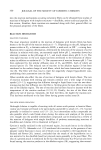
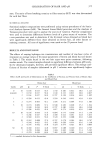
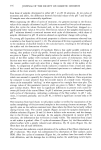
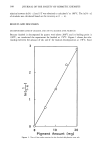
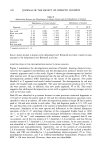
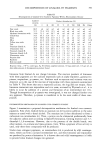
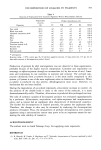
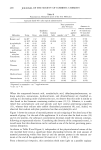
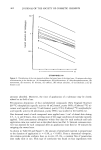
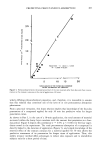
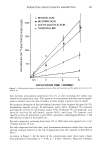
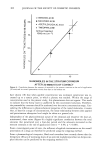
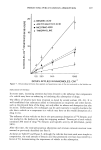
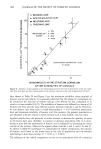
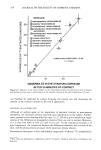
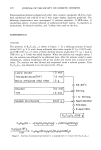
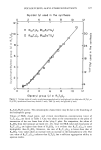
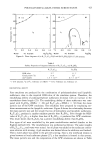
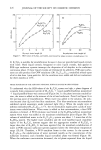
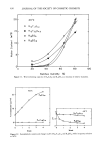
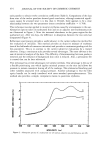
DECOMPOSITION OF LINALOOL BY PIGMENTS 389 there is a linear relationship between the amount of talc and k', dehydration of linalool is considered to be a first-order reaction. Dehydration of t-butyl alcohol was measurable over a wider range of temperatures. Figure 2 shows Arrhenius' plots for the dehydration of t-butyl alcohol over seven typical pigments. Since a linear relationship was recog- nized between log k' and I/T, k' for t-butyl alcohol at 180øC for every pigment was calculated using these Arrhenius plots. Table II shows the data obtained as log k' for dehydration of t-butyl alcohol at 180øC and log k' for dehydration of linalool at 178øC. A correlation was found for dehydration of t-butyl alcohol and linalool over these seven pigments (0.9226). 10.0 1.0 0.1 1/T [ K 0.01 ¾/l [] I 1.5 2.5 3.0 400 300 200 150 100 60 Temperature (øC) Figure 2. Arrhenius plots of the dehydration of t-butyl alcohol over cosmetic pigments. --O--, zinc oxide --I-- , black iron oxide --/X--, mica --O--, talc --[•--, ultramarine blue --&--, kao- linire --0--, red iron oxide.

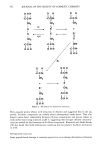
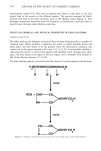
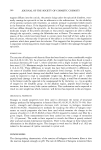
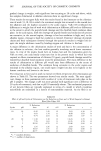
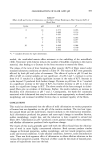
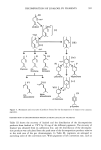
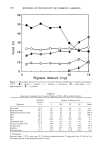
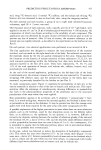
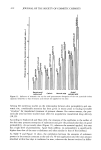
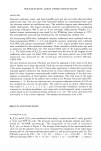
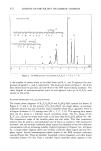
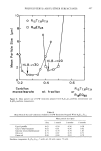
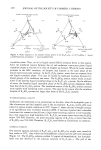
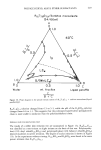
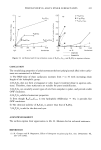
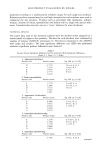
390 JOURNAL OF THE SOCIETY OF COSMETIC CHEMISTS Table II Relationship Between the Dehydration of t-Butyl Alcohol and the Dehydration of Linalool Dehydration of t-butyl alcohol Dehydration of linalool Pigments x* k' log k' x* k' log k' Zinc oxide 0.10 0.001 - 2.997 13.5 0.145 -0.839 Black iron oxide 0.40 0.004 - 2.452 42.5 0.553 -0.257 Mica 2.40 0.024 - 1.623 65.5 1.064 0.027 Talc 69.20 1. 172 0.069 75.0 1.387 0.142 Ultramarine blue 10.90 0.115 - 0.938 81.5 1.687 0.227 Kaolinite 99.99 14.280 1.155 99.5 5.297 0.724 Red iron oxide 74.90 1.384 0. 141 99.0 4.603 0.663 * Linalool recovery as (l-x). Since t-butyl alcohol is known to be dehydrated over Br6nsted acid sites, linalool is also assumed to be dehydrated over Br6nsted acid sites. IDENTIFICATION OF THE DECOMPOSITION PRODUCTS FROM LINALOOL Figure 3 summarizes the decomposition reactions of linalool, showing chemical struc- tures for the suggested intermediates and the decomposition products formed over the cosmetic pigments used in this study. Figure 4 shows gas chromatograms for linalool after reaction over 10 mg of ultramarine blue (A) and red iron oxide (B) at 178øC. The decomposition products differ depending on the nature of the pigment. Five peaks labelled I to V appeared and much linalool remained. For decomposition by red iron oxide, the linalool peak was negligible. The same decomposition products (I to V) for (A) were present, and, in addition, four new peaks appeared, VI to IX. This result suggests that additional decomposition occurs with a pigment having stronger activity such as red iron oxide. Peak IX was identified as p-cymene because its mass spectrum contained fragments at 119 and 91 within the parent peak of 134 and the infrared absorption spectrum corre- sponded to that of p-cymene. All other decomposition products except IX had a parent peak at 136 and were similar to each other. They had fragment peaks at 121, 105, and 93, and thus they were considered to be isomers of dehydrated linalool (see Figure 3 for structures). Similarity of the mass spectra and differences in the infrared absorption spectrum of the C=C stretching vibration of the conjugated double bond at 1650 cm-1, as well as the out-of-plane carbon hydrogen deformation vibration from 1000 cm -• to 750 cm -1 and comparison with authentic samples, suggested that II was cis-ocimene, one of the two isomers of 3,7 dimethyl-l,3,6-octatriene, and that III was another isomer of 3,7 dimethyl- 1,3,6-octatriene, trans-ocimene. In the same manner, I was identified as 7-methyl-3-methylene-1,6-octadiene (myrcene), VI and VII as cis-al- loocimene and trans-alloocimene, respectively, one of two isomers of 2,6-dimethyl- 2,4,6-octatriene. Furthermore, IV, V, and VIII were assumed to be cyclized p-mentha- diene, and VIII was identified as 1,3-p-menthadiene (alpha-terpinene), IV as 1,8-p- menthadiene (limonene), and V as 1,4(8)-p-menthadiene (terpinolene). Products with MW = 138 were detected. However, these were not identifiable.
Purchased for the exclusive use of nofirst nolast (unknown)
From: SCC Media Library & Resource Center (library.scconline.org)