j. Soc. Cosmet. Chem., 38, 435-441 (November/December 1987) Microbial contamination of cosmetics and personal care items in Egypt. I. Contamination of toothpastes and mouthwashes M. S. E. ASHOUR, A. A. ABDELAZIZ, O. M. EL-TAYEB, AND H. HEFNAI, Faculty of Pharmacy, A1-Azhar University, Cairo (M.S.E.A., H.H.), Faculty of Pharmacy, Tanta University, Tanta (A.A.A.), and Faculty of Pharmacy, Cairo, University, Cairo (O.M.E.-T.), Egypt. Received December 15, 1986. Synopsis Ninety-six items of toothpastes and 48 items of mouthwashes purchased in 1985-1986 from retail outlets in Cairo, Egypt were examined for their microbial contents. Toothpastes were generally more heavily contaminated than mouthwashes. Viable bacterial counts above 100 CFU/g or ml were recovered from more than 70% and less than 40% of the toothpastes and mouthwashes, respectively. Coliform bacteria were only recovered from 7% of the toothpastes examined, in the range of 300-1200 CFU/g, while no coliform were recovered from the mouthwashes. The results of qualitative tests for the presence of special hazardous bacteria showed that Staphylococcus species, Pseudomonas species, and Escherichia coli were recovered from toothpastes in different percentages. Some of the detected Staphylococcus were aureus type, and P. aeruginosa were also detected. On the contrary, mouthwashes were free from those organisms except for five samples which contained Staphylococcus species. These were not aureus type. Most of the fungal contaminants were molds, rather than yeasts, for both mouthwashes and toothpastes. More than 90% of the mouthwashes tested contained less than 100 fungal cells/ml, and none of them contained 1000 or more fungal cells/mi. More than 20% of the toothpastes contained more than 100 fungal cells/g, and 7% of them were contami- nated with more than 1000 fungal cells/g. The relationship between the detected level of microbial contamination in the tested preparations with the proposed allowable international limits of contamination, as well as the possible sources of contamination, are discussed. INTRODUCTION Microbial spoilage of different items such as food, papers, and textiles, has been known for many years. It is perhaps a little surprising that the problem of microbial contami- nation in non-sterile medicines and cosmetics received detailed attention only recently (1). This possibly is due to overconfidence in the traditionally good hygienic conditions under which such products are manufactured and also because it is assumed that added preservatives will prevent microbial growth upon storage and/or during use (2). How- 435

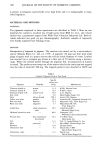
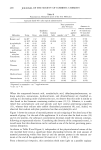
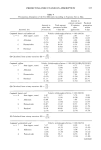
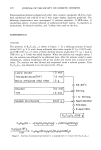
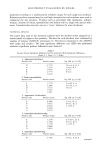
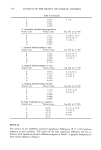
436 JOURNAL OF THE SOCIETY OF COSMETIC CHEMISTS ever, studies have shown that although many cosmetic preparations contain preserva- tives, microbial spoilage can still occur during storage or use (3-6). Using cosmetic preparations which are contaminated with microorganisms has been associated with several diseases. For example, four babies died from Clostridium tetani infections attributed to use of a talcum powder contaminated with this organism (6). Wilson and Ahearn (7) have demonstrated that eye cosmetics may serve as a possible medium in transmission and persistence of microorganisms in clinical eye infections. Bruch (8) detected several opportunistic pathogens, such as Pseudomonas and Acineto- bacter sp., which were commonly associated with serious infections, in facial cosmetic creams and a liquid eyelid preparation. A preliminary investigation in Egypt indicated that a commercial hexetidine mouth- wash was not only heavily contaminated with both bacteria and mold but that it also often harbored Candida species (9). As a part of a comprehensive survey for the microbial contamination of cosmetic preparations and personal care items manufactured and/or used in Egypt, this report describes the results of a qualitative and quantitative investi- gation of the microbial content of eight commonly used toothpastes and four popular mouthwashes. MATERIALS AND METHODS TESTED PREPARATIONS Eight different toothpastes and four mouthwashes were examined (Table I). A total of 12 samples from each preparation representing three different batches were purchased at Table I Distribution of Aerobic Bacterial Counts in Tested Preparations No. of items Preparation tested Min. Max. Bacterial No. and % of items with colony No. and % count/ml count within the range of samples containing 100 0-( 102 102-103 103-104 104 coliforms/ml A. Toothpaste 1 12 200 5.7 X 2 12 0 2.2 X 3 12 20 9.0 X 4 12 0 3.0 X 5 12 0 9.0 X 6 12 0 8.0 X 7 12 200 1.3 X 8 12 0 3.2 X Total 96 0 9.0 X B. Mouthwash 1 12 0 8.0 X 2 12 0 9.0 X 3 12 0 9.0 X 4 12 0 2.6 X Total 48 0 2.6 X 10⁴ 0(0) 3(25) 6(50) 3(25) 0(0) 103 3(25) 6(50) 3(25) 0(0) 1(8) 104 2(17) 6(50) 2(17) 2(17) 3(25) 103 8(67) 2(17) 2(17) 0(0) 2(17) 102 4(33) 8(67) 0(0) 0(0) 0(0) 102 3(25) 9(75) 0(0) 0(0) 0(0) 103 0(0) 7(58) 4(33) 1(8) 1(8) 104 4(33) 6(50) 2(17) 0(0) 0(0) 104 24(25) 47(49) 19(20) 6(6) 7(7) 103 6(5 o) 4(33) 2(17) 0(0) 0(0) 102 9(75) 3(25) 0(0) 0(0) 0(0) 103 7(58) 2(17) 3(25) 0(0) 0(0) 104 8(67) 3(25) 0(0) 1(8) 0(0) 104 30(63) 12(25) 5(10) 1(2) 0(0)
Purchased for the exclusive use of nofirst nolast (unknown)
From: SCC Media Library & Resource Center (library.scconline.org)