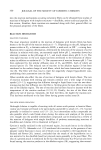
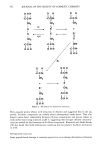
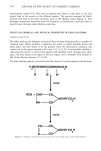
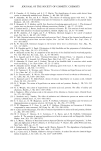
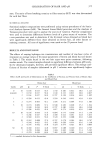
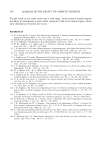
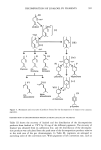
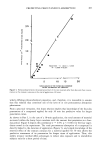
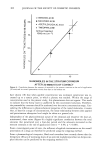
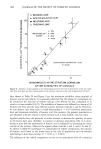
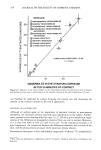
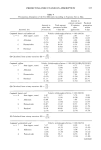
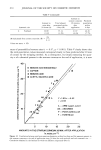
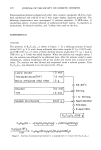
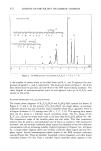
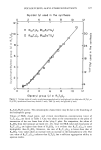
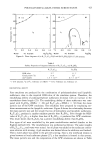
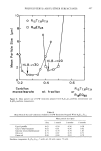
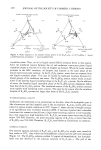
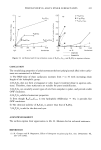
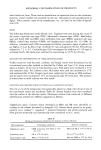
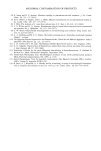
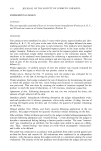
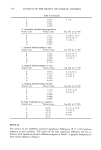
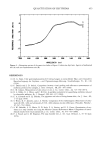
424 JOURNAL OF THE SOCIETY OF COSMETIC CHEMISTS IOO 80 • 40 oe0 i i i I -.o-o---o w+s 0 I I I 0 0.2 0.4 0.6 Wafer wt. fraction I 0.8 .0 RmTh2G2.1 'W + D'• • LC,• W+LC•j I I I I 0.2 0.4 O.G 0.8 0 1.0 Water wt. fraction R•2EO 4 Figure 4. Phase diagrams of (a) R•2Tz,2G 2 z/H20 and (b) Rz2EO4/H20 (16) systems. HLB VALUES OF RnTxGy The HLB-values of R•2TxGy, R•8TxGy , Rt2EOx, and R•8EO X are shown in Figure 7. The HLB-values of the R•2TxGy and the Rt8TxGy series increase from 7 to 30 with increasing numbers of glycerol groups (y). On the other hand, the HLB values of the R•2EOx and the R•8EO x series change from 8 to 21. The HLB value of the POE-type nonionic surfactant cannot exceed 20, according to Griffin's equation (21). The fact that the HLB-value of R,EOx was under about 20 was confirmed by phase inversion emulsi- fication. R,TxGy may be the first nonionic surfactant with an HLB value exceeding 20. We believe that the high HLB value of R,TxGy results from the large number of hy- droxyl groups present. IOO 80 • 6o o 40 t_ E • 20 i i i ! •c ic c t.c o o w+s o-.... w +1 s•-O--•)•.•_c• • 0 0.2 0.4 0.6 0.8 I.O 0.2 0.4 0.6 0.8 Water wt. fraction Ri2T2.2G3j (bJ Water wt. fraction RizT3.264.0 Figure 5. Phase diagrams of (a) R•2T2.2G3.z/H20 and (b) Rz2T3.2G4.o/H20 systems.

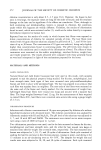
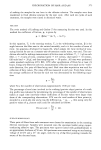
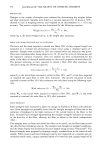
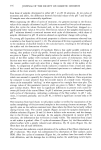
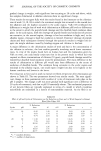
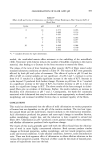
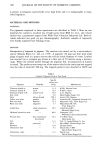
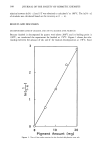
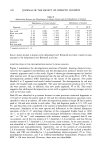
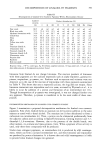
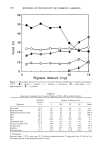
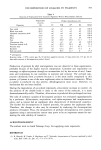
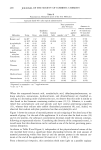
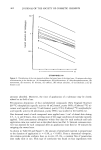
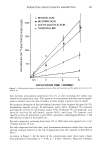
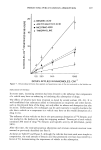
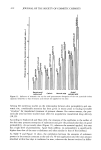
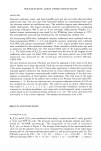
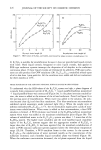
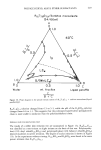
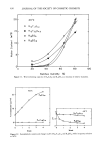
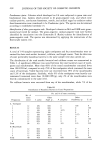
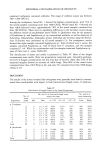
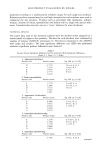
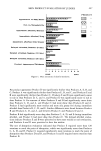
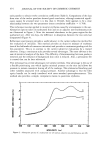
POLY(GLYCERYL) ALKYL ETHER SURFACTANTS 425 IOO 80 o 60 • 4o E i- 2O 0 0 Water I I ! I )c ic c [c o o W ! L• ! El I I I 0.2 0.4 0.6 0.8 1.0 0.2 wt. fraction RmTs.7G6.• Water //Ii , 0.4 0.6 wt. fraction i lb) LC• .o RmEO8 0.8 Figure 6. Phase diagrams of(a) R•2T5.vG6.•/H20 and (b) R•2EOs/H20 (17,18) systems. Table I Surface Properties of Aqueous Solutions of R12T 3 2G4.0 and R12EO 6 R12T3.2G4.0 R•2EO6 HLB value 17.7 11.7 c Cloud point a (øC) 57.0 52 a cmc s (mol/1) 1.9 x 10 -5 8.7 x 10 -Se • 1 wt% solution bat 25øC Creference 21 (HLB-v = E/5) areference 22 ereference 23. EMULSIFYING ABILITY Fine emulsions are produced by the combination of poly(oxyethylene) and lipophilic surfactants close to the required HLB-value of the emulsion system. Therefore, the emulsifying ability of poly(oxyethylene) surfactants decreases with an increase in the oxyethylene chain length (25). The emulsifying ability of these surfactants was com- pared with R12EO25 (HLB-v = 20) and R12T7.8G7. 9 (HLB-v = 30) from the mean particle size of the O/W emulsions. The emulsions were prepared by employing sor- bitan monostearate as the lipophilic surfactant. Figure 8 shows the relationship between the mean particle size and the weight fraction of hydrophilic and lipophilic surfactants. R12T7.8G7. 9 produced a smaller emulsion particle than R12EO25. Even though the HLB- value of R12T7.867.9 is higher than that of R•2EO25, it produces fine O/W emulsions. This result shows that R•2TxGy has a greater emulsifying ability than R12EO x. Five types of oil were emulsified by the paste emulsification method (similar to the English method) (26). The emulsification was performed as follows: The same weights of R•8T•4 ' •G•3.2 and water were mixed. An oil phase was added to the surfactant contin- uous solution with stirring. A gel emulsion was formed when the addition was finished. Then a water phase was added to the gel with stirring. Since a low interfacial tension is given between oil and surfactant phases (27), a fine emulsion is formed in this system. The mean particle size and the composition of the O/W emulsions are shown in Table
Purchased for the exclusive use of nofirst nolast (unknown)
From: SCC Media Library & Resource Center (library.scconline.org)