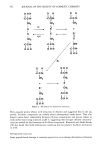
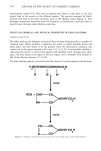
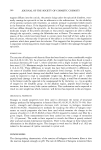
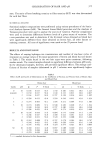
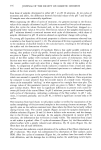
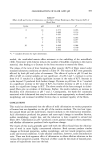
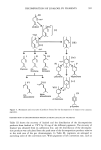
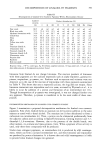
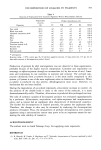
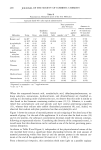
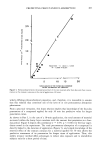
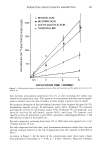
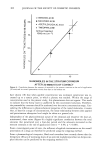
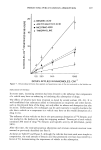
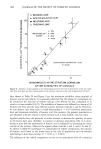
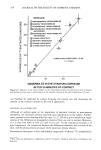
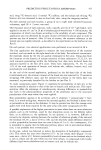
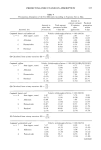
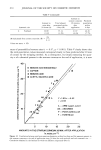
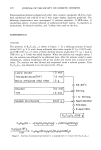
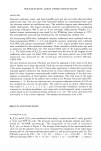
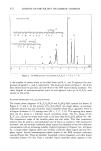
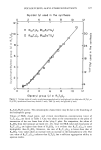
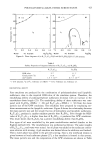
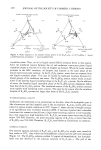
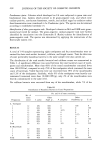
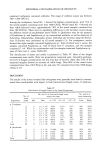
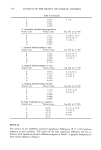
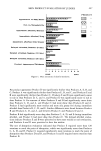
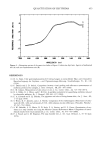
QUANTITATION OF ERYTHEMA 453 Figure 2. The fiber optics equipped Pye-Unicam spectrophotometer with flexible positioning arm. where G is the absorbance in the green region (570-580 nm), R is the absorbance in the red region (645-650 nm), t is the treated site, and c is the control site. The data were analyzed using Spearman's rank correlation procedure. RESULTS AND DISCUSSION The adjusted absorbance values and their corresponding erythema scores were ranked for Table I Relationship Between Adjusted Absorbance and Clinical Scores Using Spearman's Rank Correlation Procedure Panelist r Value 1 0.125 2 1.000 3 O.875 4 O.875 5 0.125 6 0.125 7 O.875 8 1.000 9 0.875 10 0.875 11 0.875 12 0.875 Mean = 0.708.

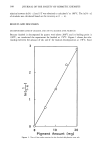
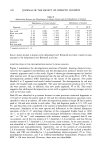
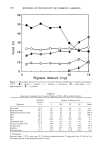
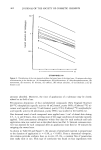
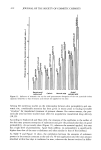
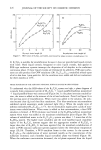
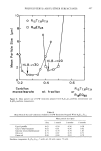
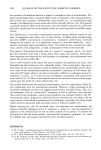
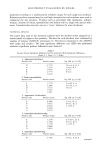
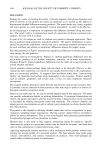
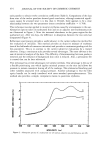
454 JOURNAL OF THE SOCIETY OF COSMETIC CHEMISTS each panelist to obtain twelve correlation coefficients (Table I). Comparisons of the data from nine of the twelve panelists showed good correlation, although statistical signifi- cance cannot be attained since n is less than 4. Overall, there appears to be a close relationship between the two parameters (mean correlation coefficient = 0.708). This technique was also applied to monitor erythema caused by overexposure to the sun. Absorption spectra taken on sunburned skin and on an adjacent non-erythematous site are illustrated in Figure 3. Note the increased absorbance in the green region for the sunburned site. After ten days, the difference in absorption between the two sites had disappeared (Figure 4). Reflectance spectroscopy provides a useful adjunct to the current subjective method for the evaluation of irritation. This method provides an objective measure of erythema (one of the hallmarks of cutaneous irritation) and provides a continuous grading scale for this parameter. This is in contrast to the current subjective evaluations by a trained observer. Using a continuous scale provides several advantages. The most obvious is the ease of statistical analysis of the data. The difficulty of discriminating between grades is removed and the influence of background skin color is reduced. Also, a permanent file is created that can be later referenced. This technique has several advantages over similar methods. One advantage is the use of a flexible positioning arm which applies minimal pressure on the sites and allows the pressure to remain consistent during all of the readings. This eliminates blanching and other variables associated with unequal pressure. Another advantage is that the fiber optics bundle can be easily interfaced with most standard spectrophotometers. This method also provides a simple, inexpensive means to quantitate erythema. .9 .8 .7 ÷ .6 I I I I ! I I I I 4 I ! ! I .5 • : : : I I I I I I I I I 660 640 620 600 580 560 540 520 50• VRVELENGTH [nm) Figure 3. Absorption spectra ofasunburned site(A) and an adjacent non-erythematoussite(B).
Purchased for the exclusive use of nofirst nolast (unknown)
From: SCC Media Library & Resource Center (library.scconline.org)