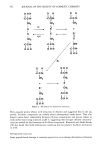
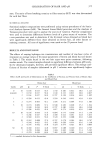
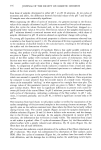
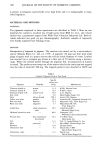
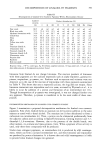
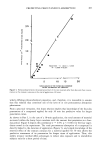
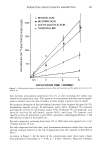
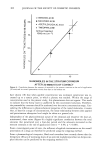
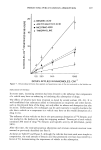
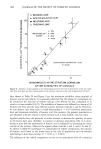
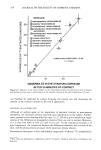
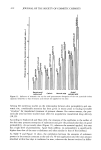
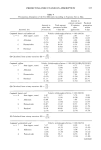
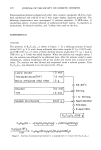
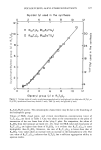
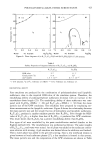
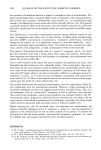
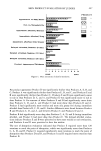
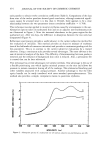
PREDICTING PERCUTANEOUS ABSORPTION 411 acid, (ring •4C) benzoic acid, (1 methyl •4C) caffeine, and the sodium salt of (ring •4C) benzoic acid was measured in man on four body sites, using the stripping method. For each material and each location, a group of six to eight male informed Caucasian volunteers, aged 28 _+ 2 years, was used. One thousand nmol of each molecule, with a specific activity of 10 -3 }xCi/nmol, were applied to an area of 1 cm 2 in 20 }xl of ethylene glycol/water/triton x 100 mixtures, the composition of which was chosen according to the solubility of each compound. The application area was delimited by an open circular cell fixed by silicone glue in order to prevent any loss of material. After 30 min of contact, the excessive substance in the treated area was rapidly removed, as described in the experiments on the hairless rat (see Part I). On each patient, two identical applications were performed in an interval of 48 h. The first application was designed to measure the total penetration of the material involved, and was made on the right-hand side of the body. For technical convenience, the materials chosen for the test are quickly eliminated in the urine. Using data from the literature on the kinetics of urinary excretion of these substances (13,32,33), the total amounts penetrating within the following four days were deduced from the amounts excreted in the first 24-h urine. These were, respectively, 75, 50, 75, and 31% of the total quantities of benzoic acid sodium salt, caffeine, benzoic acid, and acetylsalicylic acid absorbed. At the end of the second application, performed on the left-hand side of the body (contralateral site), the stratum corneum of the dosed area was removed by 15 successive strippings (3M adhesive tape), and the radioactivity present in the horny layer was measured, as previously described for the hairless rat (see Part I). To make comparisons easier, Figure 11 expresses the permeability of each site to the various materials in relation to that of the arm to benzoic acid sodium salt. This repre- sentation offers the advantage of simultaneously showing differences in permeability due both to the physicochemical properties of the penetrants and to the structural peculiarities of the areas where they were applied. Skin permeability appears to be as follows: arm • abdomen postauricular fore- head. It is worth noting that, whatever the material applied, the forehead is about twice as permeable as the arm or the abdomen. It may be pointed out that this average ratio agrees well with those reported for the same areas with other compounds (29,30). A possible explanation of the higher penetration in areas where there are more sebaceous glands, such as the forehead, could be that absorption occurs via the follicles rather than, or in addition to, the epidermis. In our opinion, it is, however, difficult to reconcile the disparity existing between the number of sebaceous glands of the arm and the forehead (34,35), a factor of 50 to 100, and the relatively small difference observed in skin permeability between these two sites (a factor of 2 to 3). As a consequence, if it is reasonable to assume that the follicular pathway plays a role in percutaneous absorp- tion, it has probably been overestimated. In the past, sebum was believed to reduce the absorption of hydrophilic compounds (36). This theory has since been disproved (37). As our results show (Figure 11) the same ratio, a factor of 2, between permeability levels of areas such as the forehead which is rich in sebum and the arm which has very little sebum, to compounds with totally different lipid-water solubilities such as benzoic acid and its sodium salt.

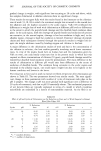
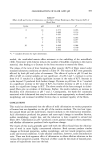
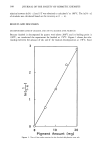
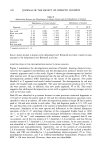
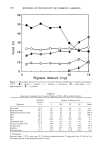
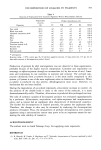
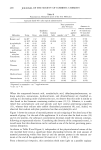
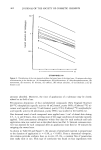
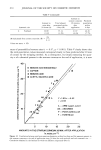
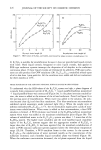
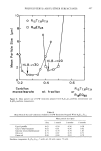
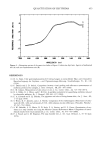
412 JOURNAL OF THE SOCIETY OF COSMETIC CHEMISTS BenzoJc •:id Acety{ sodium salt Caf rein Benzoic ac•d salicylic acid Among the numerous studies on the relationship between skin permeability and ana- tomic site, considerable attention has been given in recent years to finding favorable "windows" for transdermal treatment of systemic diseases. For various reasons, the post- auricular area has been studied most often for scopolamine transdermal drug delivery (38,39). According to Taskovitch and Shaw (40), the closeness of the capillaries to the surface of the skin may promote resorption of substances and give the postauricular skin its good permeability. As our results show (Figure 11), whatever the material applied, this area has a high level of permeability. Apart from caffeine, its permeability is significantly higher than that of the arm or abdomen and often similar to that of the forehead. As Table V and Figure 12 show, the correlation between the amounts of substance present in the stratum corneum at the end of a 30-min application and the total amount absorbed within four days is confirmed in man, whatever the factors involved in differ-
Purchased for the exclusive use of nofirst nolast (unknown)
From: SCC Media Library & Resource Center (library.scconline.org)