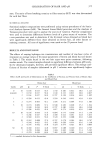
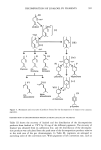
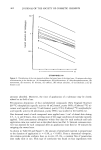
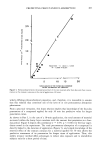
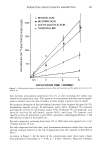
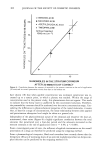
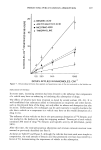
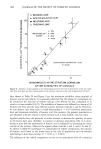
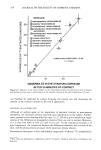
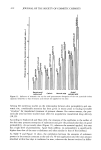
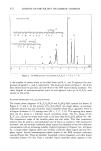
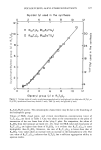
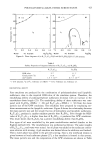
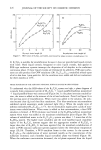
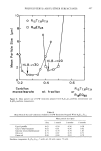
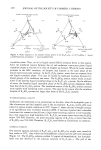
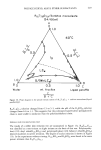
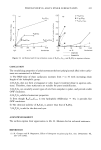
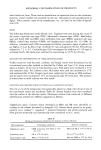
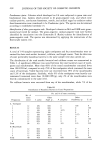
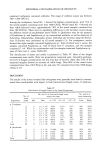
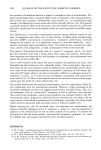
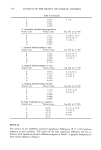
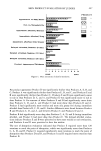
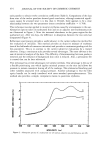
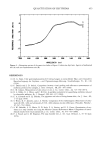
CHLORINATION OF HAIR AND pH 381 ¾, ,,. Figure 4a. Brown hair, 5 cycles of chlorination at pH 2. Figure 4b. Brown hair, 15 cycles of chlorination at pH 2.

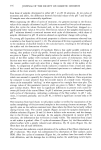
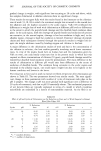
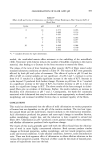
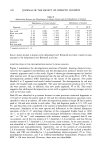
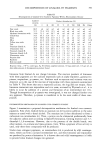
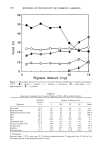
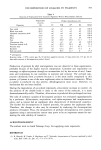
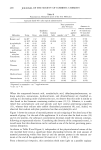
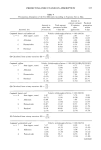
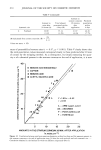
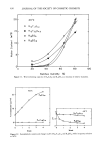
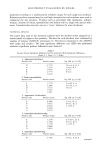
382 JOURNAL OF THE SOCIETY OF COSMETIC CHEMISTS gradual change in weight, with significant loss occurring at 20 cycles and above, while the samples chlorinated in alkaline solutions show no significant change. These results do not agree fully with the results found in the literature on the chlorina- tion of wool (13,18,19) in which the minimum weight loss occurred in the neutral (not the alkaline) and the highest occurred in the acidic region. Valk (18) attributed the differences in weight loss of wool with chlorination at different pH levels to differences in the extent to which the peptide bond cleavage and the disulfide bond oxidation takes place. In the acid region, both the cleavage (of peptide bonds) and oxidation (of cystine) are extensive in the neutral region, cleavage is low but oxidation is high and, in the alkaline region, cleavage is high but oxidation is limited. Extensive cleavage of peptide chains and their subsequent removal through the epicuticle results in weight loss de- spite the weight addition caused by binding oxygen and chlorine to the hair. A major difference in the chlorination studies of wool and hair is the concentration of the chlorine in solution, the hair studies generally involving much lower concentra- tions. In view of the results found here on human hair and the explanation given by Valk on wool, one could easily conjecture that in the present study in which hair was exposed to dilute concentrations of chlorine (10 ppm), peptide bond cleavage would be limited but disulfide bond oxidation would be predominant. The main difference in the results of chlorination at different pH would arise from differences in the extent of oxidation of disulfide bonds. The oxidation being extensive in the acidic region and minimal in the alkaline region, one could expect weight loss also to be highest in the former condition and lowest in the latter. The reduction in force and in work to extend wet fibers 20 percent after chlorination are shown in Table III. The two parameters showed very similar trends. The most signifi- cant change in these parameters with number of cycles of treatment took place in the pH 2 samples. The change at pH was more gradual (still significant over a difference of 20 cycles of treatment), and that at pH 10 essentially absent. The mechanical properties of wet keratin fibers are typically explained in terms of a model in which crystalline microfibrils are embedded in a matrix of noncrystalline material. As the fiber is ex- Table III Effect of pH and Cycles of Chlorination on the Reduction in Force and in Work Required to Extend Blond Hair Fibers 20% % Reduction % Reduction Cycles pH force s* n** work s 10 10 0.42 1.45 12 2.03 4.30 9 7 4.03 1.34 11 8.00 3.03 8 2 9.74 2.01 12 12.81 1.97 9 20 10 - 1.10 1.10 12 -0.23 3.79 9 7 7.76 1.61 11 13.35 3.78 8 2 20.18 6.76 11 25.48 3.18 8 30 10 1.24 1.26 12 2.60 3.53 9 7 19.19 1.75 11 21.62 3.58 8 2 40.77 6.58 12 48.22 9.17 9 * s = standard deviation. **n = number of observations.
Purchased for the exclusive use of nofirst nolast (unknown)
From: SCC Media Library & Resource Center (library.scconline.org)