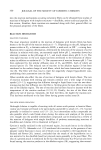
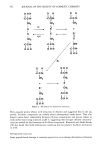
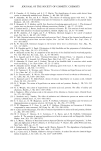
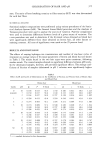
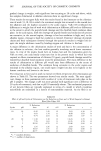
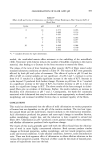
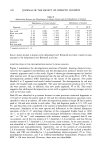
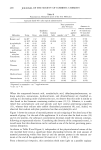
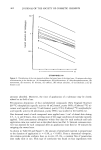
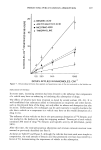
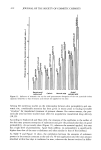
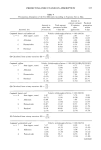
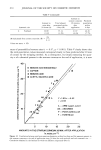
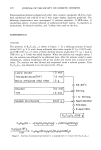
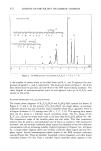
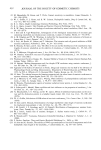
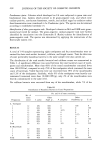
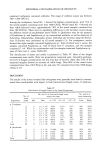
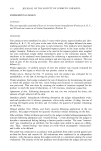
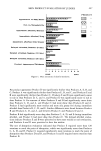
446 JOURNAL OF THE SOCIETY OF COSMETIC CHEMISTS Table I (continued) C 4.3611 C vs E A 3.9167 D 3.5556 E 3. 0000 6. Immediate afterfeel/oiliness/greasiness Product code Product means Sig. diff. (p 5 0.05) E 7.1111 E vs B, C, D, A B 5.7500 B vs C, D, A C 3. 5667 C vs D, A D 2.0000 A 1.4167 7. Delayed afterfeel/residue (5 min) Product code Product means Sig. diff. (p : 0.05) E 4.4167 E vs C, D, A B 3.6389 B vs C, D, A C 2.2500 C vs D, A D 0.5833 A 0.2778 8. Delayed afterfeel/residue (15 min) Product code Product means Sig. diff. (p 5 0.05) E 2.8611 E vs C, D, A B 1.9722 B vs D, A C 1. 1667 C vs D, A D O.5556 A 0.0278 9. Delayed afterfeel/residue (30 min) Product code Product means Sig. diff. (p : 0.05) E 1.7222 E vs C, A, D B 1.1111 BvsA, D C 0.5000 A 0.0000 D 0.0000 10. Rate of absorption (no. rotations) Product code Product means Sig. diff. (p 5 0.05) E 120.00 E vs C, A, D, B C 96.28 C vs D, B A 92.78 A vs B D 82.78 D vs B B 63.28 RESULTS The results of the ANOVA indicated significant differences (P _ 0.05) between products at each attribute. The results of the least significant difference test for at- tributes with significant product differences appear in Table I. A graphic illustration of these results appears in Figure 1.

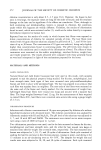
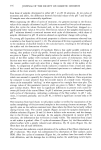
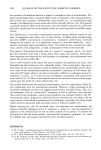
SKIN PRODUCT EVALUATION BY JUDGES 447 Appearalice of Skt•x/Shine Rub-- t•/Spre adabllity 1•---• edta%e A/%er/e el/Residue lmmedtate A/ter/eel/Drag T..m edtate A/ter/eel/Otly/Oreasy Delayed A/ter/eel/Reetdue (5 Min.) Delayed A•ter/eel/Restdue (15 Mt•m.) Delayed AfterSeel/Residue (30 Min.) Produot App e arma. o e/'l'hiotr- ess 0 1 18 3 4 5 6 NONE Figure 1. Mean intensities of skinfeel attributes. | i 8 • lo •GH PRODUCT E For product appearance Product D was significantly thicker than Products A, E, B, and C Product A was significantly thicker than Products E, B, and C and Products E and B were significantly thicker than Product C. Products E and B were significantly easier to rub in than Products D, C, and A, and Product D was significantly easier to rub in than Product A. For amount of shine Products E and B had significantly more shine than Products C, D, and A, and Product C had more shine than Products D and A. Product E had significantly more residue and more oily greasy feel during immediate afterfeel than Products B, C, D, and E. Similar differences were found between Product B and Products C, D, and A, and between Product C and Products D and A. Product B had significantly more drag than Products C, A, D, and E during immediate afterfeel, and Product C had more drag than Product E. The delayed afterfeel evalua- tions indicate Products E and B were perceived to have more residue at each evaluation, and Products A and D were perceived to have less residue. The rate of absorption evaluation indicated that Product E required more than 120 rotations to reach the point of absorption, which was significantly more than Products C, A, D, and B. Product C required significantly more rotations to reach the point of absorption than Products D and B, and Products A and D required more rotations than Product B.
Purchased for the exclusive use of nofirst nolast (unknown)
From: SCC Media Library & Resource Center (library.scconline.org)