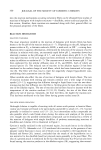
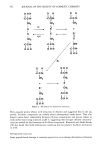
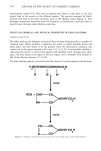
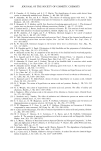
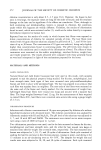
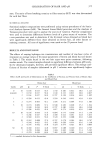
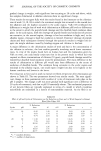
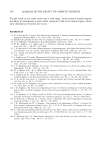
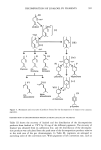
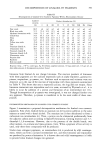
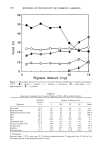
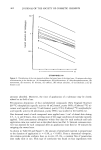
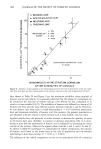
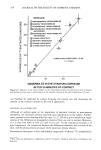
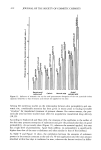
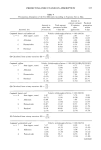
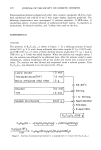
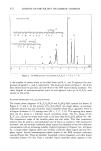
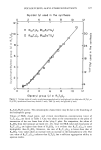
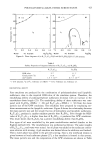
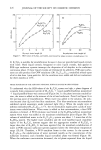
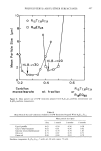
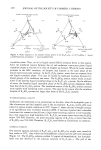
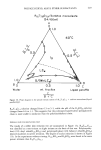
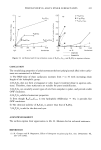
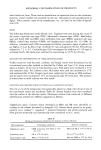
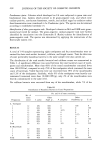
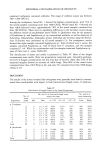
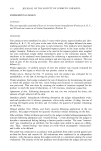
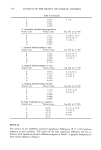
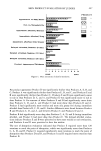
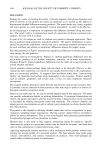
422 JOURNAL OF THE SOCIETY OF COSMETIC CHEMISTS Ri2TB.oG7.9-Ac d ?COCh5 CHa(CH2)9CH2CH20(CH2CH2CH2CH20)8.o(CH2CHCH20)7.90COCH3 a b c e e c c e f h f d d d OCOCH3 OCOCH3 - CH20CH2CHCH20CH2CHCH20COCH5 f h f f hg d e Figure 2. •H-NMR spectrum of acetylated R•2TxGy (x -- 7.8, y = 7.9). is the number of carbon atoms in the alkyl chain and B, C, and D represent the inte- grations of signal b, c, and d, respectively. The results are shown in Figure 3. All of the fatty alcohol and the glycidol, and one-third of the THF reacted during synthesis. The chain lengths of tetraoxymethylene units (x) and glyceryl units (y) in RnTxGy were similar in this series. SOLUTION PROPERTIES OF R•2TxGy/H20 SYSTEMS The binary phase diagrams of R12TxGy/H20 and R12EO,e/H20 systems are shown in Figure 4, 5, and 6. In the systems of Rt2TxGy/H20 , two single phases, an isotropic surfactant solution (ID) and a lameliar liquid crystalline phase (LC,•), appeared. Point A in Figure 4a shows a 1:1/2 spacing ratio (20 = 1.17, 2.33). This spacing ratio means that the LC,• phase is a lameliar liquid crystalline phase. The LC,• phase of the R12T1.2G2.1 system can retain more water in the layer than the R12EOx system (16-18). The temperature range of the lameliar phase was also wider. This blue translucent solution may be used as a microemulsion type of lotion in cosmetics. The cloud point increased, and the isotropic surfactant phase region (ID) expanded to the low surfactant concentration with an increasing number of glyceryl groups (y) (Figures 5,6). In Figure 6a, a simple phase diagram shows one isotropic surfactant phase region and one two- phase region. Several mesomorphous phases appear in the POE nonionic surfactant systems (Figure 6b). These are lameliar, hexagonal, inverse hexagonal, and cubic liquid crystalline phases (16-20). Only a lameliar liquid crystalline phase appears in the

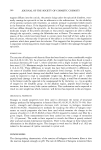
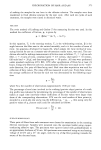
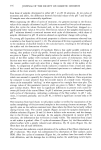
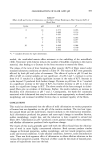
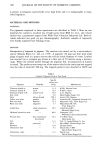
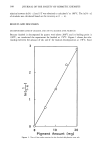
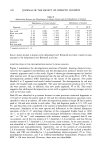
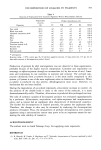
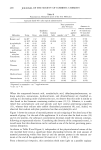
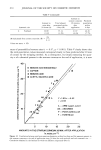
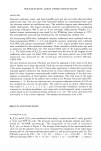
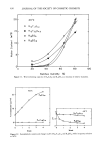
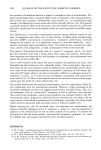
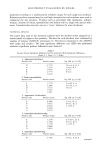
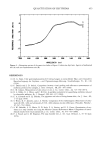
POLY(GLYCERYL) ALKYL ETHER SURFACTANTS 423 Glycidol {y)used in fhe synfhesis 12 0 2 4 6 8 I0 I I I I I 0 Ri2TxGy {Ri23yTGy} [] RisTxGy (Ri83yTGy} -30 -24 -18 -12 -6 0 I I I I I 0 2 4 6 8 I0 12 Glyceryl group {y)in RnTxGy Figure 3. Average moles of x and y in poly(oxytetramethylene) (x) poly(glyceryl) (y) alkyl ether (RnTxOy Rn3yTGy) synthesized from fatty alcohol (1 mol), THF (3y mol), and glycidol (y mol). or Rt2TxGy/H2 ¸ system. This mesomorphic characteristic may be due to the branching of the hydrophilic group. Values of HLB, cloud point, and critical micellization concentration (cmc) of Tt2T3.204. o are listed in Table I. Cmc was taken as the concentration at the point of intersection of the two linear lines of the •/-1og C plots. For comparison, the values of R12EO 6 from the literature are listed (21-23). Since the HLB-value and cloud point of R•2T3.204. o are higher than those of R•2EO6, it is evident that R•2T2.3G4. o is more hydrophilic than Rt2EO 6. However, the cmc of R•2T3.204. o is lower than that of R•2EO 6. Cmc values show an increase with an increase in the hydrophilicity (24). The cmc value of R•2T3.204. o indicates that RnTxGy has a sufficient aggregation ability in aqueous media.
Purchased for the exclusive use of nofirst nolast (unknown)
From: SCC Media Library & Resource Center (library.scconline.org)