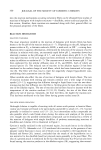
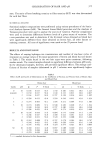
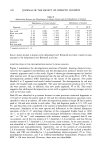
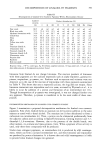
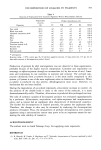
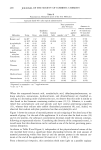
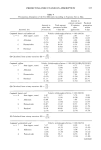
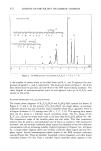
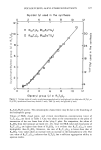
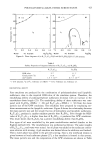
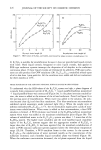
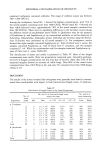
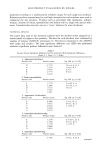
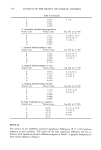
CHLORINATION OF HAIR AND pH 375 mm. The ratio of knot breaking tenacity to fiber tenacity (K/T) was then determined for each hair fiber. STATISTICAL ANALYSIS Statistical analysis computations were performed using various procedures of the Statis- tical Analysis System (SAS). The General Linear Model procedure and the Analysis of Variance procedure were used to analyze the sources of variation. Pairwise comparisons were used to determine differences between levels of a given source of variation. The t-test procedure was used to determine if the frictional values obtained on blond hair were significantly different from those obtained on brown hair, all other factors re- maining constant. All tests of significance were made at the 95 percent level. RESULTS AND DISCUSSION The effects of varying hydrogen ion concentration and number of one-hour cycles of treatment on average values of frictional parameters of brown and blond hair are shown in Table I. The results found in the two hair types were quite consistent, following similar trends. The control samples showed no significant difference between pH levels. In the chlorinated samples, however, pH provided significant effects. The average coef- ficients of friction of samples chlorinated in pH 2 solution were significantly higher Table I Effect of pH and Cycles of Chlorination on the Coefficient of Friction and Percent Stick of Brown Hair and Blond Hair Brown hair Blond hair Cycles pH • s* % Stick s • s % Stick s 0 10 0. 164 0.015 36.4 1. 140 0. 160 0.022 38.0 1.225 (control) 7 0. 130 0.017 36.6 1. 140 0. 132 0.013 36.8 0.837 2 0. 164 0.027 38.0 0.707 0. 148 0.016 36.8 1.095 1 2 0.258 0.015 45.0 2.550 0.216 0.015 43.8 1.924 3 2 0.274 0.005 45.2 1.304 0.272 0.004 47.8 1.483 5 10 0. 174 0.009 37.4 0.548 0. 182 0.018 37.2 1.924 7 0. 180 0.016 38.0 0.707 0. 180 0.014 38.6 0.548 2 0.296 0.023 45.6 1.817 0.374 0.019 63.0 3.606 10 10 0.156 0.019 37.6 0.894 0.174 0.018 37.4 1. 140 7 0.246 0.027 41.8 2. 168 0.222 0.031 42.8 3.033 2 0.360 0.021 56.6 5.320 0.352 0.008 63.0 3.606 15 10 0. 162 0.008 37.0 0.707 0. 178 0.034 38.0 0.707 7 0.244 0.021 43.2 1.483 0.220 0.014 43.6 1. 140 2 0.376 0.042 55.8 4.324 0.374 0.021 60.4 0.894 30 10 0. 160 0.021 41.8 0.837 0. 188 0.020 43.0 0.707 7 0.278 0.026 46.8 1.304 0.302 0.023 51.4 5.595 2 0.370 0.039 60.6 7.403 0.328 0.008 53.8 4.438 * s = standard deviation for five observations.

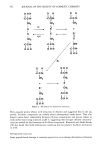
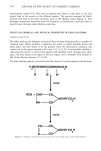
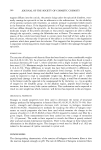
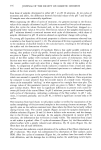
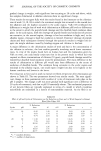
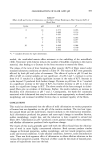
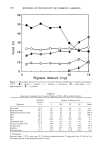
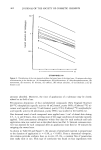
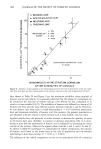
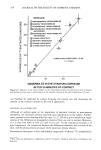
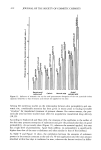
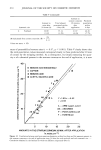
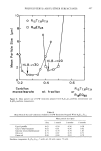
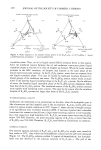
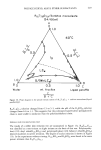
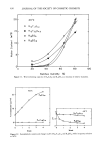
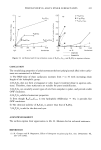
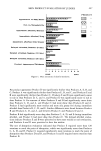
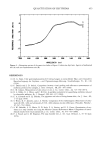
376 JOURNAL OF THE SOCIETY OF COSMETIC CHEMISTS than those of samples chlorinated in either pH 7 or pH 10 solutions. At ten cycles of treatment and above, the differences between frictional values of the pH 7 and the pH 10 samples were also statistically significant. When examining the effect of cycles of treatment, the greatest increase in the friction values of the samples chlorinated in pH 2 solutions occurred by five cycles of treatment. After five cycles the values fluctuated and, in the case of blond hair, dropped to a significantly lower value at 30 cycles. The friction values of the samples chlorinated in pH 7 solutions showed a continual increase with cycles of chlorination, while those of samples chlorinated in pH 10 solution showed no significant change with cycling. The strong pH dependence of frictional properties in chlorine treatments observed here is similar to that found in wool (11, 12). The alteration of friction is generally attributed to the oxidation of disulfide bonds in the cuticular layers, resulting in the softening of the surface and the destruction of scales. An important frictional prope.rty of viscoelastic fibers is that under suitable conditions of testing, they produce a stick-slip profile. Several typical profiles obtained in this work are given in Figure 1. These profiles clearly indicate the marked alteration in the prop- erties of the fiber surface with increased acidity and cycles of chlorination. Since all friction tests were carried out at a constant speed of traverse (0.5 in/min), a change in the tension profiles could only arise from a change in the state of the surface of the fibers. A comparison of profiles clearly indicates a transition from a hard and elastic surface of the control and less severely chlorinated specimens to a softened and plastic surface of the more severely chlorinated specimens. The amount of time spent in the upward traverse of the profile (stick) as a fraction of the whole was assessed to quantify the changes in the stick-slip behavior. Data acquisition by computer is more sensitive than the recorder system of a tensile tester. Therefore, there can be measurable "sticking" in what appears to be a straight force-time plot. The average values of this parameter (percent stick) are given in Table I. Both hair types gave similar results. There were no significant differences in percent stick noted be- tween pH levels of the control fibers. In pH 2 solutions, percent stick increased rapidly with cycles of chlorination, indicating a softening of the fiber surface. In pH 7 solu- tions, it increased gradually, and in pH 10, it showed a significant increase only at 30 cycles. The transition from hard elastic to soft plastic surface is verified by examination of the surface morphology of friction-tested samples in the scanning electron microscope. The specific areas on the surfaces examined were those where the fibers had actually rubbed during friction tests. The control samples (Figure 2a) and the samples chlorinated in alkaline solutions (Figures 2b and 2c) show a definite scale structure, and the damage due to the friction test is minimal. In the samples chlorinated in neutral (pH 7) solutions, the deformation due to friction is clearly visible. The transition from a hard to soft surface is gradual. After 15 cycles of treatment (Figure 3a), the fibers exhibit an altered surface with a greatly reduced scale definition. By 30 cycles (Figure 3b), the fibers have lost all scale definition. The frictional data indicates a rapid alteration of the surfaces of hair fibers chlorinated in pH 2 solutions. This result was substantiated by observation of fiber surfaces under SEM. After five cycles of treatment (Figure 4a), the surfaces have lost much of their scale definition, and the damage due to rubbing reaches the underlying cuticle layers.
Purchased for the exclusive use of nofirst nolast (unknown)
From: SCC Media Library & Resource Center (library.scconline.org)