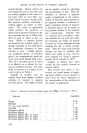
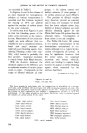
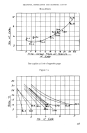
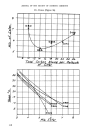
JOURNAL OF THE SOCIETY OF COSMETIC CHEMISTS the rapid drying required in this type of product, although many of them give rise to the attendant defect of "blushing ", due to condensation of atmospheric moisture as a result of the fall in temperature on evapor- ation. The water-miscible solvents, e.g. acetone or methyl acetate, generally are more prone to this defect, and the less water-miscible solvents, e.g. ethyl acetate and butyl acetate, are therefore to be preferred although they are some- what less volatile. Diluents or "thinnets", besides reducing the cost of the product effectively, reduce the viscosity of the solution and thus permit the use of higher solids contents leading to the deposition of heavier coatings. The three main types of diluent com- prise aliphatic hydrocarbons (viz. pertoleum distillates) aromatic hyd- rocarbons (toluene) and alcohols (ethanol, butanol). The hydrocar- bon thinners are true diluents. The alcohols function as diluents where the active solvents are ketones (acetone, methyl ethyl ketone) and as latent solvents where the active solvents arc esters (ethyl .acetate, butyl acetate). It will be apparent that the amount and evaporation rate of the diluent must bc so adjusted that on application of the film and evapora- tion of the volatile liquids present there is always an adequate amount of active solvent present to, prevent precipitation of the cellulose nitrate by the diluent. Should this not be the case poor strength and surface finish result. True diluents are not essential constituents of nail lacquers and many formulations are based •solely on solvents and latent sol- vents. The alcohols, particularly butanol, also serve the additional purpose of ,p r e v e n t i n g "blushing" and "bloom" Butanol forms a con- stant boiling mixture with water and thus is effective in removing deposited moisture. It is also an excellent blending agent for the solvent mixtures c o m m o n 1 y employed. Amounts of the order of 3-5% are sufficient to blend homo- geneously ethanol and petroleum hydrocarbons. Medium-boiling solvents are .re- quired to promote "secondary flow"--the process which elimin- ates brush marks and gives a smooth film of even thickness. They increase the drying time of the film (and should thus be used with discretion) and are an additional safeguard against precipitation of the resin by any diluents present. Amyl acetate and ethyl glycol ether are effective members of this class. The selection of the correct sol- vents is not sufficient to ensure a satisfactory product unless they are also correctly balanced. Solvent balance is determined not only by the evaporation rate but also by the existence of azeotropes between the various solvent components. These two factors permit the approximate determination of the correct solvent balance and the final adjustment is best made by trial. Only approxi- mate generalisations can be made on 106

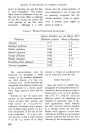
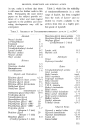
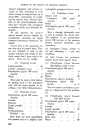
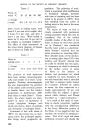
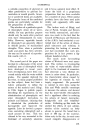
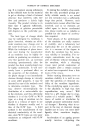
$OLYENT$, HUMECTANT$ AND BLENDING AGENTS solvent balance, since this depends on the number and type of solvents employed and final adjustment is best made by practical tests. The constants of some of the common solvents in use are given in Table 1, in order of decreasing evaporation rates. '[ABLE 1. CONSTANTS 07[: •OME COMMON SOLVENTS Solvent Vapour Evaporation Pressure Flash B.P. Rate ram. Hg Point øC Ether = I 20øC øF Acetone 56 2.1 Methyl acetate 80•/, 54 2.2 Ethyl acetate 77 2.9 lsopropyl acetate 89 4.2 Toluene 111 6.1 Methyl cthyl ketonc 80 6.3 __ Ethanol 78 8.3 Butyl acetate 126 11.8 A•nyl acetate 139 23 lsopropanol 81 21 Butanol 118 33 Methyl glycol 124 34.5 Ethyl glycol 135 43 Ethyl lactate 154 80 Diacetone alcohol 170 147 Butyl glycol 171 163 180 0 ~70 .... 73 23 •22 45 22 40 71 19 45 57 18 74 16 108 33 64 5 95 _ 10 97 _ __ 8 104 - 118 10 125 O.6 140 The final class of solvent to be considered is the non-volatile plas- ticiser. The function of this com- ponent is to improve the elasticity and toughness of the deposited film so that the danger of brittle fracture is eliminated. The materials used for this purpose must be substanti- ally non-volatile, a feature which is widely acknowledged, and they •nust also be water-resistant, a fac- tor which has apparently been little stressed. Since, during the normal life of a lacquer film, frequent immersion in warm water is encountered, the plasticiser is sub- 107
Purchased for the exclusive use of nofirst nolast (unknown)
From: SCC Media Library & Resource Center (library.scconline.org)