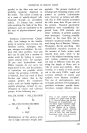
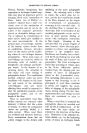
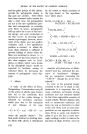
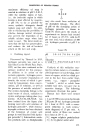
JOURNAL OF THE SOCIETY OF COSMETIC CHEMISTS means of mercury or manganese catalyst: C2H2 q- H20 = CHaCHO. From this, the first synthetic acetic acid and acetone were made. In December, 1914, a young re- search chemist, Dr. George Curme, began an investigation at the Mel- lon Institute, Pittsburgh, which in- troduced olefines as starting materials and fairly started the syn- thetic ball rolling . . . Soon after the end of the first war the work was ready for industrial development, and a beginning was made on a river island .4ite in West Virginia. It is still the principal plant of several. I have been privileged to visit that factory, and I can best describe it as a gigantic open air laboratory, with aluminium painted stills, frac- tionating columns, gas purifiers, reaction vessels, autoclaves, cata- lysers, and so on. It is so huge that a bus service runs along the main avenue, in appearance just like a single decker bus in an English country town instead of stopping at the station, the corn market, the co-op., the Horse and Jockey, and so. on, you get out at Acetic Anhy- dride No. 1, Ethylene Oxide No. 2, Ethanolamines, Isopropanol, etc. ENTER ETHYLESE Oxm•. The king-pin of all this early work was the compound ethylene oxide, made from ethylene by indirect or direct oxidation: C=H• q- O -- (CH2)20 or C2H4 q- HOC1 ---- CH2 C1.CHaOH ---- (CH=)20. This com- pound, besides being a valuable fumigant and pesticide, has the most prodigious and versatile chemical 128 reactivity, and is readily converted to glycols and glycol ethers or, by introducing ammonia, ethanolam- ines. Later, propylene and buty- lene were introduced and different methods of treatment perfected. The products which can be ob- tained by synthesis or semi-synthesis from natural, petroleum or coal-de- rived hydrocarbons range to-day from familiar chemicals such as glycerin, to complete novelties, and include alcohols, aldehydes, ketones, acids, esters, amines, polyhydric alcohols, etc., which may contain carbon atoms up to six in number in straight chains, 15-20 in branched carbon chains, over 300 in poly- ethylene oxide linkages, and many thousands in cross-linked polymers such as those deriving from unsatur- ated polar structures such as vinyl chloride or acrylic esters. These compounds may truly be said, especially as regards the United States, to enter in one way or an- other, not only into every field of industrial manufacture, but into surgery, medicine, the household, the kitchen, the growing of crops and the raising of ,livestock, the equipment of the armed forces and the fire brigades, and the pursuit of the fine arts. To give anything like a complete description, far more than a single lecture would be re- quired for the broadest general- ities. For a few minutes, however, let us imagine an American taking his family or friends for a day's out- ing, and see how they may meet synthetic chemicals without know- ing it.

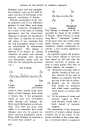
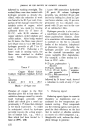
•NFLUENCE OF ALIPHAT1C CI4EI•IiSTRY DEVELOPI•IENT• CHE•4IST:RY IN DAILY LIFE. Our hero gets up and has a bath the bath water may be softened with an ion-exchange resin system, of which anionic sequestration may be by means of a resin from aliphatic amines and formaldehyde. He may or may not have to equip himself with polymethacrylate dentures. tte has a shave with a cream formu- lated with triethanolamine or the polyglycol fatty esters. He may cut himself and dab the spot with a styptic pencil made from poly- ethylene glycol solid base. For breakfast he may have cereals or dried fruit and coffee, which have been fumigated in storage or before packing with ethylene oxide or ethylene dichloride. His wife washes up with a dish-washing detergent based on the sodiosul- phate of a synthetic secondary alco- hol or the condensation product of ethylene oxide with a fatty alcohol or cresylic compound. The party set out in an auto- mobile which may be finished in cellulose lacquer and polished with a morpholine emulsion polish the upholstery may be an artificial fabric based on polyvinyl esters the compound glass windows contain an interlayer of polyvinyl butyral and a synthetic plasticiser the hydraulic braking system may con- tain both lubricants and solvents of polyglycol ether stucture. The roads he travels may have their surface improved by being made or repaired with tar macadam containing partly synthetic cationic auxiliaries. They arrive at the seaside or country club he or his I'childre'n may have a summer drink or ice- cream the flavourings or colouring matters are dissolved or preserved •in propylene glycol. Even if he has a beer, that inviolate citadel of ultimate conservatism, propylene glycol may be employed in the cool- ing coils of the brewery. If he bathes he may have a swim suit of nylon, "Vinyon," or other totally synthetic fibre. If the insects trouble him he may have a lotion containing ethyl hexane diol and a sun-screening agent. If he plays games, the golf balls, tennis racket and other parapher- nalia are certainly processed at some stage with synthetic chemicals. If he goes to the cinema the theatre may be conditioned with fine vapour mist of triethylene glycol as a safe- guard against influenza infection. If, in spite of this, he feels a cold coming on, he may be able to drop into. a drugstore and buy anti- histaminic drug tablets made from dimethylethanolamine. I assure you I could go on a long time like this, but no doubt this will give some illustration of the extraordinary way in which organic synthesis impinges on everyday life apart from heavy industry per se. The synthetic fibres perhaps represent the greatest and most spectacular triumph of synthetic organic chemistry, for they repre- sent, as I have said, a complete synthesis from compounds of one or two carbon atoms to polymers of molecular weight of the order of 100,000. They are not only amen- 129
Purchased for the exclusive use of nofirst nolast (unknown)
From: SCC Media Library & Resource Center (library.scconline.org)