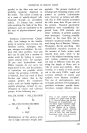
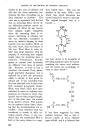
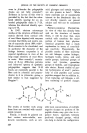
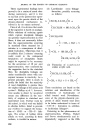
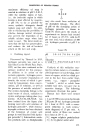
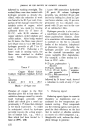
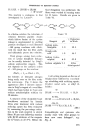
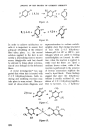
JOURNAL OF THE SOCIETY OF COSMETIC CHEMISTS commercial mixture of the three ethanolamines, most readily fur- nished by the interaction of ethy- lene oxide and ammonia, is a com- plete creation of manufacturing synthetic chemistry. It was origin- aly made for the American colour and dyestuff industry, and in the course of twenty years it has ac- quired something like a hundred .,d'istinc½ industrial uses. ,Cosmetic preparations account for a possible 5 per cent of the total, but it is true to say that in toilet products it achieves its succ•s d'estime. If you mention triethanolamine to anyone concerned with the other ninety-nine uses, the chance is that he will say "that is used for creams and make-ups, is it not?" One reason for this is that it does so many things. The introduction of nitrogen confers a basic reaction, but the hydroxyethyl groups restrain the strength of the base very much. Thus we get a compound combining the qualities of ammonia and gly- cerin, N(CH•CH.oOH)3: a very mild emulsifying base, a humectant and hairwaving reagent, and an ingredi- ent of many mild and emollient shampoos, soaps and soapless deter- gents. As an emulsifying base it is super- latively easy to use, and a very sound view of the quality of an emulsion is that the better it is, the easier it is to make. Triethanolamine calls for the bucket and spade type of emulsifying equipment. It is, of course, a soap-forming base, and its emulsions are subject to the usual limitations of soap emulsions. N(CH2CH2OH)a + RCOOH- H N(CH2CH2OH)a ROOC -- + It is really like an anhydrous and permanently liquefied ammonia, mild enough to be free from skin irritation. It is most effectively used asl a general rule by putting the amine into the soft or distilled water phase, and the corresponding fatty acid into the oil phase. The distri- bution of the soap at the emulsion interface is thereby encouraged. The fatty acid should always be in excess, stochiometric equivalents be- ing very nearly one of triethanola- mine to two of pure stearic acid. In a great many cases there is a sub- stantial excess of stearic acid, and creams of the vanishing or brushless shave types can be made from their ingredients ,in almost any manner of assembly. Cosmetic creams made from iso- propanolamines with other ingredi- ents equal, are distinctly softer than with triethanolamine, and it is often said that they are whiter or less liable to yellowing. I must admit that in my own ex- perience, a fairly comprehensive one so far as triethanolamine is con- cerned, this alleged discoloration is exceedingly capricious. In many cases it never appears at all, or at most amounts to a practically imperceptible off-white. It is most reported from tropical countries and is encouraged by exposure to the air. I believe myself that it is dis- tinct only where appreciable chem- ical unsaturation exists. Triethano- 134

INFLUENCE OF ALIPHATIC CHEMISTRY DEVELOPMENTS lamine oleate itself, for example, darkens from light yellow to deep brown quite rapidly, and is much darker than sodium oleate. With tdethanolamine stearate the, purer the grade of stearic acid the better the colour, but stearic acid is never entirely free from unsaturation. When I was in America I had with me a specimen of practically pure white triethanolamine stearate, pre- pared in London by the most careful technique with the best ingredients. I was gratified to find that my specimen won appreciative comment from all concerned, until after a week or m in Pittsburgh, June, at around 88øF. every day, it all at once developed brown streaks of superficial but alarmingly unattrac- tive appearance, and I abruptly withdrew my prizewinner from cir- culation. The same superficial dark- ening occurs to a greater degree with cationic nitrogen derivatives from stearic acid, and again very hot weather will accelerate the effect. In the high degree of dilution and dispersion in ordinary creams these d•sco.lorations are of course much less evident. Specimens of liquid shampoo made from triethanolamine and mixed isopropanolamine respec- tively, with otherwise e!xactly the same ingredients and proportions: palm kernel fatty acid, industrial spirit, polyethylene glycols and water, do show paler colour with mixed isopropanolamine. Palm ker- nel fatty acid contains a subsidiary proportion of unsaturated acid: about 16 per cent oleic and 1 per cent linoleic, with lauric, myristic, palmitic, etc. On the other hand, specimens of vanishing cream (without perfume) made from the best stearic acid and cetyl alcohol only, show very small differences over a period of many weeks. The most noticeable darken- ing occurs when the colour of the amine itself is very yellow--alkan- olamines darken slowly with age or with overheating, and I have the advantage of a truly vintage trieth- anolamine which is almost mahog- any in colour. It may be noted that it contains no appreciable iron or other metals. Cream made with this very old specimen is among the ex- hibits (shown during the rending this paper.--Editor). The inclusion of 0.5 per cent sodium sulphite appears to be bene- ficial, again indicating that amines activate the oxidising tendency of unsaturated compounds, which may be restrained by reducing agents. The same test compositions main- tained at 30øC. for several weeks, to simulate tropical conditions, all showed a very faint discoloration, the isopropanolamine specimens be- ing no whiter but more pearly. One or two more remarks about triethanolamine in general may be acceptable it is well to keep it in a• warm place in winter, as it freezes fairly readily, and having a lot of hydroxyl groups it has a high speci- fic heat and takes a lot of melting. At about 50øC. it loses its high glycerin-like viscosity and runs easily. If a little water is added it will not freeze at all readily and it 135
Purchased for the exclusive use of nofirst nolast (unknown)
From: SCC Media Library & Resource Center (library.scconline.org)