JOURNAL OF THE SOCIETY cohols of the very best quality are not single chemical compounds at all, and even now it is not possible to achieve the industrial resolution of fatty isomers. For many formu- lating purposes this is immaterial, but when it comes to making chemi- cal derivatives the use of a single entity makes for simiplicity and pre- cision. INSECT REPELLENTS. Turning now to eight carbon chain compounds, we begin to. leave the surface active territory behind, except for opera- tions in very concentrated electro- lytes. Instead, we get a series of qualities, frequently associated with very sparing but appreciable aque- ous solubility, including certain odour characteristics. Nearly every- body likes a nice smell, whether it is called an alluring perfume or a manly tang but there is a use in toiletry for smell that insects do not like, as well as for those that people do. Ethyl hexane diol is one of the best products available for repelling gnats, mosquitoes and summer pests of this kind. It has an interesting history, and one which is a certifi- cate of good value, for it and a very few others were selected from a very extensive range of possible products for use by American armed forces in tropical far eastern theatres of war for restraint of insect borne tropical disease, and for which it xvas remarkably effective. Used as a cosmetic formulation, ethyl hex- ane diol and other insect repellents have to be used in fairly high con- centration, so it is not customary 132 OF COSMETIC CHEl•IISTS to include them in ordinary creams and lotions. For example, neat ethyl hexane diol will protect for six hours or so against mosquitoes a lotion containing one-third of the active ingredient will protect for roughly one-third of the time. Slightly soluble diols and other al- cohols are also difficult materials to emulsify well, and finely dispersed particles in emulsified form will penetrate the skin like a cleansing or vanishing cream, whereas a repel- lent should stay well on the surface. For these reasons we find it better for an insect repellent cream not to incorporate water, but to stiffen the product with metallic stearates which confer a sort of barrier effect. Active ingredients, which being used in small proportions do not disturb or interfere with insect repel- lency, may be added, a very suit- able ingredient of this character being a sun-screening agent. A very attrac- tive combined liquid lotion of this kind isl made in America under the auspices o.f one of the industry's leading ladies. Ethyl hexane diol being a spar- ingly water- soluble long chain alcohol, has an emollient effect on the skin. The fatty chain imparts more marked softening than purely hydrophilic structures such as gly- cerin, and the two hydroxyl groups afford some penetration. As a con- centrated skin lotion ethyl hexane diol has shown no recorded adverse effect, and unlike dimethyl phthalate it does not dissolve or soften finger- nail varnish or plastic spectacle frames.

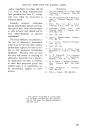
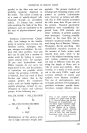
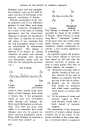
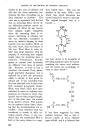
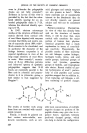
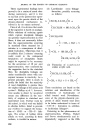
INFLUENCE OF ALIPHATIC CHEblISTRY DEVELOPblENT$ PERFUblES, •OLVENTS, PLAST[- C•SERS, HU•ECT^NXS. By abstrac- tion of water, ring closure and slight re-arrangement, ethyl hexane diol is convertible to trimethyl cyclohex- anol, a compound with a marked re- semblance to menthol, and with a similar odour. Other synthetic aromatic eight- carbon compounds useful for per- fumery esters and fixatives include acetophenone and the corresponding secondary alcohol, phenyl methyl carbinol. Six and four carbon atom com- pounds are, I think, principally re- presented in the industry by normal caproic and butyric acids, which are used to prepare various flavouring esters. Brief reference may also be made to the widely practised derivation of completely synthetic butanol and butyl acetate as used in liquid nail polish. Butanol may also be made by the aldol condensation from acetaldehyde and acetylation can be performed with acetic anhydride from acetylation through aceraide- hyde again, or from the labile com- pound ketene, CH2:CO which can be made transitorily from propylene through acetone. A great many lacquer solvents and plasticisers are made synthetically, and to take an example, the six carbon atom acid 2-ethyl butyric or diethyl acetic acid can be esterified with triethylene glycol to form a di-ester which gives a totally syn- thetic plasticiser. The outstanding feature of this particular plasticiser is that it renders nitrocellulose at least as flexible, if not more so, at OøC. or less than in summer heat, which might be a point for nail polish in very cold weather. With three carbon chains we arrive at a type of compound of simpler and often very varied uses. The latest recruit to the forces is glycerin itself, which is made in America by a process something like the following: simple and elegant in design, but a triumph of chemical engineering in execution: CHaCH = CH•_ + Cl.o -- CH2CHC1 = CHq. + HC1 CH2CHC1 = CH2 + HOC1 -- CHo. C1.CHC1.CH2OH 2NaOH fi dichlorhydrin CH2OH.CHOH,CH2OH 1:2 propylene glycol or deoxyglycerol CHa.CHOH.CH2OH is another well-established synthetic chemical used as a solvent, humec- rant and softening agent in creams, perfumery, flavourrings, edible colours, dontifrice. and many pre- scriptive and proprietary ointments and medicines. It is perfectly edible and is often preferred to glycerin for two reasons: it is less sticky and much less amenable to bacterial in- festation. The corresponding amino com- pounds, mono-, di- and triisopro- panolamines, can be considered along with the better known two carbon ethanolamine derivatives. TRIETHANOLAMINE AND THE ISO- PROPANOLAMINES. Triethanolamine, by which is usually understood the 133
Purchased for the exclusive use of nofirst nolast (unknown)
From: SCC Media Library & Resource Center (library.scconline.org)