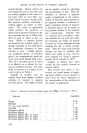
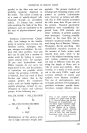
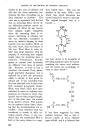
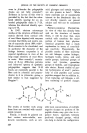
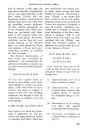
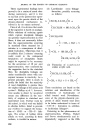
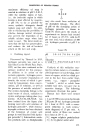
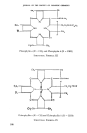
JOURN:.•L OF 'THE'• SO•I'ETY into the polyglycols, we find our- selves back in the emulsifying and surface active range, with the vital difference that the structures so formed are non-ionic and exert sur- face activity by their duality of con- stitution: -- + C•H•OCO N(CH2CH20H):• H Triethanolamine stearate (soap) L C•H•OCO M CHJCH20CH2)•CH20H Tetraethylene glycol oleate (ester) L = lipophilic portion kl = hydrophilic portion. Non-ionic emulsifying principles are the most versatile of all, since they are not liable to the rapid re- actions, solubility and concentration changes which may be brought about by electrolytes in ionised in- terfacial systems. Moreover, anionic and cationic agents precipitate each other, while non-ionics serve to supplement either. When improved emulsification is secured by using two agents in conjunction, usually of complementary solubilities and affinities, one is invariably non-ionic and the other commonly an ionised product. The polyethylene glycol or poly- oxyethylene fatty esters provide an especially versatile series for start- ing, say, with a dozen each of poly- glycols and fatty acids we can have our emulsifying agents "tailor made", or at least choose from a possible 144 fittings. The neutral and inert behaviour of these compounds compared with electrolytes generally renders them 138 OF COSMETIC CHEMISTS harmless towards the most sensitive tissues As a very general guide, the sur- face qualities of these surface active esters may be predicated upon the balance of lipophilic and hydrophi- lic portions of their structure. When these are more or less equal, as in polyethylene glycol 300 monostear- ate or polyethylene glycol 200 monolaurate, we have materials of unctuous or fatty appearance and external quality, which self-emul- sify in cold or warm water to give stable, opaque and somewhat vis- cous dispersions. On one side of this we can have an excess of the lipophilic portion, as in di-, tri- or tetraglycol oleate, insoluble in water but readily dis. persed by homogenisation or by small additions of more soluble members of the series. On the other hand, an excess of the hydrophilic portion, as in the monolaurates of polyglycol 400 and upwards, pro- duces increasing water solubility, declining viscosity in solution, and free but not persistent foaming. With polyethylene glycols of m.w. 1000, the diesters, which in general present qualities more of the character o,f saponifiable fats, also become water soluble and emulsify- ing, though they are rather difficult to prepare and do not seem to pre- sent any particular advantage over simpler monoesters of similar bal- ance. As has been pointed out in a pre- vious lecture to this Society, the less ,water soluble types can furnish either w/o or o/w emulsions. This

INFLUENCE OF ALIPHATIC type can generally be recommended for oils and fats of non-polar struc- ture and extreme insolubility in water, e.g. straight chain saturated petroleum oils. Animal and vege- table oils are more hydrophilic than these castor oil and coal tar hydro- carbons more so and fatty acids and simple esters such as methyl methacrylate monomer considerably more so. The best emulsifying prin- ciples among the polyglycol fatty esters generally follow in the same direction of increasing water solu- bility. As regards the fatty constituent, emulsifying quality is not greatly affected by substituting one fatty acid for another of approximately the same molecular weight and chain length but the physical qualities may be greatly altered. The oleates, •lino.'leates, ricino•eates and other unsaturated esters are usually brownish fluids coconut and palm kernel fatty esters, containing small proportions of unsaturated ingredi- ents, give yellowish oils with lower polyglycols and tan coloured soft fats with higher polyglycols purified laurates and myristates are paler, and esters irom the best grades of stearic acid and polyglycols are practically white. For this and various other reasons the stearates are generally the most popular for cosmetic formulations. The stearates, to a higher degree than the others, form viscous muci- lages with water. These are applied in hairdressing lotions and to sus- pend toilet powders or medicaments. especially when they are chemically CHF.•ISTRY DEVELOPMENTS active and disposed to react with electrolytes, as in the case of cala- mine or magnesia. The lower polyglycol esters, con- sisting, like the fatty alcohols, of a fatty chain compound with one hydroxyl group and a limited affin- ity for water, confer considerable emolliency and penetration. They are also easily removed and non- irritant, and so are popular ingredi- ents of cake make-up. They can be incorporated into almost any type of cream, either as the principal emulsifying agent, or as emollients. They are probably best in the heavier types of cream as used for cleansing or for winter use. They can incorporate weak acids or inorganic salts as used for astringents, depilatories, or in re- straint of perspiration. Most of these esters have the pro- perty, often characteristic of poly- alkylene derivatives, of being less soluble hot than cold, and so emul- sions should be made at as low a temperature as possible. For this reason they are not well suited for emulsifying waxes of high melting point. This peculiarity becomes less marked as the ester becomes more mater solluble, for instance, the monolaurates of polyglycols 400, 600 and 1000. In these cases wet- ting and detergent qualities become pr. onounced, and being free from injurious effect and compatible with most w a v i n g and bleaching materials they are effective wetting agents for the hairdresser. If added in subsidiary proportions to liquid soap shampoos, they sup- 139
Purchased for the exclusive use of nofirst nolast (unknown)
From: SCC Media Library & Resource Center (library.scconline.org)