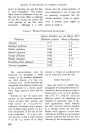
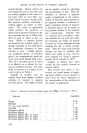
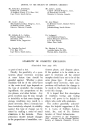
JOURNAL OF THE SOCIETY to the first cream. When cetyl alcohol is replaced by wool wax in the above experiment, the contrast is even more marked. Mixtures of soaps and long chain alcohols also yield excellent emul- sions but these are obviously suscep- tible to the influence of electrolytes, and are decomposed by strong acids. An old favourite which still retains its popularity is glyceryl mono stearate, probably the forerunner oi the present day, non-ionic emulsi- tiers. "Glyceryl mono stearate" (inverted commas because the per- centage of the mono stearate is low) is available in two distinct types. One type usually possesses a low acid value and is composed of a mixture of mono and di esters. Con- ditions of manufacture almost certainly preclude the possibility of the tri ester. Since it is made from commercial stearic acid, it is in fact a mixture of glyceryl mono and di palmirate and glyceryl mono and di stearate together with some mono and di oleate. This grade is used extensively in the food industry to stabilise w/o emulsions. The self-emulsifying grade has the following approximate analysis: Mixed Esters 80 Free "Stearic" Acid 10 Potassium "Stearate" 6 Glycerin 3 Water 1 Here again, we may assume that this agent acts as an emulsifier when the soap is extracted by water to OF COSMETIC CHEMISTS form a complex at the interface with the oil-soluble glyceryl mono stearate. J. H. Schulman, in "Emulsions in Vivo ", given at the Cambridge University S u m m e r School Colloid Science Course 1945, shows how a triple system of long chain substances produces very low interfacial tensions and will result in spontaneous emulsification. It is of interest, therefore, to learn that a self-emulsifying glyceryl mono stearate containing free fatty acid is a more effective emulsifier than one containing no free fatty acid. Whether results were obtained by a detailed knowledge of the principles involved or by trial and error, the c• r i g i n a t o r s of self-emulsifying glyceryl mono stearate offered to the cosmetic chemist a remarkably efficient emulsifier. Variations of this theme may be c•btained by using different polyhy- dric alcohols, e.g., propylene glycol, diethylene glycol, and polyethylene glycols of higher molecular weights, different fatty acids, e.g., oleic acid, lauric acid, and also different soaps, e.g., triethanolamine stearate. The combination of propylene glycyl lnono stearate and triethanolamine stearate is most effective as a stabiliser of thin o/w emulsions. Thinking of the two proprietary types of emulsifiers--the long chain alcohols and their sulphates and the soap-containing g 1 y c e r y 1 mono stearate, it is interesting to speculate as to why cetyl alcohol and soap were not mixed, for despite the advantage of the relative stability of the sulphates to acid, there is a !48

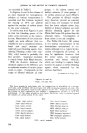
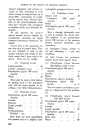
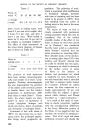
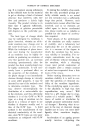
EMUL$ION,q AND TIlE COSMETIC CHEMIST place for the soap containing type. How many creams have been improved by the addition of cetyl alcohol put in for quite another reason ? A microscopical examina- tion of a typical vanishing cream of the caustic potash-stearic acid type, with and without cetyl alcohol, emphasises this point. Furthermore, self-emulsifying gly- ceryl mono stearates which will stabilise o/w emulsions of low pH are also available. These are usually mixtures of glyceryl mono stearate and long chain alcohol sulphates, sapamine phosphate or other surface active agents. ' The writer has made a study of the effect of many types of surface active agents in both cetyl alcohol and glyceryl mono stearate. In each case (Cetyl alcohol or GM.S•) t0ø/o of the surface active agent was added to produce a base. The experiments covered a wide range of soaps-- varying both fatty acid and alkali, and a wide range of anionic, cationic and non-ionic agents. Each base wa.q used to make creams of the types shown in the table below. Cream 1 Base Water 2 Base Water 3 Base Water 4 Base Water 5 Base Water 6 Base Water 7 Base Water 8 Base Water 9 Base Water 10 Base Water 11 Base Water 12 Base Water Constituents -- Glycerin Citric Acid Glycerin Hydrochloric Acid Glycerin Aluminium Chloride Glycerin -- Mineral Oil Citric Acid Mineral Oil Hydrochloric Acid Mineral Oil Aluminium Chloride Mineral Oil -- Waxes Citric Acid Waxes Hydrochloric Acid Waxes Aluminium Chloride Waxes The purpose of the experiments was to determine the efficiency of each base when used as an emulsi- fier in creams of different types and under varying conditions of pH. The results were both valuable and instructive, and although not avail- able for general publication, illustrated the value of certain non- ionic agents as auxiliary emulsifiers under conditions of low pH. How- ever, the use of a water soluble non- ionic agent would not fulfil one requirement of the complex forma- tion theory as this specifies the presence of an ionisable water- soluble substance. In fact, the water-soluble non-ionic agents are poor substitutes for the soaps and alcohol sulphates when used in con- junction with cholesterol, cetyl alcohol, etc. It must be remembered 149
Purchased for the exclusive use of nofirst nolast (unknown)
From: SCC Media Library & Resource Center (library.scconline.org)