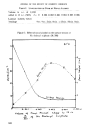
)OURNAL OF TtlE SocIETY OF COS3iET[C CHEMISTS oil and with the stability of the emulsion resulting from the addition to a large quantity of water. The emulsifying agents are usually alka- line soaps of the fatty acids, which produce emulsions on the subsequent dilution of the "miscible oil." In addition, many of the synthetic detergents function as emulsifiers. These include a number of the long chain sulphates, and to some ex- tent, the non-ionic emulsifiers. The "auxiliary solvent" will be a water- soluble substance such as alcohol, a poly glycol or a poly glycol ether. Most organic compounds are soluble to about 0.1ø/o in water, and many of the aromatics used in per- fumery appreciably more so. How- ever, a large amount of energy is required to bring about this solution, as the rate of solution is dependent upon the diffusion of the particles to. be solubilised. In other words, the rate of solution is proportional to the area exposed. Surface active agents aid the dispersion and therefore pro- mote favourable conditions for solu- tion. Self-emulsification requires zero surface tension, as in the ex- treme case of water and glycerine which are completely miscible. Cer- tain aqueous salt solutions, especi- ally neutral salts of organic acids, have the power to dissolve greater quantities of slightly soluble sub- stances than does pure water at the same temperature. The effect (hydrotropic solution) is illustrated by the fact that 60 grms. of nitro- benzene will dissolve in 100 ccs. of concentrated sodium xylene suphon- ate solution at 80øC. It is generally accepted that solu- tion of otherwise poorly soluble sub- stances only takes place in water when micelles are present. Micelles are aggregates of colloidal dimen- sions. The ionic micelles are believed to consist of loose spherical aggre- gates of the hydrocarbon chain ions, with the polar heads turned towards the aqueous phase. When polar substances are solubilised they orientate in the micellar lattice so that their polar group sits side by side with those of the solubiliser whereas their hydrophobic portion penetrates in between the paraffin chains of the solubiliser. This solu- bilisation is called solubilisation by penetration and is distinct from solu- bilisation of hydrocarbons which produce a latteral sw. elling of the micelle and no lengthening along the direction of the polar groups. Thus, paraffin chain salts have power to dissolve organic compounds which are otherwise only slightly soluble in water. In the case of a substance partially soluble in water it is suggested that the polar groups are absorbed at the surface of the micelle with the par- affin chain inside the micelle. Al- though the surfaces concerned differ from the oil and water of emulsions, the suggestion of adsorption at the surface of the micelle would place the partially soluble substance in the category of a surface active agent. To produce a bath essence which is clear in the bottle, but which turns cloudy on dilution, we must choose a surface active agent capable not only of inducing the solubility of a 154

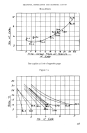
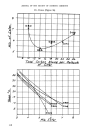
•2MULS]•ONS AND THE COSMETIC perfume in water, but also one which will function as an efficient emulsi- fier. If a surface active agent such as sodium lauryl sulphate is chosen, the solubilising effect is good (in the presence of an efficient peptiser, such as carbitol) but the ultimate dilution in water will not be an emulsion and may well actually be clear. On the other hand, the alkali soaps such as potassium ricinoleate are efficient solubilisers and emulsifiers. This difference has been explained in the earlier stages of the article. As a perfume is compounded from materials which are almost insoluble in water (terpenes, etc.) and sub- stances which are partially soluble (alcohols, etc.) it must be appre- ciated that the perfume itself will have an effect upon the nature o[ the system. Thus it will not be pos- sible to establish a formula indicating the quantities of water-soap-solvent, and perfume to be used, as the vari- ous ratios will depend upon the nature of the constituents of the per- fume employed. "Sulphonated" Castor Oil (T.R.O.) is a good dispersing medium but a rather poor emulsi- fying agent. It is sold usually as the di sodium salt containing vary- ing amounts of water. Most per- fumes will dissolve in this body to the extent of 10% and will produce clear solutions in distBled water al- though these solutions will rapidly cloud. The presence of free sodium ricinoleate results in a strong opales- cence in tap water. Larger amounts of perfume may be added, especially in the presence of certain hydroxylic compounds such as glycols, ete, Benzyl alcohol will be found useful to clarify dispersions of perfume and T.R.O. The non-ionic agents are of great use in solubilising oils, although relatively expensive. Where an expensive bath essence is concerned, the cost of the dispersing agent is of less significance. Three or four parts of proprietary Sorbitan mono laurate poly oxyalkylene derivatives are recommended by the makers to solubilise one part of perfume. Mono o!eates of high molecular weight poly ethylene glycols are said to confer spontaneous emulsification upon mixtures of essential oils. The poly ethylene glycol and poly oxyalky- lene chains, when used in conjunc- tion with long chain fatty acids or alcohols, confer solubilising action upon these emulsifiers. An interesting and instructive experiment was carried out on the following lines: Solutions of triethanolamine oleate in Carbitol, water, benzyl acetate and benzyl alcohol were prepared and placed in burettes. In one sehes the triethanolaminc oleate was used at the rate of 5% in each solvent. In the. second series the soap content was increased to. 10%. A number of experiments were made commencing with a constant volume of the benzyl acetate/soap solution and making various additions of the aqueous solution. In each case the mixture was titrated with the Carbitol solu- tion until a clear solution was obtained. The series was extended to cater for varying amounts of the 155
Purchased for the exclusive use of nofirst nolast (unknown)
From: SCC Media Library & Resource Center (library.scconline.org)