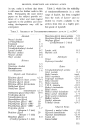
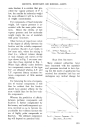
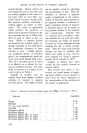
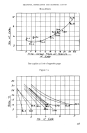
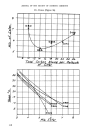
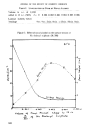
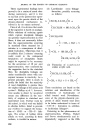
JOURNAL OF THE $OCIET'¾ benzyl acetate solution. These experiments were repeated with a benzyl alcohol solution in the place of the benzyl acetate soiution and further extended with mixtures of the benzyl alcohol/benzyl acetate solutions. On obtaining a clear solution in each separate experiment, the mix- ture was shaken with nine times its volume of water and the type and stability of each dispersion noted immediately and after one week. By plotting the oil/water ratio for each system against the Carbitol/oil + water ratio, a number of graphs were drawn. These graphs show the proportions of the four ingredients of the system required to produce clarity and maximum emulsification on subsequent dilution with water. OF CO$3IEIIC CilE3•ISI$ Benzyl alcohol exerts a considerable influence upon the system, since it is dispersed in wat.er by relatively small amounts of soap and Carbitol. Its presence, in conjunction with benzyl acetate, greatly facilitates the dispersal of the latter. These experi- ments demonstrate the influence -which the ingredients of the perfume have upon the final dispersions in water. Perfumes which contain large amounts of alcohols--rose, lilac, lily--for example, are more easily dispersed than colognes. It is realised that this short dis- cussion will not have presented the reader with a definite formula for a bath essence, but the manner in which the problem of formulation may be approached has at least been indicated. This apparatus for use in the determination of the apparent melting point of resins, waxes, etc., is described on the oppo- site page. 156 :

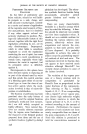
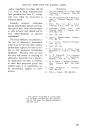
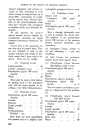
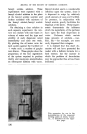
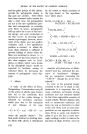
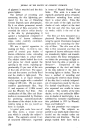
A METHOD FOR DETERMINING THE APPARENT MELTING POINT OF RESINS, WAXES, ETC. THis METHOD is based upon the property of the solid material to flow when liquefied and to separate by order of density when in contact with mercury. To the best of the writer's know- ledge, the method was first used by Dr. T. H. Durrans for comparing "melting points" of rosins, ester gums, etc. Its use has now been extended to cosmetical preparations, especially lipsticks, and to raw materials such as waxes. ADVANTAGES The method, using the quantities stated below, gives reproducible results within very close limits. The temperature at which the change in state occurs is extremely easy to detect and does not rely upon a per- sonal appreciation of liquefaction, as is the case with most methods. DESCRIPTION OF APPARATUS The apparatus shown in the figure consists of a standard bore test-tube fitted into a boiling-tube. A quantity of 2 grams of the sample under test is weighed into the test-tube, avoid- ing contamination of the sides. The mass is gradually heated to above its melting point and then cooled so that an even surface is obtained. When the substance has solidified, 50 grams of mercury are carefully poured into the tube. A thermo- meter, passing through a cork, is fixed in the tube so that the bulb just enters the substances under test. In the case of a hard sub- stance such as rosin the bulb of the thermometer will rest on the surface. For this reason it is desirable that a small bulb thermometer is used. Although the bulb can be inserted into the molten mass prior to cool- ing, where a substance such as rosin is concerned severe thermometer breakages result. The tubes are immersed in a liquid bath, water or oil, depending upon the material under test. The bath is gradually and slowly heated while the liquid is stirred to main- tain an even temperature. At the apparent melting point a sharp behaviour is observed, the substance liquefies, flows through the mercury and rises in the tube. Very little practice is necessary to decide upon the exact temperature of liquefac- tion. It is relatively easy to recover the mercury, although precautions must be taken to ensure that exactly 50 grams are available for the next test. --J.P. 157
Purchased for the exclusive use of nofirst nolast (unknown)
From: SCC Media Library & Resource Center (library.scconline.org)