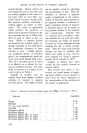
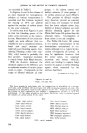
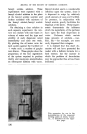
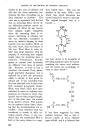
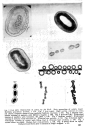
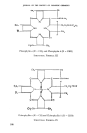
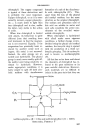
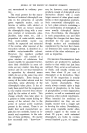
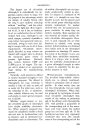
SOME PHYSICO-CHEMICAL PROPERTIES OF KERATIN FIBRES' AND THEIR SIGNIFICANCE IN COSMETOLOGY By DR. J. L. STOVES, F.R.•.C.* HISTOLOGICAL STRUCTURE. Micro- scopic examination shows that mam- malian hair fibres consist of three main zones, an outer layer or cuticle of flat, Overlapping scales surround- ing the cortex, which in turn is traversed by a central core, or medulla, of air-filled cells. The pro- portion and arrangement of these three histological components are characteristic of the animal species, and since the physico-chemical con- stitution of each zone is different •-3, it follows that certain properties of hair fibres will vary from species to species (cf. Figures 1-6). From the cosmetologist's point of view, however, the problem is simplified somewhat by the fact that hair from one genus only is involved and in man the bulk of the fibre substance is present in the cortex, the fibres in general being non-medullated (Figure 7). Recent work 4 has shown that the cuticle consists of three parts, a thin outer coating of epi- cuticle, an intermediate layer, the exocuticle and the scale substance proper, the endocuticle. The epi- cuticle, which prevents the diffusion of large molecules and colloidal aggregates into the fibre is easily * Chemical Consuliant. damaged mechanically and is also degraded by prolonged treatment with alkali. Nevertheless, histo- chemical tests have shown that the cuticle as a whole is much more resistant to alkaline hydrolysis than is the cortex, and treatment which causes complete solution of the cor- tex only partially disintegrates the cuticle s . Medulla cells also resist attack by alkali and can be isolated by treating medullated fibres with 4 N. sodium hydroxide for 17 hours at 20øC. followed by centrifuging and washing. The epicuticle is non- cellular, and of unknown chemical composition. Its inert character, however, is reminiscent of that of medulla calls, the walls of which contain a 1ipo-protein-sterol com- plex 6, and it may well be that similar material is present in the outermost layer of the fibre. Cement- ing the epicuticle on to the main body of the cuticle is a thin protein layer, or exocuticle, which can be digested by trypsin. The endocuticle consistsl of flat overlapping scales arranged with their major axes along the length of the fibre. X-ray and optical studies of wool cuticle show that the protein crystallites in the cuticle are not orientated 158

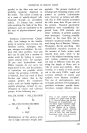
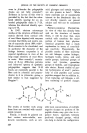
PROPERTIES OF KERATIN FIBRES parallel to the fibre axis and are probably randomly dispersed in the scales. The cortex is made up of a mass of spindle-shaped cells dispersed through an amorphous matrix. In human hair, cortical cells constitute the bulk of the fibre substance, and are considered to be the seat of physico-chemical prop- erties. CHEMICAL CONSTITUTION. Chemi- cally, hair belongs to the keratin group of proteins and contains the elements carbon, hydrogen, oxy- gen, nitrogen and sulphur. In com- mon with other proteins, wool and hair can be split into a number of amino acids by boiling in concen- trated mineral acids for example, 20 per cent hydrochloric acid. Milder reagents do not carry the degradation so far, and the producta of hydrolysis are peptides which contain the grouping -CO-NH-. It is believed, from the work of Emil Fischer and others, that in the original protein the constituent amino acids are linked together via peptide groupings, formed by con- densation o[ amino- and carboxyl groups, in the following way: NH:.CH.COOH + NHo..CH.COOH I -- NH2.CH.CO.NH.CH.COOH + H•O Multiplication of this process gives rise to high molecular weight poly- peptides. The pioneer methods of isolating and estimating amino acids present in protein hydrolysates were, however, so tedious and diffi- cult that in 1910 analysis accounted for little more than 50 per cent of the protein. Classical gravimetric procedures were considerably im- proved from 1918 onwards and newer methods of protein analysis were developed. Growing scientific interest in the wool fibre led to extensive analytical studies, notable work being that of Marston, Vickery, Rimington, Barritt and King. But considerable variation occurred in the amount of basic amino acids isolated from wool, while in the case of the sulphur-containing amino acid, cystine, variation was found not only in different wools but also along the length of fibres and in cells of cortex and medulla. More recently, asta result of work carried out in the early 1940's, rapid and accnrate methods of amino acid analysis have become available *. The use of electrophoresis, ionic exchange, partition chromatography, periodate oxidation, specific decar- boxylases, isotopic dilution, micro- This is the original English version of a paper read by Dr. J. L. Stoves before the Soci6t6 Fran•aise de Cosm(•tologie, at the latier body's Keratin Sym- posium, held in March, 1951, at the Maison de la Chimie, Paris. Other papers dealing with keratin and various as- pects of hair, fur and leather treatment were also presented on that occasion. 159
Purchased for the exclusive use of nofirst nolast (unknown)
From: SCC Media Library & Resource Center (library.scconline.org)