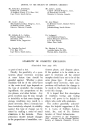
JOURNAL OF THE SOCIETY both here and abroad as an out- standing study of mercury, contains a wealth of interesting information. Mercury is not a foreign substance to the human body.' It is present in the bone and tissues. This find- ing is confirmed by the earlier work of Stock% Bodnar, Odon and Werz- preny 7. Mercury is also in foods. An analysis of 32 commonly used foods, including milk, bread, meat, fish, canned goods, etc., showed that mercury. was present in all of them except fresh vegetables, salty crackers and fresh eggs. The total amount which may be ingested daily in the normal conmmpton of approximately 5 pounds of food is from 5 to 20 gamma. These findings established beyond a reasonable doubt the fact that the absorption of small amounts of mercury is the inevitable concommitant of •rdin- ary daily life, and the presence of these small amounts in the excreta or tissues presents no danger to the individual. There is a constant daily stream of from 5 to 20 gamma pass- ing through the human body. The interesting question--Does the daily use of Bleaching Creams containing Ammoniated Mercury increase this daily stream to dangerous levels?-- i• also answered. The normal aver- age in,take and output of mercury is approximately 20 gamma per day. The use of 10 per cent Ammoniated Mercury ointments over an extended period of time increases this figure to approximately 30 gamma--an insignificant increase without toxo- logical significance. Gibbs' work shows that 1/3800 of 178 OF COSMETIC CHEMISTS the Ammoniated Mercury applied to the skin is absorbed and excreted-- a figure closely confirmed by the work of Sollman and others • on the absorption of mercury from the ap- plication of a 50 per cent calomel ointment. A striking comparison of mercury absorption and excretion is --that if you took a medicinal dose of Calomel, 1 grain, you would absorb and excrete over the next few days the same amount of mer- cury that you would if you applied a 10 per cent Ammoniated Mercury Ointment on your face daily for 8-1/3 years. This significant re- search told us exactly how much of the applied mercury was absorbed that it was promptly eliminated that it presented only a slight in- crease to the normal stream of mer- cury which is constantly passing through our bodies. Dr. Sulzberger 4 performed a clinical study, designed primarily_ to determine whether or not irrita- tions would be produced by the local application of mercurial ointments, of various concentrations. After 4 weeks of daily application to the sen- sitive flexor surface of the arms, he found no sensitisation or irritation from the use of the 5 per cent Am- moniated Mercury Ointment, which is the percentage now in common use. This is in accord with the records of the National Toilet Com- pany, which in 1947 showed only one report of this na•ture for every 325 M packages sold ø This answers the question as to whether or not it damages the skin. Our second group of questions is:

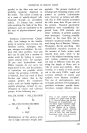
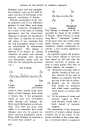
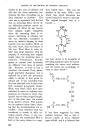
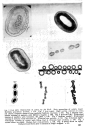
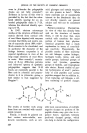
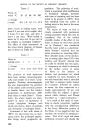
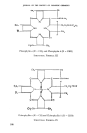
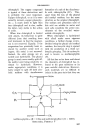
BLEACHING CREAMS will Bleaching Creams prove help- ful in the removal of blackheads help prevent externally caused pimples and secondary infection and will they fade freckles and lighten the skin ? We have been able to demonstrate successfully that the exfoliation produced by the application of Bleaching Cream and the friction of the wash cloth during the prescribed washing of the face before its application will help re- move blackheads. The antiseptic and germicidal value of the U.S.P. 5 per cent Ammoniated Mercury Ointment is well established. Its continued popularity for the treat- ment of skin disorders is evidenced by a recent study showing its pre- scription use and continued recom- mendation by standard dermatolog- ical textbooks •ø. The following studies on skin lightening were made independently by the National Toilet Company on its product, an advertised Bleaching Cream •. Jones 4, in his report on pigmentation, tells us that the colour of the human skin is dependent upon five factors: 1. The number of blood vessels present in the tissues and the degree to which they are filled with blood 2. The natural inherent colour of the materials which com- pose the skin cells 3. The pigment, carotin 4. Bile pigments 5. Melanin. We are interested only in Melanin, because it is the pigment which most strongly influences the colour of the skin--and because it is the pigment affected by Bleaching Cream. Melanin is formed in the basal or germinative layer of the epider- mis. As the cells move upward, the pigment begins to disappear and by the time they reach the stratum lucidum it has vanished entirely. It was originally believed that bleach- ing creams, by their property of speeding up the natural exfoliation of the skin, simply hastened nature's process of destroying melanin. We 'now have more knowledge of its formation and the action of Am- moniated Mercury in retarding it. Reports by Raper •2 Arnow •a, and Jones 4, have done much to enlighten us on the formation of melanin. It is possible that any one of three amino acids found in the skin may form the same end product-- melanin. These are Tyrosine, Phenyl- alanine and Tryptophane. According to these scientists, it is believed that the first step in human pigment formation is the conversion of tyrosine to dopa. This is brought about by ultra violet light or the enzyme tyrosinase. In 1917 Bloch 4 demonstrated that in man there is an enzyme, dopa oxydase, that con- verts dopa to dopa-quinone. By condensation we obtain 5:6 dihy- droxydihydroindole a carboxylic acid. This compound changes to the red pigment, hallochrome, which is converted to. 5:6 dihydroxyindole, a carboxylic acid. Melanin is formed when two or more molecules of this compound join together. Mercury prevents the formation of melanin by inhibiting the action of the enzy- mes, so that the first steps in this series of reactions do. not take place. When this happens, the formation 179
Purchased for the exclusive use of nofirst nolast (unknown)
From: SCC Media Library & Resource Center (library.scconline.org)