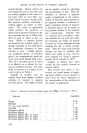
BLEACHING CREAMS ByD. F. The origins of bleaching creams, like tho•e of cosmetics in general, arc lost in the early history of man- kind. Unlike most cosmetic ducts, bleaching cream has been subject to indifference on the part of the industry as a whole. Careless. unwarranted and exaggerated at- tacks have been made upon it from time to time, by the medical profes- sion, regulatory bureaux, and pro- Iessional reformers. I a•n happy to have this opportunity to give you, as open minded scientists represent- ing the entire industry, a brief sum- mary of the modern history of this product, and the research recently conducted that firmly establishes it a,•.• a safe and beneficial product. For with all modesty and honesty, Am- moniated Mercury Ointments will do more for the skin than any other cosmetic product within my knowl- edge. Bleaching Creams and Freckle Creams first appeared on the market about 50 years ago. The original formulae were obtained from works on dermatology, current at that time: 10 per cent Ammoniated Mer- cury, 10 per cent Bismuth Subni- trate and 80 per cent White Petrola- .rum, is typical. Modifications of this formula, with 5 per cent Ammoni- *Lately Vice-President, National Toilet Company, Paris, Tenn., U.S.A. •EALON* ated Mercuw, are still in use by the indus,try. }towever, in the past few years there has been considerable progress in developing hydrophilic Ammoniated Mercury Ointments. They are more pleasant to use, as they leave no oily mask on the ,•tkin. They are said to have a higher germ- icidal value than the old petrolatum base creams. This type of product is already being marketed and wc shall soon have the consnmer's ver- dict. Much of the original work appeared in the Journal of the American Pharmaceutical Associa- tion*, •, • From 1900 to 1938 numerous pro- ducts of this natm'e were marketed. As frequently happens in many in- dustries, the somewhat overextended advertising claims of a few manu- facturers overshadowed the honest statements of the entire group. This condition attracted criticisdn of the industry as a whole, some of which was warranted and some unwar- ranted. In 1938 this condition had become seriou, enough for ,the man- ufactm'ers to form an association in order to determine the facts. Imagine yourselves in our position. My company had marketed a Bleaching Cream fo[ 40 years. Through simple-observ•atibh{ of its use by friends and employees we knew that it would fulfil our claims 176

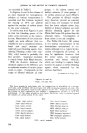
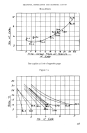
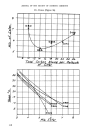
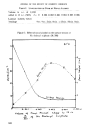
BLEACHING CREAMS for it. The steadily increasing sale of the product, without serious com- plaint on the part of the users, indi- cated that these locally observed result. were being obtained by our customers. Imagine too, if you will, our concern and alarm when our industry was suddenly confronted with the criticism--or accusation, supported by government bodies that ore' products'• would not act as claimed were not only harmful but were positively dangerous to the health and lives of our customers. We suddenly discovered that we, by studies and research, must provide the answers to two questions. First, are they safe for general use ? Second, are they effective ? My presence here today indicates that the answer to both questions was afftrmative, for if the answer to either had been negative, our bra.nch of the cosmetic industry would have disappeared. Our newly formed association, The External Products Research Institute, was fortunate to have *d•,e direction and advice of Dr. O. •. Gibbs, who performed the major part of our research--pharma- cology. A thorough search of the literature on mercury indicated in a general way that our products were safe and would, as we advertise, lighten, clear and beautify the skin. However, no direct experimental records based on purely objective findings could be di•overed. We, therefore, embarked upon what to us was a long and expensive pro- gramme of research. Since the most serious criticism was regarding the safety of Ammoniated Mercury Oint- ments, this received our first and major consideration. We had to know: 1. How much of the applied mercury salt is absorbed. 2. Is it stored in the body ? 3. Does it, like lead, replace the calcium in the bone structure, to be suddenly released under certain pathological condi- tions with the same resulting serious illness ? 4. Does it danaage the skin ? Studies by Gibbs •.'• on pharma- cology, Cash-King * on radiologs,, Sulzberger • on dermatology, have provided us with the answers to these questions of danger. Cash-King made a radiographic study of 13 individuals who were employed for periods varying from 6 months to 32 years, in the preparation of a certain Bleaching Cream. He made the same studies on 70 rats and 24 rab- bits. On the animal:• there were a certain number of controls that re- ceived X-ray studies for comparison. His conclusion, taken verbatim from his report is, "After repeated studies of all the X-ray examinations I made, I am of the opinion that there is no X-ray evidence of any storage o.f heavy metals in the bone struc- ture or soft tissues" This is con- firmed by Gibbs 'q who, after exten- sive chemical analysis of various bones and body tissues, states, "There is no question that mercury is not stored in the body to form dangerous reservoirs" The pharmacological research of Gibbs s, which has been recognlsed 177
Purchased for the exclusive use of nofirst nolast (unknown)
From: SCC Media Library & Resource Center (library.scconline.org)