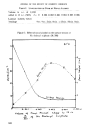
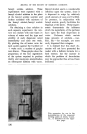
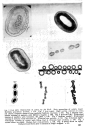
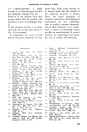
JOURNAL OF THE SOCIETY when we turn the slide upside down, we find that our attention is not dis- tracted by the beauty of the features, and a better comparison of the two skin areas is obtained. Another result of this treatment which was quite visible to the eye, and is recorded in full face photo- graphs of freckled test subjects, is the fading or lightening of freckles. This is understandable when we re- member that tan and freckles are both caused by the same pigment, melanin. In the freckle the melanin is deposited in small circumscribed OF COSMETIC CHEMISTS spots, whereas in tanning it is evenly deposited all over the exposed area. These reports answer our questions regarding the efficiency of our pro- ducts. As a result of the work here out- lined in brief and greatly condensed form, we have increased our know- ledge of the action of our products and are better fitted to present them to. our customers. These reports in- dicate beyond reasonable doubt that Bleaching Creams containing 5 per cent Ammoniated Mercury are safe and effective. BIBLIOGRAPHY 1. Gibson, Parker, and Ulmus: Oint- ments prepared by Emulsification. Jour. Am. Phar. Assn. -- Sci. Ed. 30, 7, 196, 1941. 2. Zopf, L. C.: Hydrophilic Ointment Base, Jour. Am. Phar, Assn. Pract. Phcy, Ed. 6, 12, 365, Dec. 1946. 3. Bhatia. V. N. & Zopf, L. C.: Emulsi- fiable mixtures for the preparation of Hydrophilic Ointment Bases. Jour. Am, Phar. Assn. Pract. Pharm. Ed. 10, 7, 410, July 1949. 4. Report of Studies on Ammoniated Mercury Ointment.s, privately printed by the Ex, ternal Products Research Institute, Vols. 1 and 2, 1940, to be found in the libraries of Medical Colleges in the U.S.A. U.S.A. 5. Absorption of Externally Applied Mercury. Gibbs, Shank, Pond and Honsmann. Archives of Derma- tology and Syphilogy, November 1941, Vol. 44, pp. 862-872. 6. Stock, A.: Biochem. Ztschr. 304:73, 1940. 7. Bodnar, J., Odon, S., and Wesz- premy, B.: Blochem. Ztschr. 302: '384, 1939. 182 8. Sollman, T., Cole, H. N. Schrie- ber, N. E. De Wolf, H. F. and Van Cleave, J. U.: Mercurial Inunc- tions in the treatment of Syphilis, Arch, Dermat. and Syph. 27:1 (Jan.) 1933. 9. Nealon, D. F.: Analysis of Con- sumers' Complaints, Drug and Cos- inetic Industry-- Jan. 1945. 10. Nealon, D. F.: An Estim. ate of the current medical opinion of the value of Ammoniated Mercury by Quantitative Means. 1947. Pri- vately printed. 11. Nealon, D. F.: Report of Studies on Nadinola Bleaching Cream. Pri- vately printed 1946. To be found in the libraries of Medical Colleges in the U.S.A. 12. 13. 14. 15. Raper, Biochemical Journal, 20, 735. Arnow, Journal Biological Chemis- try, 118, 531.' Newh.all, Nicherson and ]udd: Final Report on the OSA Commit- tee on the spacing of Munsell Colours. JOSA Vol. 33 P. 385, July 1943. Munsell, Sloan and ' Godlove: Neutra Value Scales I. JOSA, Vol. 23, P. 394, November, 1933.

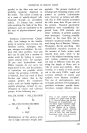
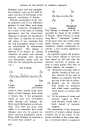
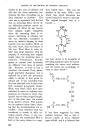
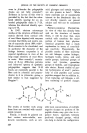
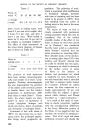
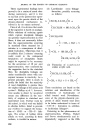
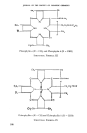
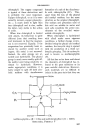
CHLOROPHYLL By WILLIAM MITCHELL, B.SC., PH.D., F.R.I.C.* (Abbreviated Version) The speaker began by referring to the extensive use o.f chlorophyll as a colouring matter for soaps and, to a lesser extent, for colouring other toilet preparations. He also. referred to its more recent applications as a personal deodorant and as a con- stituent of room deodorants. True chlorophyll, he pointed out, is not in fact used for any of the purposes mentioned, various chlorophyll derivatives being employed instead. All green vegetable matter has true chlorophyll as a constituent, most species of plar•ts containing two closely related forms, chlorophyll tt and chlorophyll b, in a fairly con- stant ratio of 3 parts of • to 1 part of b. It is• probably no exaggeration to say that natural chlorophyll is one of the most essen, tial substances in the world, ranking, for example, with water o.r oxygen in importance. Without chlorophyll, life as we know it could not exist. Chlorophyll is present mainly in the leaves and other aerial parts o.f plants, where it occurs in the company of the yel- low pigments, carotene and xantho- phyll, as well as fats, waxes, sterols, proteins and phospholipoids, etc. It seems almost certain that the chloro- phylis exist in the chloroplas.ts corn- * Chief Chemist,' Stafford Allen and Sons Ltd. Abstracted, abbreviated version of the original paper. bined in some manner with proteins --possibly as part of a more com- plex enzyme system. That the chlorophylIs exist in the platit com- bined in some way is certainly sug- gested by the fact that they cannot be adequately extracted, even from dead, dried leaves, by hydrocarbon solvents such as benzene though when isolated by other means they are readily soluble in such solvents. The complicated chemistry of the chlo.rophylls was next referred to by the speaker, who spoke of the im- portant work on the subject that had been carried out by Willst•ttter, Stoll, Fischer, Conant et alia. He pro- ceeded to show, by means of lan- tern slides, the various structural formulae herewith introduced. As will be seen, Formula 1 is the struc- tural formula now assigned to chloro- phyll. In the words of the speaker: Its main features are well estab- lished and the formula is provi- sional only to the extent that the placing of certain of the double link- ages is still not finally determined. ß . . The structure has four pyrrole rings linked by carbon in the form of a d'ihydro-porphin ring, partial reduction of one of the pyrrole rings accounting for the two extra hydro- gens. Substitution in the 3 and 4 positions of the individual pyrrole rings of such a structure gives rob- 183
Purchased for the exclusive use of nofirst nolast (unknown)
From: SCC Media Library & Resource Center (library.scconline.org)