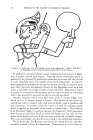
THAT UNWANTED COSMETIC INGREDIENTP BACTERIA By JAMES H. BAKER* Presented before the New York, Chicago and California Chapters, 1958 "THAT UNWANTED Cosmetic Ingredient--Bacteria." This is a topic that is of vital interest to all cosmetic chemists because most cosmetics are excellent media for the growth of all types of micro- organisms. Many a chemist tosses and turns feverishly in his sleep, due to the worry that his product may not be adequately preserved. Often- times, this is because management hastens the product on the market be- fore the preservation tests are complete. The result--a nervous, confused chemist is born, fearful that his product will bear fruit in the form of molds and bacteria. Believe me, such situations take place every week. Goods are returned, called back and who gets the blame ?--naturally, the chemist. When one considers that a cosmetic manufacturer is usually willing to spend considerable amounts of money to have his factory spotlessly clean, production line operators dressed in clean white clothing, ultraviolet or steri-lamps protecting the open jars from bacteria while cooling and numerous other features to denote cleanliness, it is amazing to learn that very few know whether or not their products contain bacteria or are ade- quately preserved. In fact, numerous cosmetic chemists believe that the incorporation of 0.1 per cent to 0.25 per cent of some popular preservative is sufficient protection until, at a later date, they are rudely awakened to the fact that they were wrong. Then, it is usually too late to conceal and rectify the situation. Most chemists, therefore, are always eager to learn ill they can about the preservation of cosmetics and, if possible, methods for determining preserva- tion activity in their particular products. Because some people always have a feeling of "well-being" when listening to the other person's troubles and because we should learn by the other fellow's misfortunes and mistakes, I thought you would be interested in hearing some specific cases I have en- countered over the past twenty-seven years where preservation was in- adequate. * Gat-Baker Laboratories, Inc., New York 11, N.Y. 133

134 JOURNAL OF THE SOCIETY OF COSMETIC CHEMISTS It is not my intention to present a technical bacteriological discussion but rather to cite some bacteriological detective stories. In closing, I will outline the procedure some of us have found to be most effective in deter- mining the preservation properties of a cosmetic within the relatively short time of two to three weeks. Because these cases are true, the trade names nor the companies in- volved will be given. In some instances, I know how the matter was solved that is, the preservatives eventually used. In other instances, the finished or corrected products were submitted for final testing without my knowing the combination of preservatives employed. C^sv, No. 1 A manufacturer was making a new liquid shampoo containing sodium lauryl sulfate, a thickening agent together with pH adjustment. Heat was not applied during the manufacture. After four to five days, the finished shampoo became slimy, changed color and, oftentimes, liberated gas to such an extent that the glass con- tainer exploded. At first, the manufacturer was somewhat reticent about revealing the exact formulation--somewhat like the chap who went to the dentist with a toothache. The dentist asked, "Which tooth is bothering you?" and the reply was, "You have the education and knowledge YOU tell me." Before he was through, however, the manufacturer was only too willing to impart all information requested. This phase of the matter is cited to impress upon you the importance of giving all the information requested which, oftentimes, speeds up the solu- tion of the problem and, indirectly, reduces expenses. Bacteriological examination of the finished shampoo showed the pres- ence of millions of bacteria per milliliter which resembled derobacter aero- genes, a gram-negative, nonsporing organism. This organism is found on grains and plants is nonpathogenic and widely scattered throughout nature. What was the source of this heavy bacterial contamination? Upon inspecting the production line, it was found that the manufacturer had re- cently installed an ion exchanger for the production of deionized water. Bacteriological tests showed that the water entering the apparatus con- tained four to five bacteria per milliliter while that leaving it harbored 500,000 per milliliter. The heavily contaminated water was then pumped into a large storage tank, situated near the roof of the building where it was warm and, often- times, remained stationary for several days, especially over a weekend. Samples of water from this storage tank produced 5 to 10 million bacteria per milliliter and were identical with those found both in the ion exchanger and finished shampoo namely, derobacter aerogenes.
Purchased for the exclusive use of nofirst nolast (unknown)
From: SCC Media Library & Resource Center (library.scconline.org)