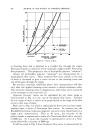
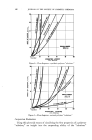
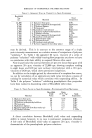
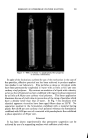
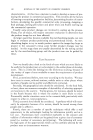
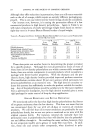
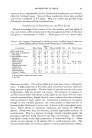
150 JOURNAL OF THE SOCIETY OF COSMETIC CHEMISTS In Table 3 the polymer solutions exhibiting plastic flow properties have been ranked by descending Brookfield yield value. Here not only is there a direct correlation between Brookfield yield value and suspension, but a critical minimum yield value is shown to TABLE 3--YIELD VALUE VS. SAND SUSPENSION--PLASTIC FLOW MATERIALS Material Brookfield Ratio Yield (Y.V./V=0) Sand Value 100 Suspension 0.15% Experimental carboxy vinyl polymer 500 6.4 0.25% Carboxy vinyl polymer 410 6.4 3.0 % Gum tragacanth (homogenized) 276 2.7 3.0 % Gum tragacanth (aged 2 months) 144 1.8 0.18% Carboxy vinyl polymer 136 5.6 0.10% Experimental carboxy vinyl polymer 124 7.2 0.15% Carboxy vinyl polymer 90 5.6 2.0 % Gum tragacanth (homogenized) 64 2.5 Permanent Permanent Permanent Permanent Permanent Permanent 48 Hr. 8 Hr exist somewhere between 90 and 124 above which permanent suspension results. In these laboratory evaluations, two months without noticeable settling has been arbitrarily considered permanent suspension. Several samples (0.18 per cent carboxy vinyl polymer) with a Brookfield yield value of 136 have actually aged for over a year in the laboratory without sand settling. In polymer "solutions" with plastic flow characteristics, the ratio of Brookfield yield value to apparent viscosity is high. Selection of the highest ratio will permit suspension in the most fluid appearing system. If a critical minimum Brookfield yield value of between 90 to 124 or approximately 107 exists for this particular sand, is it not logical to expect a minimum value for any material? In order to emphasize differences in sphere diameter and density, approximate experimental values were ob- tained for golf balls and for marbles in the same manner using various con- centrations of carboxy vinyl polymer solutions. The approximate critical minimum Brookfield yield value to permanently suspend golf balls was found to be 300, and to permanently suspend marbles, 900. It would be interesting to compare these experimentally determined minimum yield values with a theoretical value based on the physical charac- teristics of the particles involved. The theoretical force/unit area neces- sary to maintain suspension has been calculated for the particular sand, golf balls and marbles used in these experiments. In the case of spherical particles the following equation is valid-- Theoretical minimum Yield Value for permanent suspension in dynes/sq. cm. = Volume X Density'• •Volume X Density of• [ Acceleration '• of Particle ] -- k, Displaced Medium ] X k, due to gravity/ Cross Sectional Area of Particle

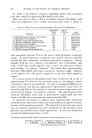
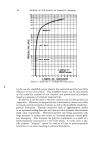
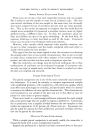
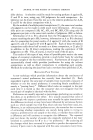
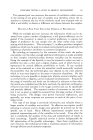
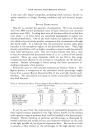
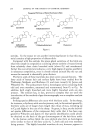
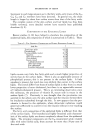
RHEOLOGY OF HYDROPHILIC POLYMER SOLUTIONS 151 Thus for the golf ball with a radius of 2.13 cm. and a density of 1.11 we have-- [(4/3•r (2.13) 3 X 1.11) -- (4/3•r (2.13) 3 X 1.00)] X 980 cm./sec. • •r (2.13) • = 306 dynes/cm? These calculated yield values are directly compared with the experimen- tally determined Brookfield yield values in Table 4. TABLE 4--CAt. CULATED YIEt. D VALUE VS. BROOKfIELD YIELD VALUE REQUIRED fOR PERMANENT SUSPENSION Theoretical Approximate Particle Yield Value, Brookfield Suspended Radius Density Dynes/cm? Yield Value R Sand 0.030 2.60 63 107 1.7 Golf ball 2.128 1.11 306 300 1.0 Marble 0.800 2.55 1622 900 0.6 It will be noted that the deviation of the Brookfield yield value from the theoretical yield value varies, depending on the magnitude of the yield value, as expressed by the ratio of the two values, R. We believe this vari- ability to be inherent in the use of the Brookfield instrument based on the fact that a change in spindle r.p.m. is not directly proportional to a change in true shear rate in inverse seconds. In any given system, an empirical cor- rection could be made. However, even without correction, the degree of agreement shown in Table 4 over a wide variation in yield value must be considered adequate for most product development work. This has been demonstrated by the effective ranking.of a wide variety of materials with regard to suspending ability in Tables 2 and 3. In these tables it was shown that gum tragacanth and carboxy vinyl poly- mer "solutions" are the best candidates for consideration in development of permanent suspension. The theology of gum tragacanth was shown to be dependent on the age of the solution and the amount of shear applied in solution make-up (3). Over 2 per cent of gum tragacanth was required to affect permanent suspension of silica sand under the best conditions. The production grade of carboxy vinyl polymer is shown to be effective in main- taining permanent suspension of silica sand at 0.18 per cent concentration and an experimental carboxy vinyl polymer is effective at 0.10 per cent. This highly efficient development of yield value at low polymer concentra- tion in water "solutions" is shown in Fig. 6. As a point of reference the theoretical yield values for silica sand, golf balls, and marbles have been indicated on this graph. /Ipplication to Product Development Problems The mechanism involved in permanent suspension has been demonstrated
Purchased for the exclusive use of nofirst nolast (unknown)
From: SCC Media Library & Resource Center (library.scconline.org)