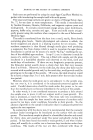
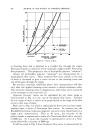
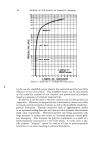
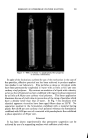
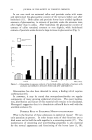
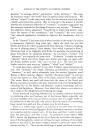
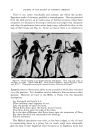
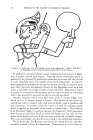
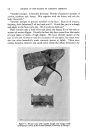
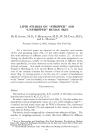
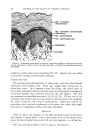
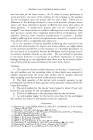
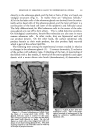
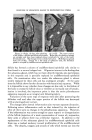
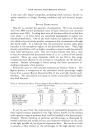
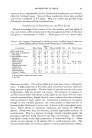
144 JOURNAL OF THE SOCIETY OF COSMETIC CHEMISTS HISTORICAL BACKGROUND The commonly known methods of preventing settling of suspensions fall short of complete success in that they rely on a delaying effect rather than a permanent one. These methods make use of relationships defined by Stokes Law involving the particle size of the dispersed phase, the density of the dispersed phase, and the viscosity of the continuous phase. Agita- tion of the system is also commonly used. If the particle size of the dispersed phase of a system is in the colloidal range, no settling problem will exist. In almost all cases of commercial interest, the dispersed phase will be larger than colloidal size. Settling is delayed by a choice of as fine a particle size as is available. Further improvement is achieved by a physical reduction in size or by defloccula- tion of agglomerates to their individual particles. Delayed settling can also be achieved by reducing the density difference between the dispersed phase and the dispersing medium to a minimum. The opportunity to use this method occurs rarely in commercial practice. An increase in the viscosity of the suspension medium results in a re- duced settling rate. In many cases where high viscosities are permissible, very low settling rates can be achieved by this method. A major share of the application of thickening agents to cosmetic and pharmaceutical formulations is based on this effect of increase in viscosity. GRAV IT Y :: • . VISCOSITY ' " lillll I I '"["'iifl'iii'fi .... [llli[[I i[i'f"[rlirrffff ...... Figure 1.--Factors influencing suspension of a particle.

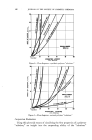
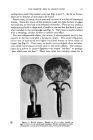
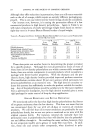
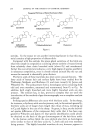
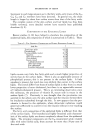
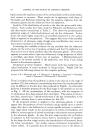
RHEOLOGY OF HYDROPHILIC POLYMER SOLUTIONS 145 The use of agitation to prevent settling is very effective as a temporary expedient. Removal of agitation always results in a reappearance of the problem. This method is commonly associated with the very undesirable commercial warning on a product--"Shake Well before Using." Those products which have achieved commerical success have employed a specific favorable combination of these factors at the sacrifice of a con- siderable degree of compounding freedom. Many products could be successful if a new method of obtaining permanent suspension was available which functioned even under adverse conditions of density difference and particle size. A detailed study of the rheology of various suspending media has revealed yield value to be an effective method for accomplishing this objective (Fig. 1). GEI•ERAL PROCEDURE A system was devised to permit detailed study of the theology of the suspending medium free from the influence of particle size distribution and particle interaction such as flocculation. This was accomplished by the use of large spherical particles of a unifmm size. An Ottawa flint silica sand with an average grain diameter of 0.06 cm. served this purpose. Addition of a few grains of sand to the suspending medium allows visual settling rate measurements which can be directly related to the theology of the suspending medium. The Brookfield Viscometer is used throughout this evaluation since it is widely available in industry and since detailed methods of relative yield value analysis with this instrument have been developed in our laboratory (1). Discussion Brook field Rheolo•y The Brookfield Viscometer is a rotational instrument which measures the torque required to revolve a spindle through a sample at a given rate of speed. The Brookfield RVT instrument has a range of spindle speeds from 0.5 to 100 r.p.m. An increase in r.p.m. produces a corresponding increase in rate of shear. The torque at any constant spindle speed is indicated by a dial reading of from 0 to 100 and is a measure of shearing stress. Char- acteristic curves for a sample are obtained by plotting the rate of shear (spindle r.p.m.) rs. shearing stress (Dial Reading). Figure 2 classifies typical flow plots for several different materials to demonstrate the characteristic differences in flow properties which are found in synthetic and natural polymer "solutions." You may consider these flow curves to be in effect x-ray photographs since they pictorialize the internal structure of liquids. A Newtonian liquid is characterized by flow that is directly proportional
Purchased for the exclusive use of nofirst nolast (unknown)
From: SCC Media Library & Resource Center (library.scconline.org)