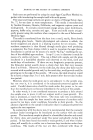
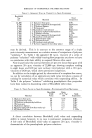
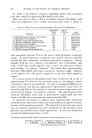
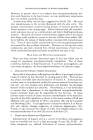
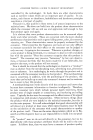
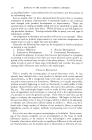
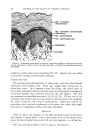
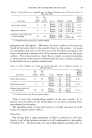
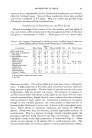
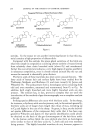
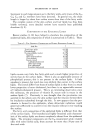
STRIPPED AND UNSTRIPPED HUMAN SKIN 189 TABLE I--LIPID QUANTITY (mgm/20 cm •) ON INTACT SURFACE AND AT BARRIER LEVEL OF HEALTHY SKIN No. No. Ratio: of of Barrier ß Test Area Subj.* Assays Level Median Range Surface Barrier 0.40 0.20-1.20 Lower chest, lateral 17 38 Surface 0.70 0.38-i7. 20 0.62 Barrier 0.56 0.20-0.80 Upper back lateral 8 9 Surface 0.80 0.50-1.40 0.78 As above, plus canes (all Barrier 0.44 0.2 sites examined) 20 48 Surface 0.70 0.38-1.40 0.69 * 1-5 determinations per site in a given subject. going plus the calf regions. Moreover, the ratio is shown of the quantity found at the barrier level to the quantity found on the surface. As would be anticipated, the ratio is less than one, since the lipids contained in the lower zone present a fraction only of the amount collected from the intact surface. The ratios, however, reveal that as much as around two-thirds to three-quarters of the amount collected from the intact surface is present in the barrier zone (or stratum conjunctum). TABLE 2.--ACID NUMBER OF LIPIDS ON INTACT SURFACE AND AT BARRIER LEVEL OF HEALTHY SKIN No. No. Ratio: of of Barrier Test Area Subj.* Assays Level Median Range Surface Barrier 37 15-75 Lower chest, lateral 17 38 Surface 44 22-84 0.76 Barrier 48 19-70 Upper back lateral 8 9 Surface 62 33-86 0.78 As above, plus calves (all Barrier 38 15-75 sites examined) 20 48 Surface 50 22-86 0.76 * 1-5 determinations per site in a given subject. Table 2 shows the corresponding medians of the acid number. It is obvious that the values for the barrier-lipids are by about one-fourth below those obtained for the surface. The spreading index, on the other hand, is virtually the same for both levels, as is apparent from Table 3. Discussion The finding that a large proportion of lipid is contained in the base (barrier level) of the stratum comeurn is in full confirmation of the results of Szakall (17). He found that two main lipid deposits normally exist in

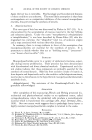
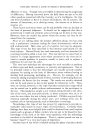
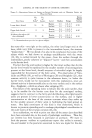
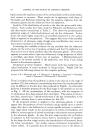
190 JOURNAL OF THE SOCIETY OF COSMETIC CHEMISTS TABLE 3.--SPREADING INDEX OF LIPIDS ON INTACT SURFACE AND AT BARRIER LEVEL OF HEALTHY SKIN No. No. Ratio: of of Barrier Test Area Subj.* Assays Level Median Range Surface Barrier 2.0 0.8-3.5 Lower chest, lateral 16 36 Surface 2.0 1.0-4.9 0.99 Upper back lateral 8 9 Barrier 2.0 1.0-2.5 Surface 2.2 1.7-3.1 0.85 As above, plus calves (all Barrier 2.0 0.8-3.5 sites examined) 19 46 SuTface 2.1 1.0-4.9 0.95 * 1-5 determinations per site in a given subject. the outer skin--one right at the surface, the other (and larger one) at the base, while very little is present in the intermediate layers, the stratum "disjunctum." He was ahead of us also in his conclusion that some of the sebum which we had shown to undergo emulsification with the sweat (12, 18), is carried inward by the sweat--from the surface through the intermediate, poorly coherent or "disjunct" layers--and then accumulates at the barrier level. The fact that the acid number is higher for the intact surface than for the barrier level would be explained by the smaller number of micro Srganisms present at the lower level, should enzymes of microbial origin be largely responsible for the presence of the fatty acids. The observation of Nico- laides and Wells (19), as well as of Montagna (20) and Steigleder (21), that esterase activity is quite intense in the sebaceous ducts, i.e. below the barrier level, would not be inconsistent with this explanation, since ad- ditional activity is demonstrable also on the very surface and in the surface film--Steigleder--which are absent after stripping (22). The failure of the spreading index to behave like the acid number, that is, to be smaller for the barrier zone than for the unstripped surface, suggests that in contrast to the fatty acid distribution, other lipid constit- uents are present in lower concentration on the surface, and in higher concentration at the base of the stratum corneum where they make up for the smaller amount of fatty acids in facilitating the lipid spread on water. One lipid constituent of this kind is free cholesterol, which is known to promote spreading and to undergo physiological esterification in the outer layers of the stratum corneum (23, 24). As an addendum, we wish to point out that all the assays just described have been exten, ded also to the study of pathologic conditions. Thus far, our interest has been focussed in particular on psoriasis. We want to limit the present outlines to a preliminary report that unlike in normals, the acid number in the psoriatics examined to date was higher for the bar-
Purchased for the exclusive use of nofirst nolast (unknown)
From: SCC Media Library & Resource Center (library.scconline.org)