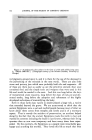
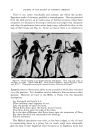
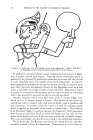
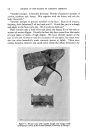
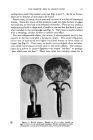
176 JOURNAL OF THE SOCIETY OF COSMETIC CHEMISTS and one was "sun" which perhaps derived from the most common shape of a mirror, a slightly flattened disk of the very shape by which the sun was depicted in the paintings and reliefs. Another name applied to a mirror is "life" and one can imagine a number of ways in which this might have come about. Mirrors were probably expensive objects, even the bronze ones, owing to the material and the amount of workmanship that went into producing one, and they were no doubt possessed only by the well-to-do. There is a plaintive line in a long text called "The Admonitions of an Egyptian Sage," a text which is full of disillusion and dismay, for it describes a period (2200- 2000 B.C.) after the disintegration of the highly centralized state in the Old Kingdom when everything in the country was topsy-turvy and in near anarchy, at least from the viewpoint of the somewhat conservative writer. The line that interests us describes, like many others in the text, the unfair upside down turn affairs have taken and illustrates the writer's objection to the destruction of the old ways and the disappearance of the good old days thus: "Behold, she who had no box now possesses a coffer. She who looked at her face in the water now possesses a mirror." CONSUMER TESTING AS A GUIDE TO PRODUCT DEVELOPMENT By N.H. ISHLER* Presented October 8, 1958, Seminar, New York City THE PRODUCT DEVELOPMENT function of a research laboratory is concerned with three principal areas of activity. These are: 1. Maintenance of quality of existing products while reducing cost or changing processing procedures or equipment. 2. Improvement of the quality of products already on the market. 3. Development of new products of adequate quality to secure and hold a consumer market. Quality is the key word in each of the preceding three statements. As used here, quality refers to those properties inherent in a product which can be altered or controlled by the chemist or technologist and which influence for good or bad the consumer's reception of that product. These properties include the appearance, convenience, flavor or odor and the texture of the product. Usually the package is also included, for it will have properties of utility, appearance and convenience which can be * Research Center, General Foods Corp., Tarrytown, N.Y.

176 JOURNAL OF THE SOCIETY OF COSMETIC CHEMISTS and one was "sun" which perhaps derived from the most common shape of a mirror, a slightly flattened disk of the very shape by which the sun was depicted in the paintings and reliefs. Another name applied to a mirror is "life" and one can imagine a number of ways in which this might have come about. Mirrors were probably expensive objects, even the bronze ones, owing to the material and the amount of workmanship that went into producing one, and they were no doubt possessed only by the well-to-do. There is a plaintive line in a long text called "The Admonitions of an Egyptian Sage," a text which is full of disillusion and dismay, for it describes a period (2200- 2000 B.C.) after the disintegration of the highly centralized state in the Old Kingdom when everything in the country was topsy-turvy and in near anarchy, at least from the viewpoint of the somewhat conservative writer. The line that interests us describes, like many others in the text, the unfair upside down turn affairs have taken and illustrates the writer's objection to the destruction of the old ways and the disappearance of the good old days thus: "Behold, she who had no box now possesses a coffer. She who looked at her face in the water now possesses a mirror." CONSUMER TESTING AS A GUIDE TO PRODUCT DEVELOPMENT By N.H. ISHLER* Presented October 8, 1958, Seminar, New York City THE PRODUCT DEVELOPMENT function of a research laboratory is concerned with three principal areas of activity. These are: 1. Maintenance of quality of existing products while reducing cost or changing processing procedures or equipment. 2. Improvement of the quality of products already on the market. 3. Development of new products of adequate quality to secure and hold a consumer market. Quality is the key word in each of the preceding three statements. As used here, quality refers to those properties inherent in a product which can be altered or controlled by the chemist or technologist and which influence for good or bad the consumer's reception of that product. These properties include the appearance, convenience, flavor or odor and the texture of the product. Usually the package is also included, for it will have properties of utility, appearance and convenience which can be * Research Center, General Foods Corp., Tarrytown, N.Y.
Purchased for the exclusive use of nofirst nolast (unknown)
From: SCC Media Library & Resource Center (library.scconline.org)