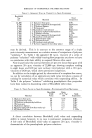
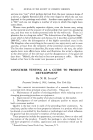
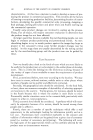
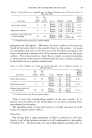
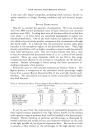
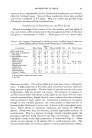
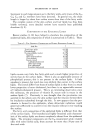
HIGH DENSITY POLYETHYLENE BOTTLES 203 is the case with impact properties, producing crack resistant bottles re- quires attention to design, blowing conditions and raw material proper- ties. BOTTLE PERMEABILITY Now let us consider the question of permeation. We have conducted well over 3000 routine permeation tests of basic chemicals and customer products since 1949. Looking back over all the data collected, we find that only about 1/a of these items are considered packageable in regular low density polyethylene. One of the main reasons for rejection of the other two-thirds is loss of certain product components due to permeation through the bottle walls. It is believed that the permeation process takes place basically in the amorphous regions of the polyethylene resin. Thus, high density polyethylene with its higher crystalline content would theoretically show lower permeation rates. Our test results indicate that this is true in fact, we normally find permeation losses of 1/2 to 1/8 those of low density material. There are some chemicals which do not fall in this range. Compounds least affected by the increase in crystallinity are the slow per- meators. Greater advantage is found among the faster permeators in- cluding compounds of low polarity. Permeation data on a few selected chemicals are listed in Table 2. The figures present a comparison of the calculated yearly percentage weight losses from 4-ounce Boston Round bottles of low and high density poly- ethylene. The calculations are based on results of standard twenty-eight- day shelf life tests. TABLE 2--PERMEATION DATA--4-OuNCE BOSTON ROUND BOTTLES CALCULATED PERMEATION LOSSES (% PER YEAR) .... 73OF.______--. 100øF.- .... Low High Low High Density Density Density Density Methyl salicylate 14.4 1.7 81. 11. Parafiqn oil light 0.2 0.2 1.6 1.0 Cetyl alcohol 0.5 0.2 2.7 1.7 Pure vanilla extract 0.7 0.2 4.9 1.6 Glacial acetic acid 6.5 1.8 26. 5.2 Oil of orange 366. 66. ! 590. 199. It can be seen from the improvement in permeability properties with these typical product ingredients that high density bottles can be utilized with a greater range of products than could be handled in low density poly- ethylene. Better retention of perfumes and flavorings, as illustrated by methyl salicylate and vanilla extract, and improved resistance to oils, such as the light paraffin oil, are of prime importance here. But we do not wish to present a false picture on the advantages of the high density resins.

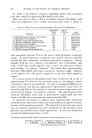
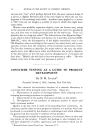
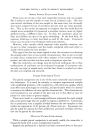
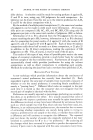
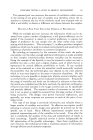
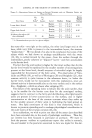
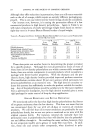
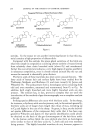
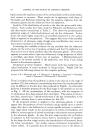
204 JOURNAL OF THE SOCIETY OF COSMETIC CHEMISTS Although they offer reductions in permeation, there are still many materials such as the oil of orange, which require an entirely different packaging ap- proach. This is one case where interior bottle linings should be considered. Our interest now, however, is in seeing the permeation effects of a few commercial products in high density polyethylene. Again in Table 3, we will make comparisons of yearly percentage weight losses based on twenty- eight-day tests in 4-ounce Boston Round bottles of equal weight. TABLE 3--PERMEATtON DATA--4-OuNcE BOSTON ROUND BOTTLES CALCULATED PERMEATION LossEs (% PER rEAR) ß --73øF..-----, ,------100øF.----, Low High Low High Density Density Density Density Liquid shampoo 0.4 0.1 3.7 1.0 Suntan lotion (alcohol base) 2.0 0.8 9.4 3.5 Suntan lotion (emulsion type) 0.4 0.01 4.2 1.4 Pre-electric shave lotion 2.7 0.4 21.4 2.8 Insect repellent (diethyltoluam- ide base) 1.5 0.7 9.4 2.7 Tincture merthiolate 1.2 0.2 8.4 0.9 These data point out another factor in determining the proper container for a specific product. Although the over-all permeation losses of most of these items in low density polyethylene are within commercially acceptable limits, there are certain components in several products which necessitate a package with better barrier properties. With the shampoo and the pre- electric shave, high density bottles provided improved perfume retention. The merthiolate contains about 10 per cent acetone which permeates low density polyethylene at an excessive rate. The high density container re- duces this acetone loss sufficiently to make the product suitable for market- ing. Any of the polyethylenes would be satisfactory for the insect repellent from a permeation standpoint, but the high density material gives a more rigid package for easier control of drop-by-drop application. GREASE RESISTANCE AND BOTTLE DISTORTION We mentioned earlier the fact that high density polyethylenes had better oil or grease resistance than the low density. This does not mean that we can recommend them for use with all oil-base or water-in-oil emulsion products. We still feel that oil-in-water emulsions are preferable for any polyethylene bottle, but we are not quite so restricted as we were with the original squeeze bottle. For instance, mineral oils typically have low permeation rates in polyethylene but they will dissolve into the polyethyl- ene and diffuse through it. On reaching the outer surface, however, they do not evaporate readily and a greasy or tacky film may form. In addi- tion, these oils and certain other compounds, when dissolved in poly-
Purchased for the exclusive use of nofirst nolast (unknown)
From: SCC Media Library & Resource Center (library.scconline.org)