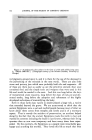
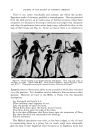
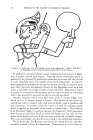
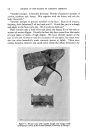
168 JOURNAL OF THE SOCIETY OF COSMETIC CHEMISTS scents to fat or oil, and it is likely that the ancient Egyptians used them. First, there is the process of enfieurage which we have just described: the flower petals are spread in layers of animal fat or soaked in oil, and this must be done over and over before any appreciable amount of scent is ab- sorbed. Second, there is maceration, the dipping of flowers in oil at about 120øF. In each case the petals or other materials must be picked or strained out. Third is the method of pressing flowers or gum resins which have been soaked in oil by some such means as twisting the compound in a bag, tour- niquet fashion. This latter method the Egyptians used in pressing the juice from grapes. There is a statement by the Greek writer Theophrastus (4th century B.C.) that one kind of Egyptian unguent of which he had learned contained several ingredients including cinnamon and myrrh, and he says that a certain perfumer "had had Egyptian perfume in his shop for eight years **** and that it was still in good condition, in fact better than fresh per- fume." This brings to mind the fact that now and then when some dis- covery is made in Egypt, perhaps a tomb is newly opened or the first open- ing of something like the so-called solar boat trench beside the great pyramid is made, one reads in the reports that a delicate or exotic perfume issued therefrom. There is probably more imagination than fact in the statement. Fatty matter has been found in Egyptian tombs and it was no doubt once scented, but when found, scientifically inclined witnesses say, it had a strong smell, scarcely the original smell and one that cannot by any license be called perfume. To move on to another aspect of ancient Egyptian cosmetics, the one thing that perhaps sticks most in the minds of people of the west and shows up in the caricatures of the ancient Egyptians and of modern easterners is the use of eye-paint. Men and women used it in antiquity, for as we have said they believed in its antiseptic and eye-easing properties as well as its undeniable decorative values. One sees evidence of it on the statues and the sculptured reliefs. There were two traditional kinds of eye-paint: green and black. The green was the mineral malachite, a copper ore, which was finely ground. This green eye-paint is known from graves of the earliest predynastic period, but seems not to have remained very popular in later times although it does occur in offering lists of ritual texts in even the latest periods as an offering to the gods along with the black eye-paint. It was called simply "the green," and was used for the lower lid and lash only. The green eye-paint was superseded in ordinary use almost entirely by the black which was originally used only for the upper lid and lash. The black is the naturally occurring dark gray lead ore, galena, a lead sulfide. Its ancient Egyptian name, (m)sdmt, went over into Greek as stimmi and into Latin as sti•iurn. We use the latter word today as the Romans did, with its derivative

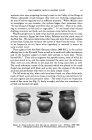
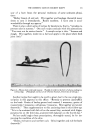
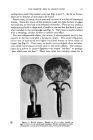
THE COSMETIC ARTS IN ANCIENT EGYPT 169 "stibnite," to mean sulfide of antimony or the metal antimony. However, the ancient Egyptian material has been shown by analysis to have been in almost every case largely galena. In earliest times these minerals were pulverized by the user on the very commonly occurring slate palettes, and the fine powder was no doubt ap- plied to the eyes with the finger dipped in water. In later times the palette developed into a highly decorated ritual and ceremonial object almost entirely, and people of means could no doubt acquire the already ground powder. Both eye-paints are found in various states in the graves of early times: As lumps of the raw material, as stains on the palettes and pebbles with which they were pulverized, as powder in small linen or leather bags, and as a compact mass of powder once a paste from which the wetting agent or adhesive has dried out. In later times the applicator or kohl rod was used for application and this object attained the status often of a piece of finely made jewelry of stone, ebony or ivory, sometimes inscribed and banded with gold. Kohl is an interesting word which is used even today for the black eye- shadow popular in the East. It is an Arabic word and properly should have the article "the" in front of it. This again is al-, hence al-kuh'l, and the whole sounds like the English word"alcohol." In fact when we speak of the eye-paint kohl and of alcohol we are using the very same Arabic word. That vagary of language, it seems, is to be accounted for in the following manner: 1) all-kuh'/when it first came into English meant the very finely pulver- ized antimony or stibnite of eastern eye-paint. Somewhere along the way kuh'l or kohl got separated from the article and still retained the original meaning. 2) In 18th century English "alcohol" was used to designate any ex- tremely finely ground powder so fine that it was almost impalpable. As late as 1812 one finds a phrase such as "alcohol of sulphur." 3) Finally, and this also in the early 18th century, "alcohol" came to mean not only a fine, impalpable powder of any sort but by extension also the pure substance of anything separated from the gross. Of course, it was only a step from there to the meaning "a very pure spirit or essence" and to the specific meaning that alcohol has today. Present day Egyptian kohl is soot made by burning something like shells of almonds or the safflower plant and it is applied with a small wooden, bone or ivory ornamental rod by moistening the rod and dipping it into the soot. There is in the Berlin Museum from ancient Egypt an eye-paint box which consists of four tubes. The inscriptions on the tubes indicate that three of them were to contain eye-paint of three different kinds, one for each of the three seasons of the Egyptian year, and the fourth was to contain "eye-paint for every day."
Purchased for the exclusive use of nofirst nolast (unknown)
From: SCC Media Library & Resource Center (library.scconline.org)