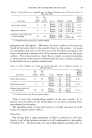
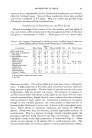
HIGH DENSITY POLYETHYLENE BOTTLES 205 ethylene, cause it to swell or expand and this eventually produces bottle distortion, more commonly called "collapse." Because of their greater crystalline content, the high density polyethylenes exhibit lower soliabil- ity constants and slow down diffusion of the product to the outer surface. We therefore have appreciably fewer problems with greasiness on the bottle surface and less tendency to collapse. A specific application where we can take advantage of these properties is the packaging of creams in polyethylene jars. A group of cream prod- ucts has been on extended shelf life test in 6-ounce high density jars for a full year with encouraging results. The initial twenty-eight-day test at controlled temperatures gave permeation results as shown in Table 4. TASLE 4--CALcu•arm) PERWEar•OS LossEs (% CItEAM PRODUCTS IN 6-Ounce JARS 73øF. 100øF. Hand cream, o/w 2.1 Cold cream, o/w 2.3 Vanishing cream, o/w 2.2 Dry skin cream, w/o 1.5 All purpose cream, o/w 1.7 Facial cream, o/w 1.9 5.5 5.4 9.0 5.0 The test jars showed no indication of collapse or greasy surface after the twenty-eight-day test period, and after an additional eleven months at room temperature all show good oil retention and good appearance. It should be pointed out here that some instances of bottle collapse can be traced to causes other than swelling of the polyethylene. Absorption of oxygen from the bottle airspace into the product or extremely high perme- ation of the product can both set up a partial vacuum condition in the bottle. Conventional polyethylene bottles collapse easily to equalize the pressures, but the high density polyethylenes, because of their greater rigidity, provide improved resistance to this collapse tendency. LIGHTWEIGHT CONTAINERS Now that we have seen the comparative data on permeability of the poly- ethylene resins, we can look again at the matter of light weighting high density bottles. Permeation losses are inversely proportional to bottle thickness so we can reason from the data in Tables 2 and 3 that bottles of high density polyethylene can be produced at weights considerably less than normally used with low density material and still afford equivalent, or even improved, product retention. As we mentioned earlier, these light weight high density bottles are practical from both production handling and consumer use viewpoints because of the inherent rigidity of the poly- mer. The lower bottle weight gives lower costs. Thus, for the proper ap-

206 JOURNAL OF THE SOCIETY OF COSMETIC CHEMISTS plications, plastic bottle manufacturers can now offer an attractive com- mercial container of good quality at favorable price levels. SUMMARY In addition, I would like to emphasize that the basic advantages of high density bottles which we have cited apply to small capacity packages of 1/2 ounce up through the pint, quart, gallon and possibly larger sizes. I hope that what has been presented here will give you an understanding of our enthusiasm for these new containers and that it may be of value to you in determining whether your products can profit from such a package. REFERENCES Natta, G., Sci. Atmerican, 197, 98 (1957). Oster, G., Sci. Atmerican, 197, 139 (1957). Martinovich, R. J., and Boeke, P. J., Modern Packaging, 31, 167 (1957). Pinsky, J., Nielsen, A. R., and Parliman, J. H., Modern Packaging, 28, 145 (1954). Nielsen, A. R., and Temple, E. J., Package Eng., 3, 21 (1958). BIOCHEMISTRY OF SEBUM By VICTOR R. WHEATLE¾, PH.D.* Presented October 8, 1958, Seminar, New York City THE TERM SEBUM applies strictly to the secretion from the sebaceous glands. It is, however, extremely difficult to collect sufficient of this ma- terial directly from the glands for chemical analysis. For this reason most chemical studies have been concerned with the composition of the skin surface or hair lipids which consist of sebum mixed with varying amounts of lipids derived from the epidermal cells. It is important, therefore, to be able to assess the extent of this contamination of such specimens in order to obtain a clear picture of the true composition of sebum. Recent studies by Reinertson and Wheatley (1) have elucidated the chemical composition of epidermal lipids. By comparing the composition of the surface lipids with that of epidermal lipids, it is possible to assess the extent of dilution of the sebum in the surface lipids by material from the epidermis. From this and other data a closer approximation to the true composition of sebum can be obtained. Sebum has proved to be a substance of unusual chemical nature. It is formed by the sebaceous glands in a somewhat unique process in which the actual cells of the glands are converted into a complex lipid mixture. Such * Section of Dermatology, Dept. of Medicine, University of Chicago, Chicago 37, Ill.
Purchased for the exclusive use of nofirst nolast (unknown)
From: SCC Media Library & Resource Center (library.scconline.org)