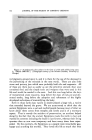
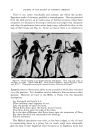
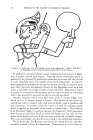
164 JOURNAL OF THE SOCIETY OF COSMETIC CHEMISTS to overcome spotted baldness and graying hair indicate a prevalence of these troubles among the ancient Egyptians or an extreme dislike of the results with a resort to shaving the head and wearing a wig. Certainly wigs developed into a long-enduring fad of their own once they got under way. But now let us turn more specifically to some of the materials and prac- tices that may reasonably be described by the word "cosmetic." You will understand that in the case of materials which are thousands of years old chemical analysis is something of a problem, for there may be many un- controlled factors. To begin with ointments and unguents, the ancients had vegetable oils and animal fats from cows, sheep and goats. Later you will see that some of their recipes call for the fat of creatures far from domesticated as well. The poor people had probably only cheap oils such as that of the castor bean, for that plant grew abundantly in antiquity as it does now in Egypt. We know the names also of plants like sesame, croton, saffron, pumpkin seed and linseed (flax) from which they must have obtained oil. But there was little if any olive oil! That may sound strange as a statement about a country at the eastern end of the Mediterranean. We know that there were olive trees in ancient Egypt, but we also know from the revenue payri of Ptolemaic times (3rd century B.C.) that there was no government monop- oly on olive oil, as there was on so many other things, because it was almost completely negligible even that late as a commodity. As a witness to the ancient EgyptJan's feeling that oils and ointments for the body were an absolute essential of living, let us look at a couple of more or less incidental references in the literature. There was a high official named Sinuhe who was on a military campaign with the Crown Prince Sesostris against the Libyans when word came that King Amenemhet I had died and, of course, Sesostris would succeed him (about 1962 B.C.). For some reason that is not told us in his story, Sinuhe anticipated trouble, at least for himself, in this change and he chose to flee his native land. He fled to the highlands of Palestine-Syria, married a native woman, had a family, became wealthy, was host to Egyptian officials and traders when they passed his adopted home, and lived there until he was an old man. Eventually upon issuance of a royal decree he was brought home to Egypt in great honor. He was given one of the royal houses in which he says pointedly that there was a bath. "Precious things of the treasury were in it," he says, "garments of royal linen, myrrh and fine oil of the king. **** Years were made to pass away from my body I was shaved(?) and my hair was combed(?). **** And I was arrayed in finest linen and anointed with the best oil. I slept in a bed and gave up the sand to those who are in it (i.e., the Asiatics among whom he had lived) and the oil of wood to him who smears himself with it." Similarly in the 29th year of Ramses III's reign (about 1170 B.C.) the

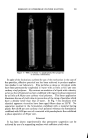
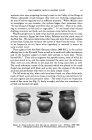
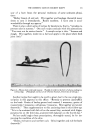
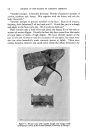
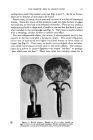
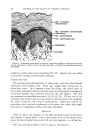
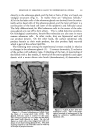
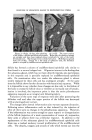
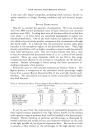
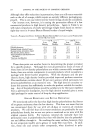
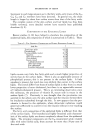
THE COSMETIC ARTS IN ANCIENT EGYPT 165 workmen who were preparing the king's tomb in the Valley of the Kings at Thebes repeatedly struck because they were not receiving compensation by way of rations regularly and in sufficient quantity. When officials came to investigate on one occasion, the strikers began their statement thus: "It was because of hunger and thirst that we came here. There is no cloth- ing, no ointment, no fish and no vegetables." In one breath they wanted clothing, ointment and food, and the ointment came before the food. Wealthy people even in early times had oils and ointments from not only the best sources in Egypt but from Libya, Palestine and the south coast of the Red Sea. We cannot determine what these oils were from such residues as have been found, but we know the names of them from the texts. Even so we frequently do not know what ingredien,t or material is meant by some ancient word. There appear from the Sixth Dynasty (about 2400 B.C.) in the earliest offering lists in the Pyramid Texts as well as in tomb and coffin inscriptions and in the funerary papyri of much later periods to have been "Seven Sacred Oils." These oils or unguents had specific names, some of which do not mean much to us, and the names remained the same over the millennia. They were not only offered to the dead but the living used them as well. The small substitute statue of the deceased which was placed in his tomb chapel was anointed with them and so also were the statues of the deities anointed and perfumed with them in the daily temple ritual. The full make-up kits, when such have been found, are often elaborately made of inlaid wood and stone boxes consisting of various compartments for oil and unguent jars and eye-paint tubes. The small oil jars are frequently made of fine stone (see Fig. 3), finely wrought, and they are sometimes in- scribed and banded with gold. Figure &--Stone kohl jars with lids and an ointment vase. (Perhaps 2000-1800 B.C.) (PhOtograph courtesy of the Oriental Institute, University of Chicago.)
Purchased for the exclusive use of nofirst nolast (unknown)
From: SCC Media Library & Resource Center (library.scconline.org)