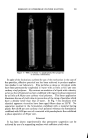
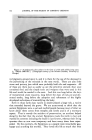
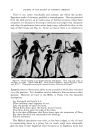
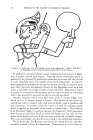
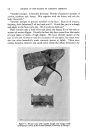
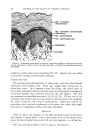
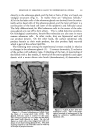
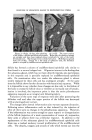
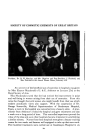
166 JOURNAL OF THE SOCIETY OF COSMETIC CHEMISTS There is one rather remarkable and common use which the ancient Egyptians made of ointment, probably a scented grease. One sees pictured from the 16th century on in tomb scenes of festival occasions where there are guests at a banquet or listening to musicians and singers that the guests and often the performers have rather large cones, yellowish in color, on the tops of their heads (see Fig. 4). So far as I know there is no reference in Figure 4.--Tomb painting of an all-girl orchestra with dancer. Note wigs and cones of ointment on beads. (About 1400 B.C. From Davies-Gardiner, /lncient Egyptian Paint- ings, P1.37.) (Photograph courtesy of the Oriental Institute, University of Chicago.) Egyptian texts to these cones, either to the material of which they consisted or to the practice. It is therefore only by deduction that we arrive at their purpose. However we have in the Bible, in Psalm 133, this beautiful description: Lo, how good and lovely it is When brethren dwell together as one. Like the goodly oil upon the head, Which flows down upon the beard, Aaron's beard, That flows down upon the edge of his robes, So is the dew of Hermon that flows down upon the mountains of Zion For there has the Lord commanded the blessing: Life for evermore. This Biblical description may refer, as has been judged, to the oil used in consecrating Aaron as a priest, but no words could more adequately give the idea of what happened when the guest at an Egyptian house had

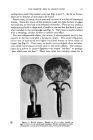
THE COSMETIC ARTS IN ANCIENT EGYPT 167 the cone of ointment placed upon his head and during the festivities from the warmth of the body it melted and ran down not only on his elaborate wig but even upon his garments. This practice must have constituted one of the courtesies of the Egyptian household, but we also see a newly ap- pointed vizier depicted on his way to the temple to be installed and he wears a cone on his head as he walks in procession ahead of the king. It has been said that this ointment would keep the wig supple and pliant, but it would seem to me that the result would be rather to undo the c.urls and braids and to create an unpleasant mess. The purpose would seem to have been the scent, and the ointment must really have been a perfume. In any case, when we see such cones on the heads of shaven headed priests, no consideration of a wig can have entered in. As another mark of the courtesy of the Egyptian host, guests at banquets, both men and women, are shown anointing their hands and limbs or having them anointed by servants. We are reminded of the scene in the New Testament when Mary, the sister of Lazarus, at a supper anointed the feet of Jesus with a jar of pure nard, and it is said that the odor of the ointment filled the house (John 12: 1-8). The ancient Egyptians were fond of scents, probably strong ones, as are their modern descendants, whether in the form of incense or for use on the body. The words "incense" and "perfume" are in origin closely related, for the first is from incendere, "to burn," and the second from perfumum, "by the smoke." Incense is known to have been used in the early dynasties, and the most common way of making of•kring to a god was by burning incense before him to purify and render the sanctuary pleasant for the food, drink and clothing offerings. Aromatic substances such as juniper oil and fragrant gums and resins of oily base were used in pure form as incense and also placed on hair, clothing and in the boxes and baskets in which wigs and clothing were kept. Slivers of sweet smelling woods were also used in the same way. However, nothing was possible for the ancients such as the modern liq- uid scents and perfumes which are solutions in alcohol. They had not learned the principle of distillation to produce the alcohol or to produce the essential scent itself. Nor did they have animal scents such as musk, ambergris, civet or beaver. Lacking alcohol the next best vehicle for ini- tially absorbing and carrying a scent is fat or oil, hence it was inevitable that the Egyptians would experiment with making the fat or oil which they used of necessity more pleasant and less objectionable when rancid. As a matter of fact, I understand that this method is made use of to the present day, that is, the extracting of scent from flowers, for example, by placing the petals in layers of solid fat or soaking them in oil as a step toward absorbing the scent in alcohol. There are, I believe, three principal ways of transferring flower or other
Purchased for the exclusive use of nofirst nolast (unknown)
From: SCC Media Library & Resource Center (library.scconline.org)