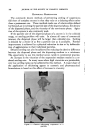
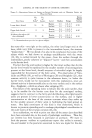
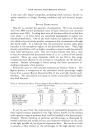
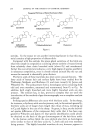
212 JOURNAL OF THE SOCIETY OF COSMETIC CHEMISTS lipids caused the squalene content of the surface lipids to fall and the choles- terol content to increase. These results are in agreement with those of Nicolaides and Rothman indicating that the squalene originates from the sebaceous glands and the cholesterol from the epidermis. Analysis of the distribution of sterois in the skin also gives useful infor- mation. Such studies have been made by Wheatley and Reinertson (t0) and their results summarized in Table 3. This shows the predominantly epidermal origin of 7-dehydrocholesterol and the free cholesterol. It also shows the much higher proportion of esterified cholesterol in the surface lipids as opposed to the epidermis. This suggests that most of the esterified cholesterol is of sebaceous origin though some esterification may occur in the stratum corneum or on the skin surface. Evaluating the available evidence we can conclude that the sebaceous glands are the active site of squalene synthesis and that the epidermis is a more active site of sterol synthesis than the sebaceous glands. Pure sebum appears to contain about 3 per cent cholesterol, a large proportion of which is esterified, and about t0 per cent of squalene. 7-Dehydrocholesterol appears to be formed entirely in the epidermis, very little, if any, being formed in the sebaceous glands. Mechanism of Stero/Synthesis. Much recent work has studied the de- tailed mechanism of sterol synthesis in living tissues. Popilk (20) has proposed the following scheme for the complete pathway: Acetate --• X --• Mevalonic acid --• Y (?Famesol) --• Squalene --• Lanosterol --• Dimethyl- sterol -,- Zymosterol -,- Desomsterol -,- Cholesterol. There is evidence that this pathway is taken in the skin up to the stage of squalene (21), but evidence is accumulating that from this step the pathway may be different in the skin from that proposed by PoPilk. An alternative pathway is therefore proposed for the final stages in the synthesis as set out in Fig. 1. All the intermediates of this synthesis, with the exception of zXS-cholestenol, have been isolated from skin lipids. The scheme involves a new idea, namely that 7-dehydrocholesterol is the last intermediate in the synthesis--already there is some evidence for this (22). If the proposed scheme is applied to the sebaceous glands, it would appear that the pathway of sterol synthesis can go rapidly up to a certain stage, then due to the deficiencies of certain specific enzymes, it reaches a slow stage which results in the accumulation of certain intermediates and differs in various species of animal according to the enzyme systems present in the sebaceous glands. In man the slow stage involves the cyclization of squalene to form lanosterol, hence there is accumulation of squalene. In the sheep the slow stage involves the demethylation of lanosterol, hence the latter accumulates. For similar reasons lathosterol accumulates in rodent sebum. It is possible that all intermediates occur in the sebum of

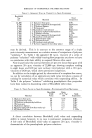
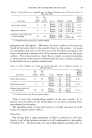
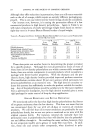
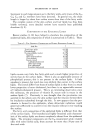
BIOCHEMISTRY OF SEBUM 213 TABLE 4--TsE PROBABLE AVERAGE COMPOSITIOlg Or PURE HUMAlg SEBUM Per Cent Free fatty acids 5 Glycerides 50 Waxes 20 Squalene 10 Branched hydrocarbons 5 Sterols Cholesterol (free) 1 Cholesteryl esters 4 Other sterols 1 Other substances 4 all species but that most are present only in minute traces. Human sebum, for instance, contains traces of lanosterol, lathosterol and 7-dehydrocholes- terol. Further work with radioactive tracers and study of the composition of the sebum of other animals will enable the complete detailed pathway to be fully elucidated. PROBABLE COMPOSITION OF HUMAN SEBUM It is now possible to summarize and predict the most likely composition of pure human sebum. The available evidence indicates that the composi- tion of sebum is approximately that shown in Table 4. If this predicted composition is compared with the results of the analysis of the carefully collected scalp soaks obtained by Nicolaides and Foster (23) it can be seen that, provided skin surface and hair lipid samples are collected from pre- viously defatted sites of skin with high sebaceous activity, relatively pure sebum is obtained. SUMMARY 1. Present knowledge of the composition of the skin surface and hair lipids of man and certain animals has been reviewed. Details of the com- position of human epidermal lipids are also described in order that the extent of contamination of human surface lipids by those from the epidermis can be assessed and the composition of pure human sebum deduced. 2. Biochemical mechanisms involved in sebaceous activity are dis- cussed. These include the biosynthesis of the long chain compounds, the formation of the free fatty acids and the pathway of sterol synthesis in the skin. 3. From the data presented the composition of pure human sebum is predicted. Part of the work described in this paper was supported in part by the Research and Development Division, Office of the Surgeon General, Department of the Army, under contract # DA-49-007-MD-411 and by the Public Health Grant E-1444(C2). The author also wishes to express his indebtedness to the inspiration first by Prof. A. Wormall and Dr. R. M. B. MacKenna and more recently by Dr. Stephen Rothman.
Purchased for the exclusive use of nofirst nolast (unknown)
From: SCC Media Library & Resource Center (library.scconline.org)