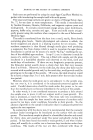
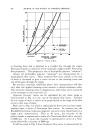
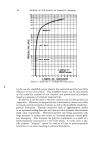
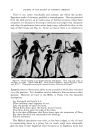
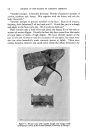
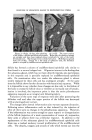
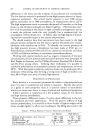
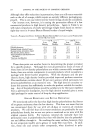
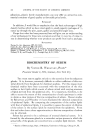
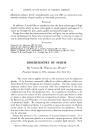
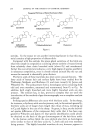
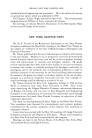
152 JOURNAL OF THE SOCIETY OF COSMETIC CHEMISTS --i •--)AARBLES i ! ..... OOLF BALLS ..... SANE) GRAINS T• •0 ,g, •'4#• ',954 Figure &--Yield value vs. Carbopol-934 concentration. by the use of a simplified system wherein the suspended particles have little influence on the total system. This simplified system can be used directly as the model for creation of new cosmetic and pharmaceutical products based on suspension of relatively large particles. In addition it can be useful in the more common case of a fine particle size suspension. However, as the particle size is decreased or the per cent solids increased, particle interaction increases as well as the possibility of polymer- particle interaction. Particle interaction such as agglomeration results in an increased settling force per unit area and thus increases the minimum yield value requirement. Decreased particle size being associated with large increases in surface area causes an increased tendency toward poly- mer adsorption. This increases the polymer requirement as a result of a lowered polymer concentration in the water phase. In some cases a spe- cific polymer "solution" cannot be used at all due to polymer-particle interaction to an extent resulting in extreme flocculation.

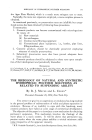
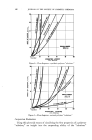
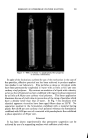
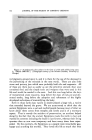
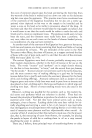
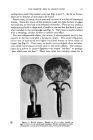
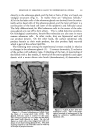
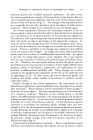
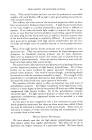
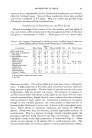
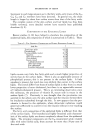
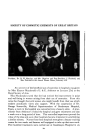
RHEOLOGY OF HYDROPHILIC POLYMER SOLUTIONS 153 Figure 7.--Effect of plastic vs. pseudoplastic flow properties in emulsion stabilization. In spite of the limitations outlined for use of the mechanism in the case of fine particles, effective practical use has been achieved in product applica- tion studies in our laboratory. Fine particles as dense as zirconium oxide have been permanently suspended in water with as little as 0.15 per cent carboxy vinyl polymer. By contrast an emulsion of a liquid with a density as low as that of heptane has been stabilized with regard to phase separation by as little as 0.10 per cent carboxy vinyl polymer. This latter application illustrates the use of yield value in prevention of the rising of particles which have a density lower than that of water. In Fig. 7 two emulsions with identical apparent viscosities have been aged fifteen days at 125øF. No separation resulted in the formulation stabilized with a material having plastic flow (0.10 per cent carboxy vinyl polymer) whereas the formulation stabilized with 0.30 per cent of a material with pseudoplastic flow exhibited a phase separation of 29 per cent. SUMMARY It has been shown experimentally that permanent suspension can be achieved by use of a suspending medium with sufficient yield value.
Purchased for the exclusive use of nofirst nolast (unknown)
From: SCC Media Library & Resource Center (library.scconline.org)