206 JOURNAL OF THE SOCIETY OF COSMETIC CHEMISTS plications, plastic bottle manufacturers can now offer an attractive com- mercial container of good quality at favorable price levels. SUMMARY In addition, I would like to emphasize that the basic advantages of high density bottles which we have cited apply to small capacity packages of 1/2 ounce up through the pint, quart, gallon and possibly larger sizes. I hope that what has been presented here will give you an understanding of our enthusiasm for these new containers and that it may be of value to you in determining whether your products can profit from such a package. REFERENCES Natta, G., Sci. Atmerican, 197, 98 (1957). Oster, G., Sci. Atmerican, 197, 139 (1957). Martinovich, R. J., and Boeke, P. J., Modern Packaging, 31, 167 (1957). Pinsky, J., Nielsen, A. R., and Parliman, J. H., Modern Packaging, 28, 145 (1954). Nielsen, A. R., and Temple, E. J., Package Eng., 3, 21 (1958). BIOCHEMISTRY OF SEBUM By VICTOR R. WHEATLE¾, PH.D.* Presented October 8, 1958, Seminar, New York City THE TERM SEBUM applies strictly to the secretion from the sebaceous glands. It is, however, extremely difficult to collect sufficient of this ma- terial directly from the glands for chemical analysis. For this reason most chemical studies have been concerned with the composition of the skin surface or hair lipids which consist of sebum mixed with varying amounts of lipids derived from the epidermal cells. It is important, therefore, to be able to assess the extent of this contamination of such specimens in order to obtain a clear picture of the true composition of sebum. Recent studies by Reinertson and Wheatley (1) have elucidated the chemical composition of epidermal lipids. By comparing the composition of the surface lipids with that of epidermal lipids, it is possible to assess the extent of dilution of the sebum in the surface lipids by material from the epidermis. From this and other data a closer approximation to the true composition of sebum can be obtained. Sebum has proved to be a substance of unusual chemical nature. It is formed by the sebaceous glands in a somewhat unique process in which the actual cells of the glands are converted into a complex lipid mixture. Such * Section of Dermatology, Dept. of Medicine, University of Chicago, Chicago 37, Ill.

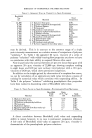
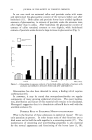
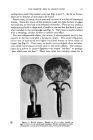
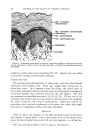
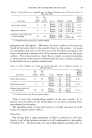
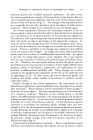
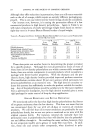
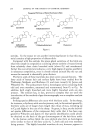
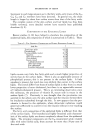
BIOCHEMISTRY OF SEBUM 207 a process must undoubtedly involve biochemical mechanisms not found in other fat forming tissues. Some of these mechanisms have been studied and will be considered in this paper. Both the nature and possible mode of formation of sebum will be considered here. COMPOSITION OF SKIN SURFACE AND HAIR LIPIDS Present knowledge of the nature of the skin surface and hair lipids of man and certain other animals and of the preen gland secretion of the duck and goose is summarized in Table 1. Preen gland oil is an almost pure TABLE 1--THE CHEMICAL COMPOSITION OF THE SKIN SURFACE AND HAIR LIPIDS OF MAN AND OTHER ANIMALS AND THE PREEN GLAND SECRETION OF CERTAIN BIRDS Guinea Constituent Man Sheep Pig Mouse Rabbit Rat Ox Duck Goose Fatty acids (free) 28.3 11.0 6.0 7.5 Fatty acids (combined)* 41.6 44.0 49.3 36.7 Glycerides 32.5 0 0 0 Unsaponifiable matter 30.1 46.1 44.8 54.6 Squalene 5.5 0 0 0 Hydrocarbons 8.1 1 1.5 1.1 Wax alcohols 6.2 9.0 5.0 5.9 Cholesterol 4.1 10.0 18.0 4.5 Dihydrocholesterol 0.1 2.5 Lathosterol i l 8 •11 Other sterols 613 i' 0.7 .. Isocholesterol J' tr 12.5 Alkane-1: 2-diols 2.0 2.5 • 16 2• 15 9.0 7. 43.6 51 0 0 45.9 41 0 0 3.5 1 31.0 17 3.5 5 0.3 0 4 5.1 .4 53.4 4•16 4•'5 0 .. .4 42.7 0 5 .. 5 4fi 0 4fi 0 8 1•14 1 4 0 3 ß . • .. • .. ß . 9 .. * As glycerides, waxes and other esters. •' See text. sebaceous secretion. The surface lipids from man have many striking fea- tures. A high proportion of free fatty acids are present and also relatively large amounts of glycerides. The hair lipids of animals contain only traces of glycerides--they are in fact true waxes. The presence of squalene is another feature which the human surface lipids do not share with the other animals presented here, though there is some evidence that this substance may be present in horse sebum (2). Cholesterol is present in all species though in very variable amounts the concentration is relatively low in human surface lipids and it occurs only in traces in the preen gland secre- tions. Other steroIs or sterol-like substances are typical for different species. Sheep wool wax, for instance, contains appreciable amounts of isocholesterol. This is a mixture of closely related trimethyl-sterols the principal component being lanosterol (see Fig. 1 for formula). The rodent hair lipids contain fairly high proportions of lathosterol (Fig. 1). Other steroIs are also present in all species often in small amounts only. The human surface lipids, for instance, appear to contain small amounts of keto-
Purchased for the exclusive use of nofirst nolast (unknown)
From: SCC Media Library & Resource Center (library.scconline.org)