HIGH DENSITY POLYETHYLENE BOTTLES 199 aimed at comparing the size of sebaceous glands. Uninvolved follicles must be measured in this type of study. REFERENCES (1) Strauss, J. S., and Kligman, A.M., 5 e. Invest. Dermatol., 30, 51 (1958). (2) Kligman, A.M., Unpublished data. (3) Pinkus, H., .4. M..4. Atrch. Dermatol. Syphilol., 67, 598 (1953). (4) Montagna, W., "The Structure and Function of Skin," New York, Academic Press, Inc. (1956). HIGH DENSITY POLYETHYLENE BOTTLES By EDW^RD J. TEMPLE* Presened November 20, 1958, New York City POLYETHYLENE SQUEEZE bottles have been with us for more than ten years and they have served us well. We have seen them used as dis- pensers, dropper packages, spray packages, and containers for bulk ship- ments. They have been used with a wide variety of products from cosmet- ics to household items, pharmaceuticals to basic chemicals. The recent development of linings applied to the interior surfaces of polyethylene con- tainers has expanded the number of products which can successfully be packaged in plastic. But a second development which has been of great interest throughout the packaging industry was the introduction of bottles produced of high density polyethylene. These bottles offer great opportunities for a whole new field of bottle applications and a tremendous expansion of the plastic bottle industry. I think we can understand the enthusiasm of container manufacturers if we examine the high density resins and what they con- tribute to the container field. DESCRIPTION OF RESINS First, let us define what is meant by high density polyethylenes. We use the term "high density" to describe polyethylenes in the density range of 0.941 to 0.965. This density range constitutes the Type III resins defined in the Tentative Specification for Polyethylene Molding and Extrusion Ma- terials, ASTM D1248-$ST. Why is a 0.94 or 0.96 density considered high? Basically because it represents a completely different polyethylene from the earlier types at approximately 0.92 density which became avail- able to us after World War II. The difference in density is small but the * Plax Corporation, Hartford, Conn.

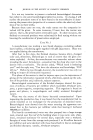
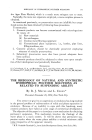
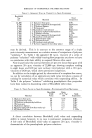
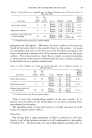
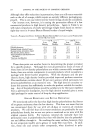
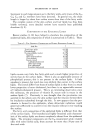
200 JOURNAL OF THE SOCIETY OF COSMETIC CHEMISTS differences in the resins and the methods of manufacture are considerable. The low density material is produced by the high pressure process in heavy, expensive equipment. The actual reactor pressure is over 1000 atmos- pheres, sometimes up to 7000 atmospheres, at temperatures above 212øF. The high temperature tends to promote the growth of branches on the long chains as the ethylene molecules are linked together. The branches inter- fere with the packing of the chains in tight crystalline arrangements and as a result the polymer made this way typically has a comparatively low crystallinity of 30 to 60 per cent. It follows that the high degree of branch- ing and low crystallinity give a low density polyethylene. We should mention here that innovations have been made in the high pressure process during the last few years to permit the production of poly- ethylenes with densities up to 0.94. To identify the various products of the high pressure process a breakdown has been made at 0.925 gm./cc. Polyethylenes of density 0.910 to 0.925 are classed as low density and those of 0.926 to 0.940 are medium, or sometimes intermediate density. Working with special catalysts, such as organic compounds of titanium and aluminum, the low pressure polymerization processes were developed by Karl Ziegler in Germany and by Phillips Chemical, Standard Oil of Indiana and Du Pont among others. Utilizing these techniques it is possible to synthesize polyethylene at atmospheric pressure and temperatures as low as 90øF. With the proper conditions, polymer chains can be produced with a minimum of branching, thus forming a strong resin of high crystalline con- tent, 80 to 90 per cent, and, of course, high density. DISCUSSION OF PROPERTIES Resin density is a convenient parameter by which to class polyethylenes since it is easy to understand and simple to measure. Density also serves as a guide to resin properties since it is directly related to crystallinity which is an important factor in many chemical and mechanical properties. Table 1 presents a comparison of a few property values for low density and high density polyethylene. These property differences mean, of course, great differences in the bot- tles produced and their applications. With the greater stiffness of high density polyethylene, it is possible to blow bottles of lighter weight which retain enough rigidity to allow easy handling in the filling plant and in the TABLE 1--TYPICAL PROPERTY VALUEs--PoLYETHYLENE RESINS Low Density High Density Ultimate tensile strength--short term, psi. Elongation, % Stiffness modulus, psi. Use temperature, øF. Impact strength--Izod (ft.-lb./in. notch) 1,800- 2,400 4,400- 5,500 400- 600 25- 180 20,000-25,000 100,000-150,000 -20 ø to-t-205 ø 0 ø to q-260 ø 13 3-5
Purchased for the exclusive use of nofirst nolast (unknown)
From: SCC Media Library & Resource Center (library.scconline.org)